Ethereum near $1,867 after Fidelity $499.55 million transfer
Ethereum’s latest pullback matters less for the price level than for the capital still circling the asset: Fidelity’s reported $499.55 million ETH transfer has put institutional positioning back at the center of the trade just as Ethereum sits near $1,867 and far below its 2025 peaks. For investors, that combination is the tell — this is no longer just a token story, but a battle over whether the next leg in crypto leadership comes from Bitcoin or from the chain powering ETF flows, tokenization and on-chain finance.
The market is reading every large wallet move as a signal because Ethereum has been under sustained pressure. ETH has fallen from above $4,600 late last year to roughly $1,868 now, a decline that has reset expectations and washed out momentum. Yet the selloff has not come with a collapse in participation. Recent volume remains elevated, and the 50-day moving average at about $1,777 is still below the spot price, suggesting the market is trying to stabilize after a steep drawdown rather than enter a fresh breakdown.
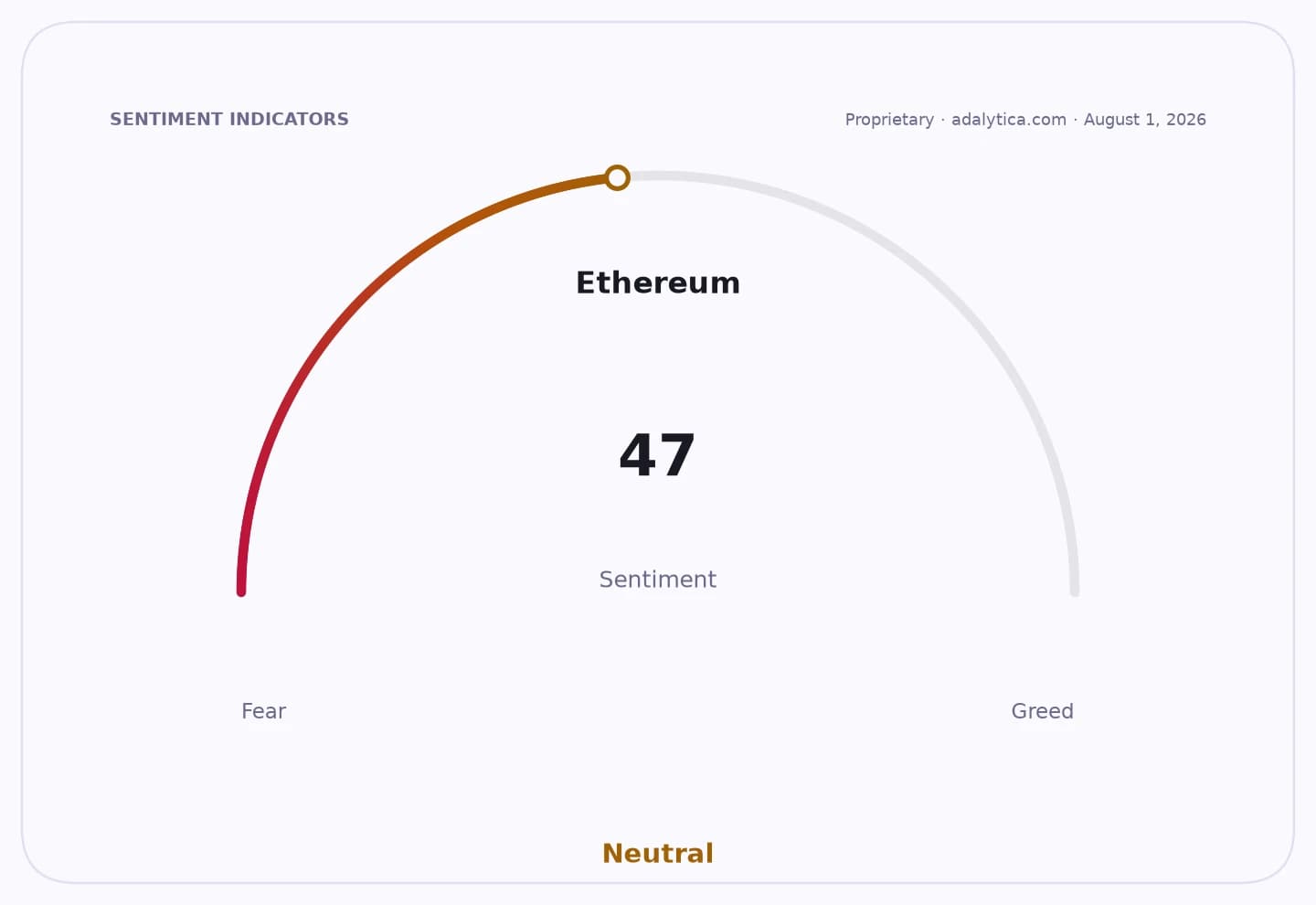
That makes the Fidelity transfer more important than a simple custody event. In crypto, large ETF-linked transfers often precede portfolio rebalancing, creation activity or liquidity management, and they tend to matter most when sentiment is fragile. Adalytica’s Ethereum Fear & Greed snapshot shows sentiment at 47, neutral, but awareness remains in fear at 17, underscoring how quickly positioning can shift if institutional flows improve. The 7-day drop in awareness also suggests the crowd is still skeptical, which is exactly when incremental flows can have the most price impact.
This is where the investment case turns asymmetrical. Ethereum is not being valued like a high-beta speculative coin anymore; it is increasingly behaving like the base asset for an institutional infrastructure trade. If ETF demand broadens, the beneficiaries are not just ETH holders. Liquidity providers, staking-related businesses, on-chain applications, and the broader crypto market’s second-order winners all stand to gain from a higher Ethereum floor. The comparison with Bitcoin is telling: BTC remains the market’s reserve asset, but ETH is the one with the more direct operating leverage to network usage, tokenization and programmable finance.
Technically, Ethereum is trying to base after an extended decline. RSI readings around 50 point to a neutral setup, while MACD has been grinding higher and is close to a crossover into firmer momentum. That does not confirm a trend reversal on its own, but it does say the asset is no longer oversold the way it was earlier in the year. For investors watching entries, that matters: the best asymmetry often appears when price is damaged, sentiment is muted and institutional flows begin to reappear.
The broader narrative is that Ethereum is moving out of the speculative-deleveraging phase and into a custody-and-flow phase. Fidelity’s transfer is a reminder that the real contest is not whether crypto survives, but which network becomes the default institutional rail for the next wave of digital assets. If ETF inflows continue to favor ETH, the market may have to reprice Ethereum not as a lagging altcoin, but as a core infrastructure asset with far more upside leverage than consensus currently allows.
| Entity | Gains | Losses |
|---|---|---|
| Ethereum ETF holders | ▲Potential inflow support | ▼Volatility from repositioning |
| Fidelity / ETH custodian flows | ▲Trading and liquidity flexibility | ▼Scrutiny over large transfers |
| Ethereum bulls | ▲Higher institutional demand | ▼Weak hands if flows fade |
| Bitcoin dominance trade | ▲— | ▼Relative capital if ETH attracts flows |