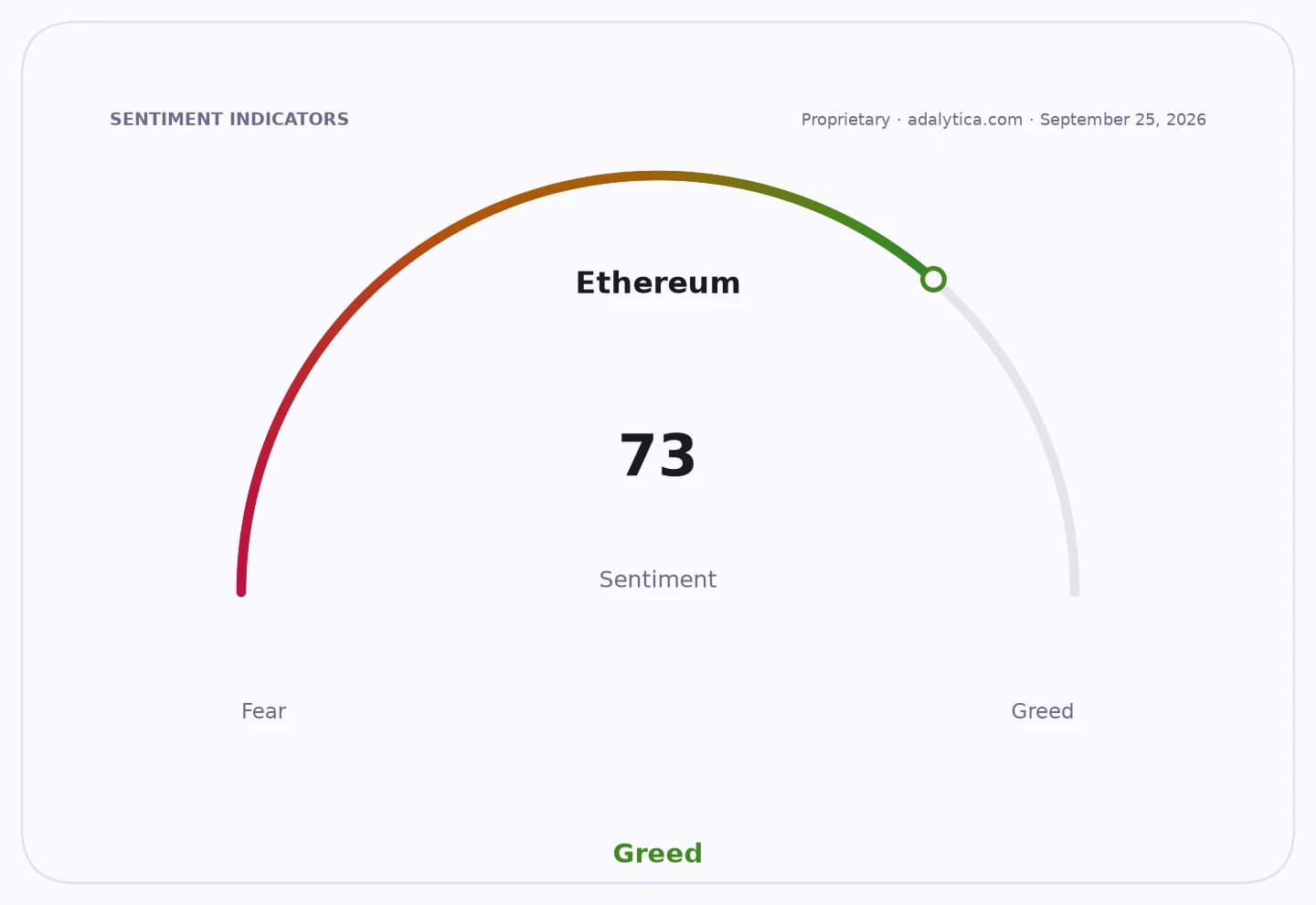
Ethereum is back above $1,900 as four straight days of ETF inflows give the market its clearest sign yet that institutional demand is trying to reassert itself just as the network moves toward the Glamsterdam upgrade.
Ethereum back above $1,900 on four straight ETF inflow days
That matters because ETH has spent much of the past year trading like a speculative beta asset rather than a scarce, yield-bearing digital infrastructure play. A sustained bid from exchange-traded funds changes the capital-formation story. It brings stickier money, lowers the market’s dependence on retail leverage and gives Ethereum a cleaner path to reprice around network utility, not just crypto risk appetite.
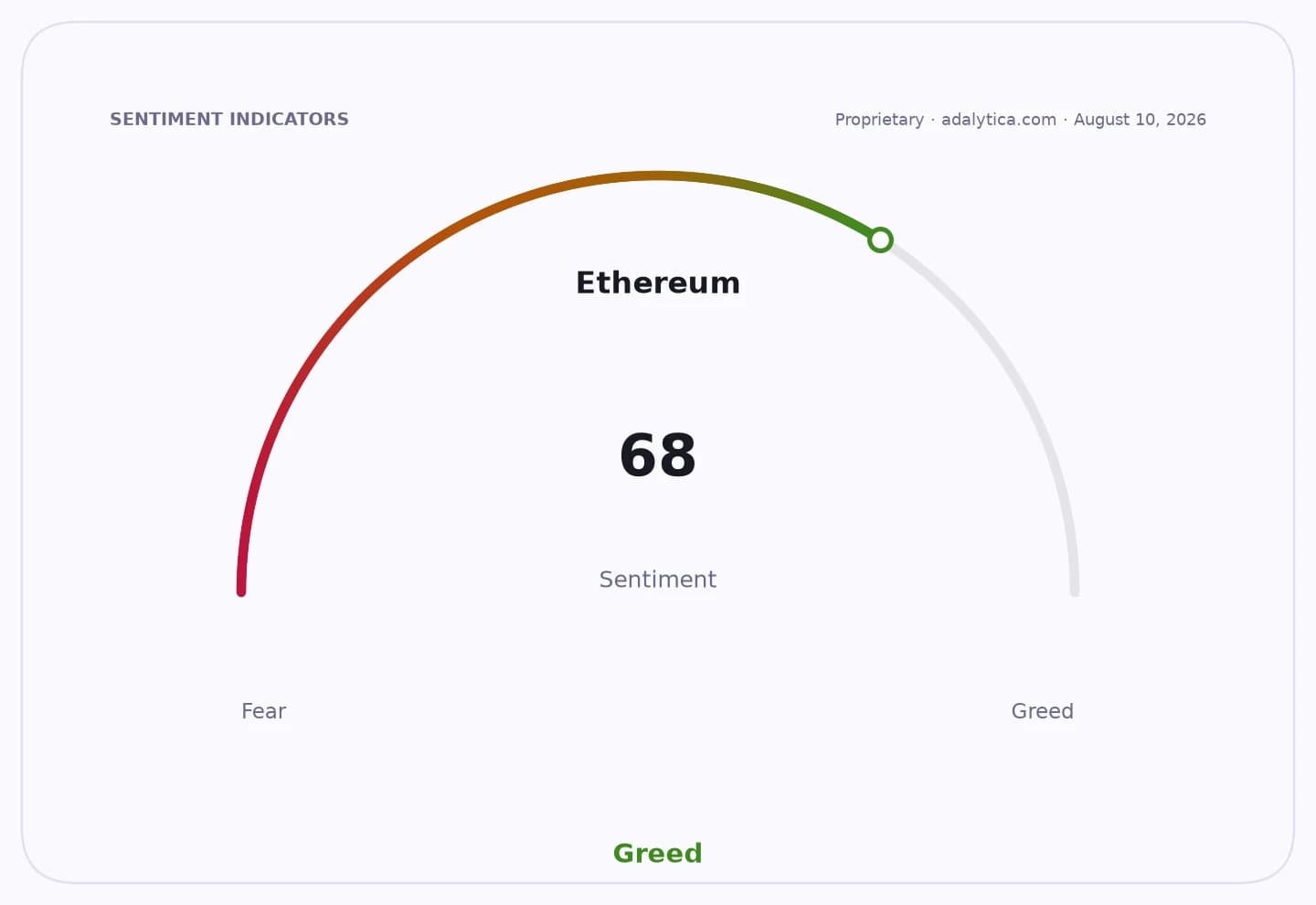
Sentiment IndicatorsⓘProprietary · adalytica.com · August 10, 2026
This is a snapshot — live sentiment, awareness and momentum for 130+ markets update continuously in the dashboard.Open AlphaPulse

The latest price action shows the market is responding. ETH closed at $1,912.40 on Monday, holding near the upper end of its recent range and above its 50-day moving average of $1,801.88, with RSI at 43.6 and the MACD still positive. That is not euphoric tape, but it is a constructive setup after the brutal slide to $1,821.68 in February, when momentum washed out and sentiment collapsed. Now the technical picture is improving while flows are turning in Ethereum’s favor.
The ETF bid is especially important because it creates a second-order effect the market often underestimates: every incremental inflow into Ethereum funds tightens available supply at the margin while reinforcing the asset’s legitimacy for wealth managers, RIAs and institutions that still cannot or will not trade spot tokens directly. Even a modest run of net inflows can matter in a market where positioning is thin and conviction has been scarred by prior drawdowns.
That is why Glamsterdam matters. Network upgrades are usually dismissed by traders as background noise, but for Ethereum they are part of the investable thesis. If the upgrade improves scalability, developer activity or fee dynamics, it strengthens the argument that ETH is not just a trade on crypto sentiment but the reserve asset of a broader on-chain economy. That can support a higher multiple on network relevance, especially if ETF demand persists into the upgrade window.
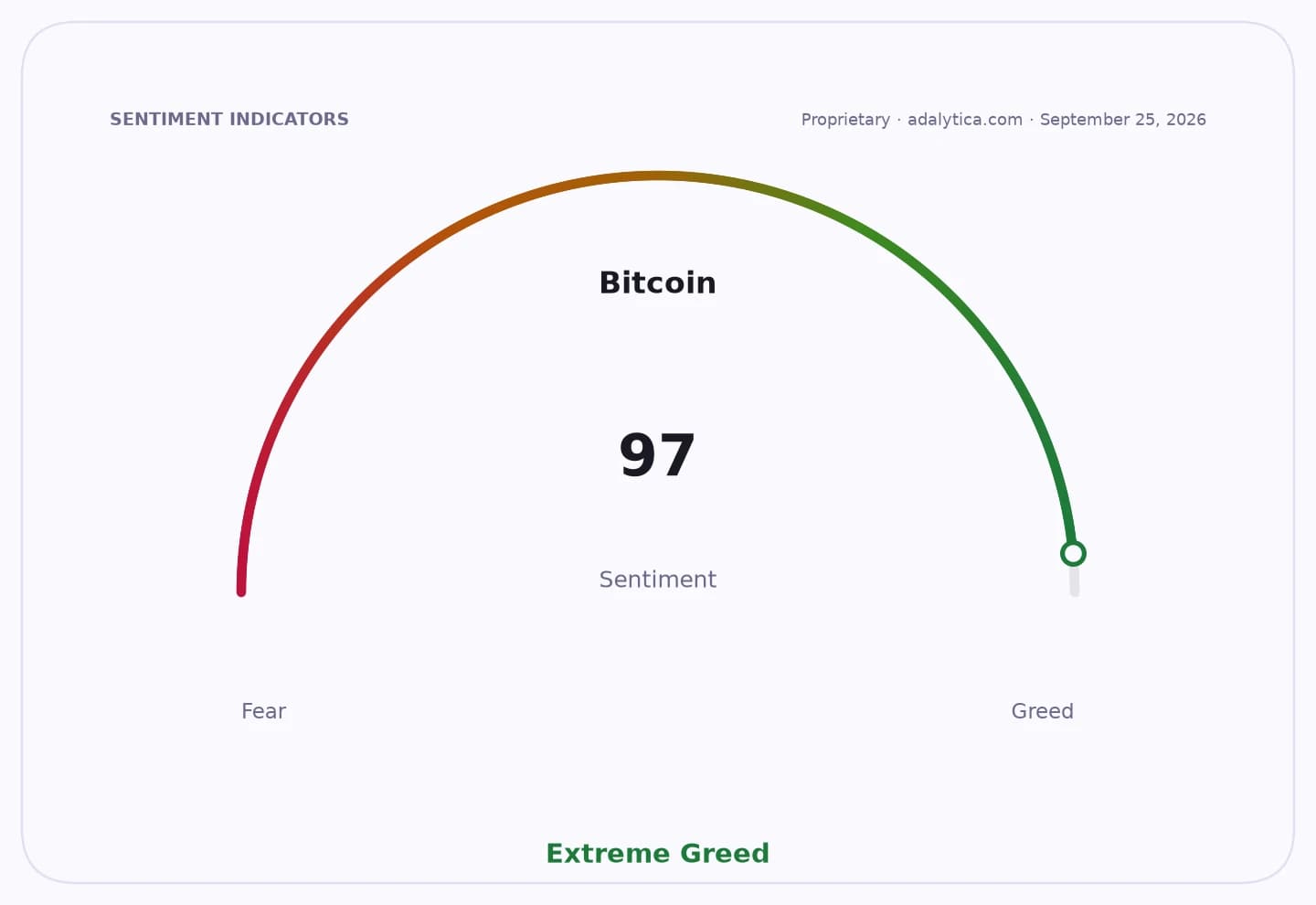
The broader market is also sending a useful signal. Adalytica’s Ethereum Fear & Greed Index shows sentiment at 68, neutral, while awareness sits at the maximum reading, suggesting Ethereum is back at the center of the market’s attention even if conviction is not yet extreme. Bitcoin, by contrast, is still flashing extreme fear. That divergence tells investors the next leg of capital rotation may not come from a broad crypto melt-up, but from selective allocation into the asset with the clearest institutional catalyst.
For investors, the opportunity is asymmetric. If ETF inflows accelerate and the upgrade narrative holds, Ethereum can reclaim its role as the market’s core smart-contract exposure. If flows stall, the upside may be capped, but the presence of regulated demand still creates a sturdier floor than Ethereum had before spot ETFs became a real source of capital. In other words, the market may still be underpricing how quickly ETH can transition from a high-volatility token to a mainstream macro asset.
The actionable takeaway is straightforward: Ethereum is becoming a flow story again, and that makes ETH one of the better ways to express the next phase of crypto institutionalization. For investors who want direct exposure, the setup favors accumulating on pullbacks while ETF demand and the Glamsterdam catalyst remain in play.
| Entity | Gains | Losses |
|---|---|---|
| Ethereum / ETH | ▲ETF demand, broader adoption | ▼Short sellers, weak holders |
| Ethereum ETF buyers | ▲Regulated exposure, liquidity | ▼Those waiting for lower entry |
| ETH validators and ecosystem projects | ▲Upgrade-driven confidence, network relevance | ▼Competing altchains seeking capital |
| Bitcoin relative rotation | ▲— | ▼Capital that shifts into ETH funds |