Ethereum $6,000 Target Depends on Bitcoin Breakout
Ethereum is still the better long-term crypto story, but the market should be focused on the catch: a $6,000 ETH target from Tom Lee depends on Bitcoin doing something it has never done in a single quarter. That makes the trade less about Ethereum’s chart in isolation and more about whether crypto’s leader can deliver the kind of macro-level breakout that unlocks the next leg for the whole complex.
That is the economic hinge investors are missing. Ethereum can only sustain a move into the $6,000 zone if liquidity, risk appetite and cross-asset momentum all line up at once. In other words, ETH is not just a standalone asset here — it is a leveraged bet on a broader crypto reflation trade.
On the tape, Ethereum is acting like a market waiting for confirmation. It has been consolidating just above $2,440 to $2,500, with the 50-day moving average at $2,147.96 and the 200-day at $2,049.05, a setup that still leaves room for trend followers to stay constructive. The relative strength index at 43.6 shows ETH has cooled from overheated conditions, while MACD remains positive enough to suggest the larger uptrend has not fully broken down. That is the kind of reset bulls often want before a fresh impulse higher.
But the technical picture also explains the catch. ETH would first need to clear the $2,500 to $2,550 resistance band and hold it. The recent range is tight, with Bollinger Bands narrowing around the current price, a sign the market is compressing before a larger move. A clean breakout could open the way toward $2,800 and then $3,000 to $3,200. Without that, the asset risks sliding back toward the 20-day average near $2,320.
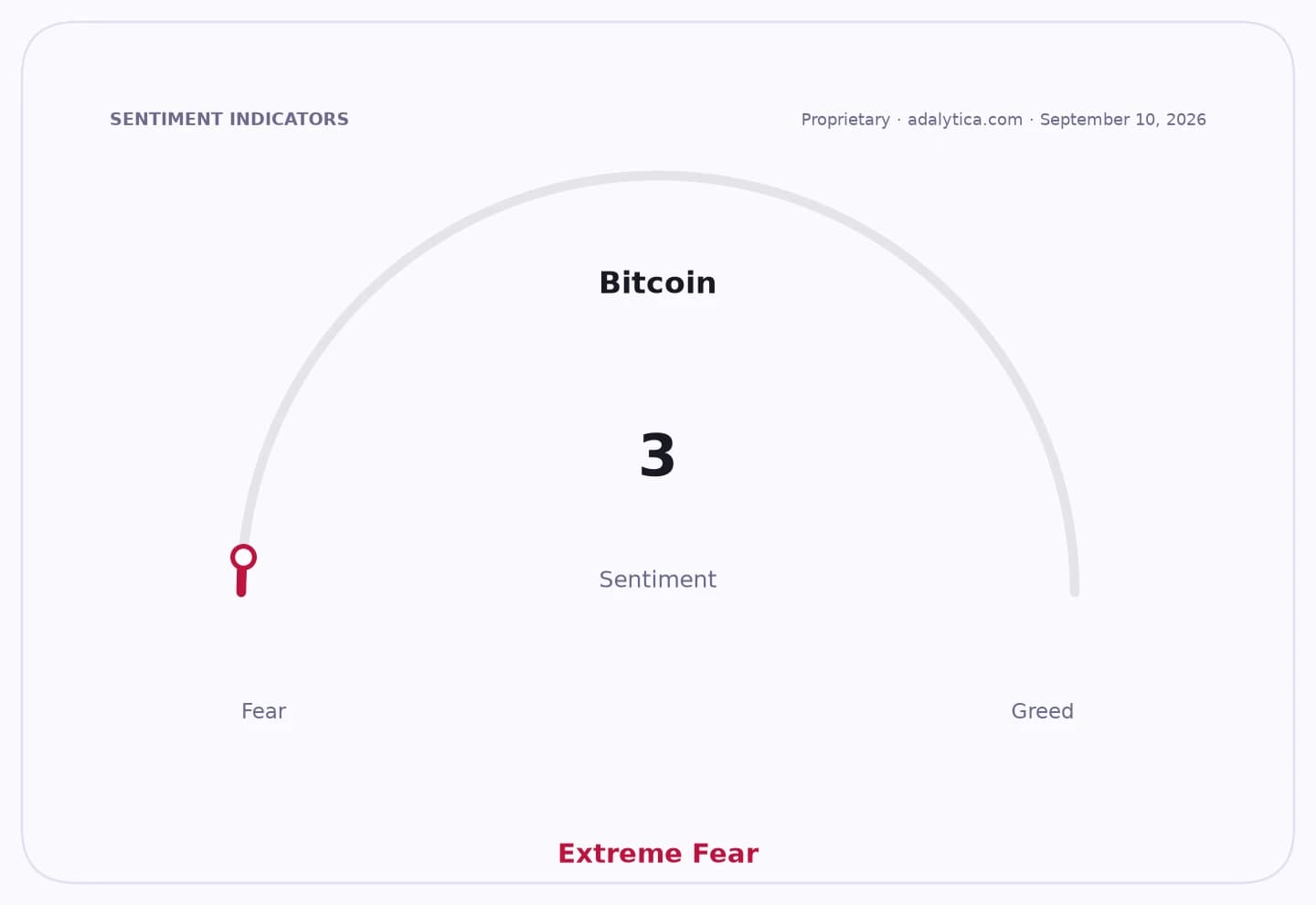
The bigger macro issue is that Ethereum does not trade in a vacuum. Oil pushing toward $100 a barrel has rattled risk assets, and the Fed remains a live variable for capital flows into speculative markets. At the same time, Bitcoin sentiment is already flashing extreme fear in Adalytica.com’s Bitcoin Fear & Greed Index, even as Ethereum sentiment has recovered to neutral. That divergence matters because ETH usually needs BTC to stabilize before the market is willing to assign it a true expansion multiple.
This is why the $6,000 call is more of a scenario than a forecast. A move from roughly $2,500 to $6,000 would require a 2.4x gain from an already massive base. That gets harder as assets get larger, and it is exactly why investors often see more torque in the infrastructure layer and in smaller-cap crypto plays than in Ethereum itself.
The market may be underestimating that second-order effect. Ethereum’s rally can still act as a signal that capital is returning to digital assets, but the highest-beta expression of that thesis may not be ETH at all. If Bitcoin leads and Ethereum follows, the next winners are likely to be the exchanges, trading platforms, staking beneficiaries and blockchain infrastructure names that capture volume, fees and liquidity expansion along the way.
For investors, the takeaway is simple: Ethereum is still the core asset to watch, but the path to $6,000 runs through Bitcoin’s ability to break out first and sustain it. Until that happens, ETH is a trade on consolidation, not conviction. The asymmetric opportunity is to stay positioned for a crypto liquidity upswing, but to favor the picks-and-shovels names that benefit from rising activity even if Ethereum’s own rally takes longer to reach the next major inflection point.
| Entity | Gains | Losses |
|---|---|---|
| Ethereum bulls | ▲Breakout upside | ▼Range-bound chop |
| Bitcoin | ▲Leads next crypto leg | ▼Extreme fear sentiment |
| Crypto exchanges | ▲Higher trading volume | ▼Thin volatility |
| Short-term bears | ▲Mean reversion setups | ▼Momentum squeeze |