Ethereum Holds Above $2,500 as Whale Buying Continues

Ethereum is back above $2,500, and that matters because the move is being driven by accumulation from larger holders just as supply appears to be tightening.
For long-term investors, that combination is more important than any single day’s price action. When whales keep loading up after a sharp correction, it often tells you the market is repricing the asset’s future rather than trading the latest headline. Ethereum has already reclaimed a key psychological level, and with technical momentum improving, the next likely test is whether buyers can push the token toward the $2,920 area that traders are watching.
That would be a meaningful shift from the bruising selloff that dragged Ether as low as $1,821.68 earlier in the year. Since then, Ethereum has rebuilt its footing, with the token closing at $2,527.12 on Sept. 14, above both its 50-day and 200-day moving averages. The relative strength index at 55.3 suggests the rally is not yet stretched, while the conventional MACD is still positive, hinting that the recovery still has room to run if demand holds.
The broader setup helps explain why bulls are getting more confident. Ethereum is coming off what could be one of its strongest third quarters on record, and institutional buying has been showing up at the margin. Bitmine’s largest Ethereum purchase since June is the kind of flow investors should pay attention to, not because one buyer changes the whole market, but because it reinforces a simple reality: Ethereum’s float can tighten quickly when long-term holders start absorbing supply.
That matters economically because Ethereum is not just a speculative trade. It remains the backbone of a large part of the smart-contract and tokenization ecosystem, and that gives it a different kind of utility than many smaller cryptocurrencies. If institutional adoption keeps growing and supply remains constrained, the token can benefit from the same compounding effect investors look for in great businesses: more use, more credibility, and more demand meeting a limited asset.
Pepeto and other newer tokens may offer the kind of upside that attracts traders looking for a faster payoff, but Ethereum still has the deeper moat. It has the larger developer base, stronger network effects, and more established institutional recognition. That does not make it risk-free. Crypto remains volatile, and Ether can swing hard in both directions. But for investors thinking in years rather than days, the key question is not whether Ethereum will avoid volatility — it is whether it can continue turning that volatility into accumulation.
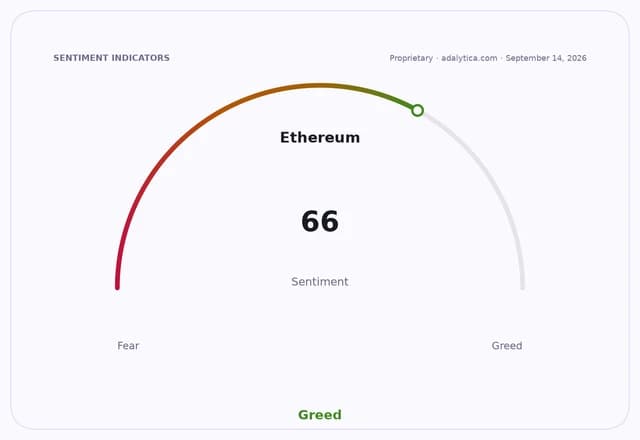
Adalytica’s Ethereum Fear & Greed snapshot has also improved to 66, with awareness at 69, suggesting sentiment is no longer washed out even after the earlier drawdown. That is not a signal to chase blindly. It is a reminder that the market is no longer pricing fear alone.
If Ethereum can hold above $2,500 and build on whale demand, a push toward $2,920 looks plausible. For patient investors, that makes ETH worth watching, especially as a core crypto asset in a diversified portfolio.
| Entity | Gains | Losses |
|---|---|---|
| Ethereum whales | ▲Accumulation at lower prices | ▼Immediate downside if support fails |
| Ethereum holders | ▲Potential rebound toward $2,920 | ▼Volatility and drawdown risk |
| Pepeto and smaller tokens | ▲Attention from speculative traders | ▼Compared with ETH’s stronger moat |
| Short-term sellers | ▲Opportunity to trade swings | ▼Squeezed if ETH breakout continues |