Ethereum Seen as Core Crypto Infrastructure
Ethereum is the cryptocurrency the market is underestimating, and that is why talk of a 13,000% move is not as outrageous as it sounds if the current cycle evolves into a true liquidity and adoption supertrend.
The reason matters far beyond a headline-grabbing price target. Ethereum sits at the center of the next phase of the digital asset economy: settlement, tokenization, smart contracts and the infrastructure that increasingly looks like the toll road for on-chain finance. When the Federal Reserve is holding rates at 3.63% and the 10-year Treasury is near 4.7%, investors are still operating in a world where capital is selective, not abundant. That means only the strongest networks with real utility, deep liquidity and persistent developer demand can command premium valuations when risk appetite returns.
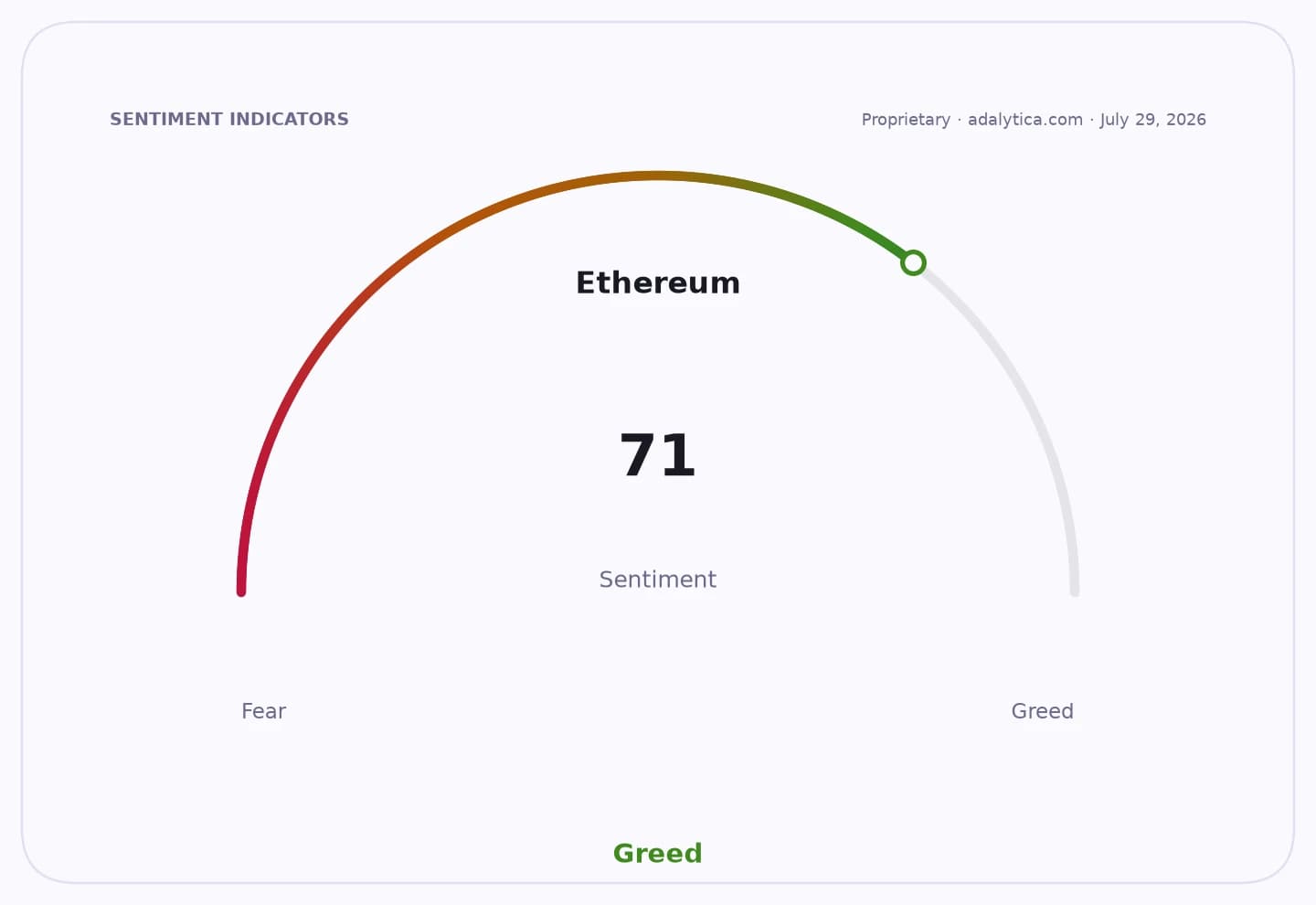
Ethereum is already showing the kind of behavior that tends to precede bigger institutional moves. Its price around $1,910 is well above the 50-day moving average near $1,758, while the RSI at 52.4 suggests momentum has cooled from overheated levels without breaking down. More importantly, the network has regained traction after a brutal winter, with Adalytica’s Ethereum Fear & Greed snapshot sitting in Greed territory at 71 after a sharp 30-day rise in awareness and sentiment. That tells us the market is not just trading Ethereum as a speculative token anymore; it is starting to reprice it as core crypto infrastructure.
Bitcoin’s own setup reinforces that view. BTC is trading around $63,994, above its 50-day average near $63,292, while Adalytica’s Bitcoin sentiment has recovered to Neutral after a volatile month. In plain English, the market is not in full-blown euphoria, but it is rebuilding risk appetite. That is exactly the kind of backdrop in which Ethereum tends to outperform if capital starts rotating from a store-of-value trade into a utility and application trade.
The broader crypto backdrop also strengthens the case for quality over speculation. A wave of bridge attacks, wallet scams and regulatory enforcement is exposing the sector’s weakest operators and draining trust from the fringes. That matters because when fraud rises, capital often consolidates into the most established venues and assets. Coinbase, the dominant U.S. crypto exchange, has already been trading with renewed strength, and the market will continue to reward the regulated, institution-friendly rails while punishing the rest.
That is the real investment thesis behind the “new Ethereum” narrative: not that every altcoin will soar, but that the next leg of crypto leadership may be driven by infrastructure, not memes. If Ethereum becomes the base layer for stablecoins, tokenized assets and institutional settlement, upside can compound far faster than the market expects. A 13,000% gain is not a forecast I would base a portfolio on, but it does capture the asymmetry investors are chasing when a network moves from speculative asset to essential financial plumbing.
For investors, the actionable takeaway is clear: own the picks-and-shovels, not the noise. Ethereum remains the highest-conviction large-cap expression of that thesis, while Coinbase offers a regulated gateway to the same structural adoption trend. If the market is right and crypto enters a new utility-led cycle, the biggest winners will not be the loudest tokens — they will be the networks and platforms that power the system.
| Entity | Gains | Losses |
|---|---|---|
| Ethereum | ▲Utility-led revaluation | ▼Short-term skeptics |
| Coinbase | ▲Higher trading activity | ▼Unregulated venues |
| Bitcoin | ▲Risk-on rotation support | ▼Capital chasing yield |
| Fraud/scam operators | ▲None | ▼Regulatory crackdowns |