Ethereum’s retreat below $2,700 is a reminder that even the market’s strongest long-term bull cases still need a near-term catalyst, but the bigger story is that the selloff has not broken the structural setup behind one trader’s $8,600 target. That makes this pullback less a thesis failure than an inflection point: if ETH can defend key support and reclaim higher resistance, the next leg could be driven by tightening supply, institutional accumulation and a looming network upgrade.
Ethereum Falls Below $2,700 as Traders Watch Support
ETH was trading around $2,673 on Sept. 30 after failing to hold a push above $2,786, with the token slipping through levels that traders were watching for short-term support. The 50-day moving average sat near $2,436, while the 200-day moving average was around $2,110, leaving the spot price well above its longer-term trend lines but under pressure after a sharp rejection. The relative strength index remained elevated at 76.3, suggesting momentum had run hot even as the MACD eased, a combination that often precedes a reset rather than a trend reversal.
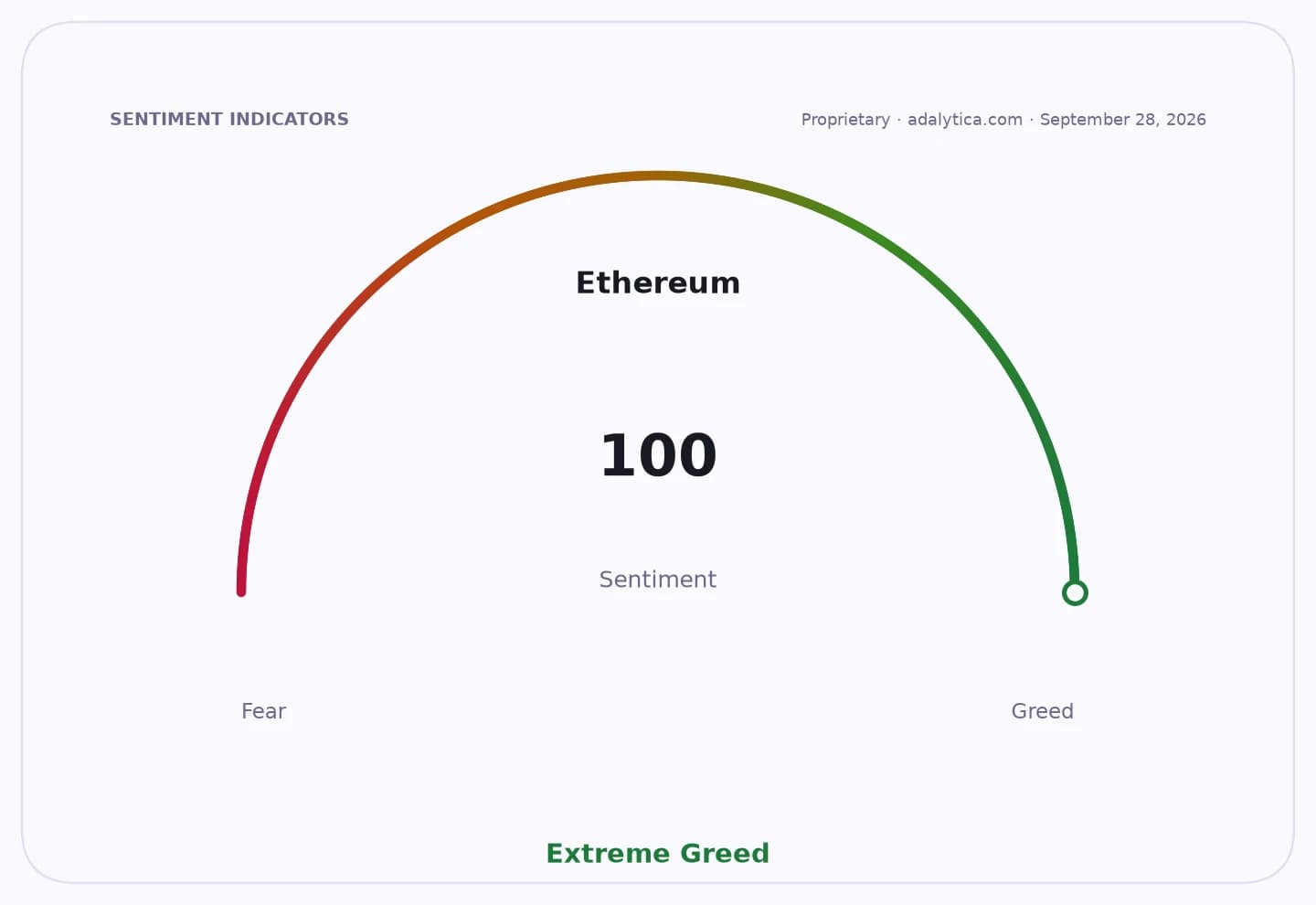
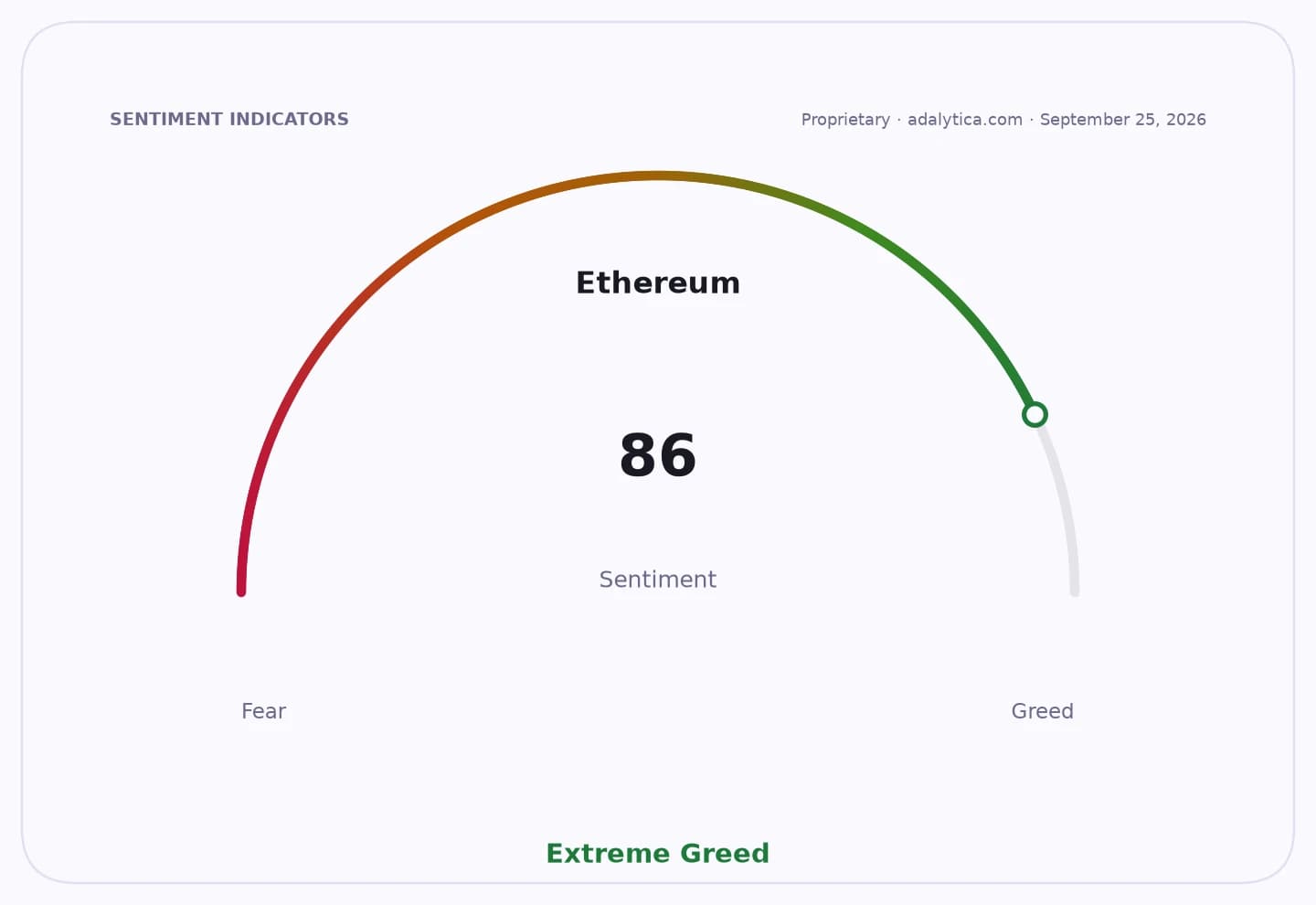
Sentiment IndicatorsⓘProprietary · adalytica.com · September 30, 2026
This is a snapshot — live sentiment, awareness and momentum for 130+ markets update continuously in the dashboard.Open AlphaPulse
That matters because the market is still treating Ethereum as a high-beta macro trade, not a mature cash-flow asset. The move lower has come even as Bitcoin held above $83,000 and its own sentiment gauge from Adalytica stayed in greed territory, underscoring that crypto leadership has not fully disappeared — it is rotating. For investors, that creates opportunity: when ETH weakens without breaking its larger trend, capital typically migrates into infrastructure names, exchanges and early-stage projects that can monetize the next risk-on wave before the token itself reaccelerates.
Peter Brandt’s long-term $8,600 target remains the headline-grabber, but his condition is the real story: Ethereum must first sustain a break above $5,000. From current levels, that is a major gap, which is why the market is not pricing the upside as if it were imminent. Still, the setup is not trivial. Bybit data showed institutional buyers accumulating in the $2,450 to $2,770 range, effectively absorbing supply on dips and helping define a floor. That is the sort of behavior that can turn a correction into a base.
There is also a concrete catalyst on the horizon. The Glamsterdam fork is set to begin on the Sepolia testnet on Oct. 6, giving traders a fourth-quarter event that could revive interest if it improves network economics or throughput expectations. Add that to the persistent demand for Ethereum exposure from institutions and the broader market’s appetite for digital-asset beta, and the case for a violent upside repricing remains intact if support holds.
The investable message is simple: Ethereum itself still offers the cleanest liquid lever on crypto risk, but the highest asymmetry may sit one step down the risk curve. If ETH’s next advance depends on reclaiming $5,000 first, then the market will likely continue rewarding exchanges, infrastructure plays and early-stage tokens that benefit from rising on-chain activity and speculative rotation before the flagship asset clears its next wall.
For now, $2,638 and $2,593 are the levels that matter most on the downside. If they fail, the market could test the Bollinger midline near $2,546 and possibly lower. If they hold, the $8,600 thesis stays alive — not because the move is imminent, but because the supply-demand backdrop still favors Ethereum on the next liquidity surge.
| Entity | Gains | Losses |
|---|---|---|
| Ethereum bulls | ▲Buy-the-dip setup | ▼Short-term momentum |
| Institutional accumulators | ▲Lower entry levels | ▼Late breakout chasers |
| Pepeto / early presales | ▲Attention from risk rotation | ▼If ETH reclaims leadership |
| Short-term traders | ▲Volatility opportunities | ▼Weak support levels |