Ethereum holds near $2,500 as Harmony migrates to ETH
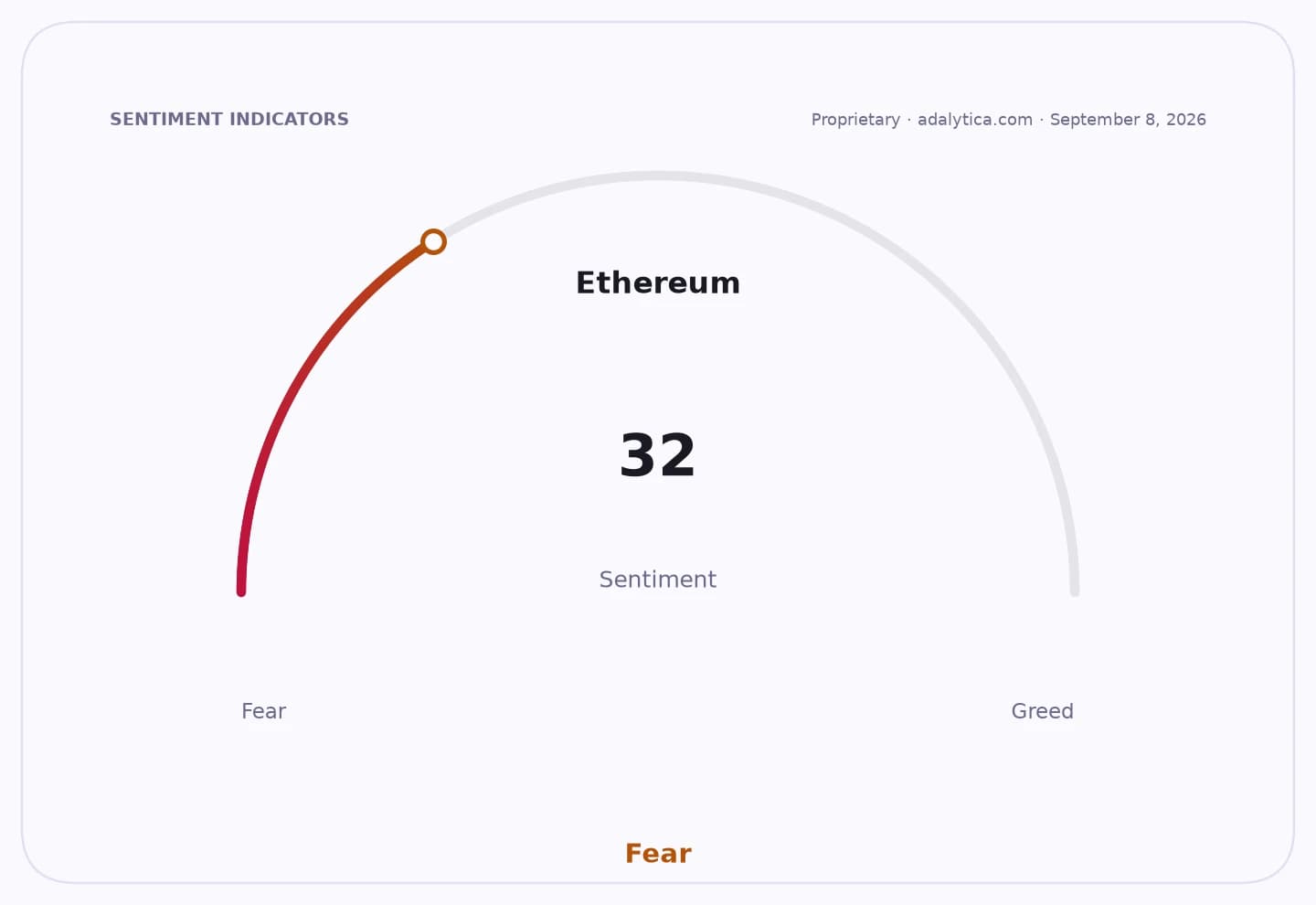
Ethereum is holding near $2,500 even as another Layer-1, Harmony, says it will sunset its own chain and migrate its ONE token onto Ethereum — a sign the market underestimates how quickly ETH is becoming the settlement layer of choice for weaker competitors.
That matters because this is no longer just a price chart story. When a blockchain that once positioned itself as a faster, cheaper alternative to Ethereum decides to shut down validators and airdrop its token onto ETH instead, it reinforces the view that the winners of the next cycle may not be the highest-throughput chains, but the network that already owns liquidity, developers and security. For investors, that shifts Ethereum from “one of many” smart-contract platforms to the toll road the rest of the sector increasingly has to use.
Harmony’s announcement said validators have until Sept. 10 to cease node operations, while token holders will receive a 1:1 airdrop on Ethereum after snapshots across wallets, staking delegations and exchanges. The chain framed the shutdown as a response to threats from “state actors and AI agents,” and it will spend $1.37 million compensating validators who transition into governors for a new “remix economy” project. The details matter less than the direction of travel: another Layer-1 is admitting that fighting Ethereum head-on is a losing capital allocation decision.
Ethereum’s price action fits that narrative. ETH is trading around $2,490, with the token locked in a narrow band after a 70% rebound from earlier-year lows. Daily volatility has compressed, and technicians are watching $2,513 to $2,550 as the key ceiling. A clean break could open a move toward $2,600 and, beyond that, $2,800. Failure there leaves ETH trapped between support around $2,350 to $2,400 and deeper moving-average support near $2,212 to $2,293.
This is exactly why the market is mispricing the setup. At a roughly $300 billion market cap, Ethereum is not the kind of asset where every breakout offers obvious asymmetry. But the chain’s role in the ecosystem may be becoming more valuable even if price is not yet reflecting it. The migration of competing Layer-1 activity onto Ethereum strengthens the base-layer thesis just as the network’s roadmap swings back toward scaling the core chain, rather than relying purely on a sprawling universe of satellites.
That makes the investment case less about chasing ETH at resistance and more about owning the infrastructure that benefits from every new user, wallet migration and settlement event. Ethereum itself remains the cleanest large-cap exposure to that thesis. But the second-order winners are likely to be the picks-and-shovels around it: staking infrastructure, scaling networks, custody, on-chain analytics and the applications that become more valuable as liquidity consolidates.
The trade here is straightforward. If Harmony’s shutdown is a one-off, ETH gets a minor narrative lift. If it is the start of a broader pattern — Layer-1s retreating into Ethereum’s orbit rather than competing for sovereignty — then Ethereum’s current consolidation may prove to be the pause before the market reprices it as crypto’s default settlement layer. For investors, that argues for staying constructive on ETH on pullbacks and looking for the smaller public and private beneficiaries tied to Ethereum adoption, not the fading dream of every chain being an island.
| Entity | Gains | Losses |
|---|---|---|
| Ethereum | ▲More settlement demand | ▼None directly |
| Harmony token holders | ▲1:1 ETH migration | ▼Native chain exposure |
| Layer-1 rivals | ▲Avoid direct competition | ▼Sovereignty narrative |
| Ethereum infrastructure names | ▲Higher activity volumes | ▼Less if ETH stalls |