Ethereum near $1,900 as Solana rivalry tightens
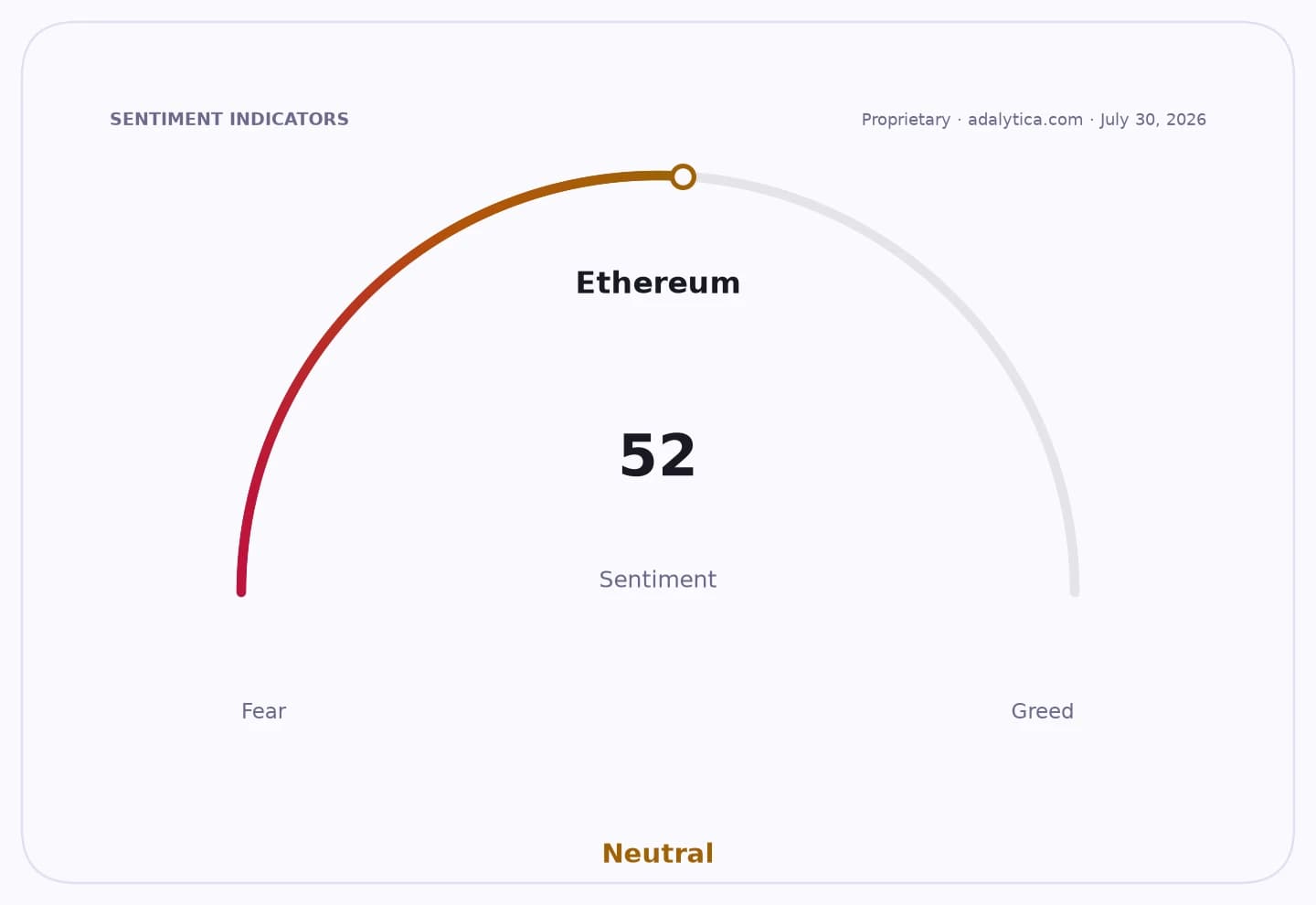
Ethereum is trading near $1,900, a sharp reset that underscores how quickly the market has shifted from rewarding the network’s institutional story to pricing in a more competitive, less forgiving crypto landscape. The bigger message for investors is not just that ETH has fallen — it is that Solana is still forcing a reappraisal of Ethereum’s premium as capital, users and developer attention continue to diversify away from the original smart-contract chain.
That matters economically because Ethereum is still the backbone of the broader digital-asset economy, but its valuation depends on whether it can defend fee generation, transaction share and mindshare against faster, cheaper rivals. ETH closed at $1,901.78 on July 30, down from $1,919.95 the prior session, while Solana hovered around $73.50, leaving the relative price gap enormous but not necessarily comforting for Ethereum bulls. The market is no longer treating ETH as the automatic winner in layer-1 crypto infrastructure; it is treating it as one member of a crowded, capital-intensive platform race.
Technically, Ethereum is holding just above its 50-day moving average of $1,763.25, but it remains well below its 200-day average of $2,122.10, a sign the longer-term trend is still damaged even after the latest stabilization. The RSI reading of 48.3 suggests the token is neither overbought nor washed out, while the MACD is only marginally above its signal line, pointing to a market that is trying to base rather than break out. Solana’s own numbers are weaker in absolute terms, with a $73.50 close, a 50-day average of $74.43 and a 200-day average of $87.10, but its tighter price structure and lower cost profile continue to make it the more aggressive trade when risk appetite turns back on.
The competitive backdrop is what investors should watch. Ethereum remains the most targeted blockchain by hackers in 2026’s first half, while Solana has become the second most affected network after overtaking Arbitrum, a reminder that scale brings scrutiny and security remains a direct economic cost for both ecosystems. At the same time, institutional interest has not disappeared: Ethereum saw $96 million in ETF inflows and Morgan Stanley launched Ethereum and Solana ETPs, showing that large allocators still want exposure to the smart-contract economy even as they diversify their bets.
That combination creates the real opportunity. The market underestimates how this rivalry is changing the investable stack: if Ethereum keeps ceding transactional momentum, the upside may increasingly sit in infrastructure beneficiaries rather than in the base asset alone. That means the highest-conviction trade is not blindly owning ETH as a sole winner, but positioning for the picks-and-shovels layer across custody, staking, scaling, wallets and exchange infrastructure that can monetize activity on both Ethereum and Solana regardless of which chain wins the next round.
In other words, Ethereum’s drop is not a death knell; it is a valuation reset in a platform war. If institutional flows stay positive and security improves, ETH can still recover toward its longer-term averages, but the market is increasingly asking a sharper question: who captures the next wave of crypto capex and usage, and who merely survives it? For investors, the answer argues for owning the infrastructure that profits from the competition, while keeping a disciplined view on ETH until it reclaims both its 200-day trend and its narrative premium over Solana.
| Entity | Gains | Losses |
|---|---|---|
| Solana | ▲Relative momentum | ▼Ethereum’s dominance |
| Ethereum infrastructure plays | ▲Activity from both chains | ▼Narrow ETH-only exposure |
| ETH holders | ▲Potential rebound if flows persist | ▼Valuation premium |
| Solana holders | ▲Lower-fee growth narrative | ▼Higher security scrutiny |