Ethereum Overbought Near Resistance as Sentiment Hits Extreme Greed
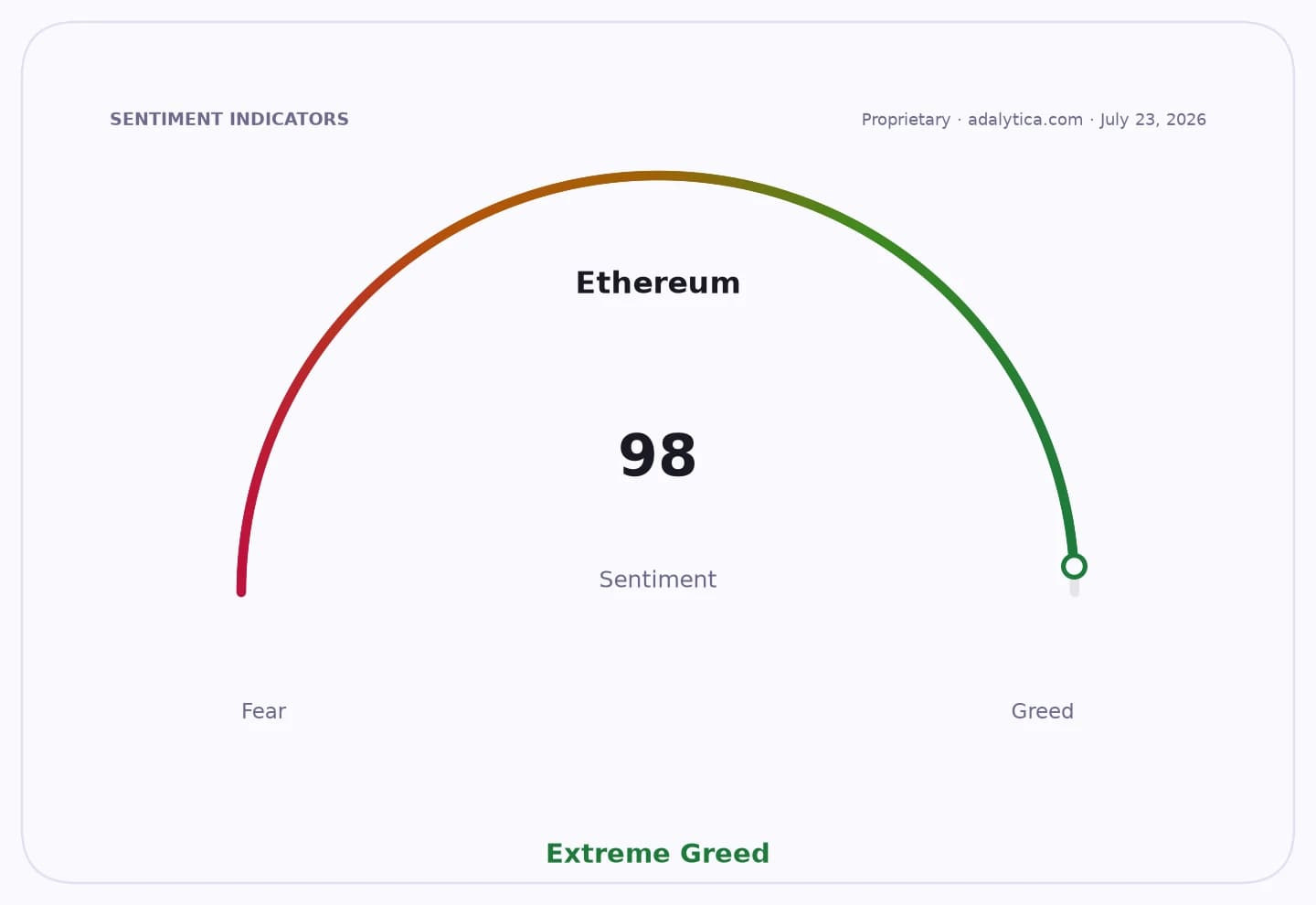
Ethereum is flashing a classic late-stage rally warning: the world’s second-largest cryptocurrency is sitting in extreme-greed territory while its price presses against a short-term ceiling that could decide whether the next move is a breakout or a swift pullback.
That matters because crypto markets do not reward optimism forever. When sentiment gets this stretched, even a modest failure at resistance can trigger forced selling, profit-taking and a sharper-than-expected drop. For long-term investors, the question is not whether Ethereum can stay volatile — it is whether the current move is building a stronger foundation for the next multi-year leg higher.
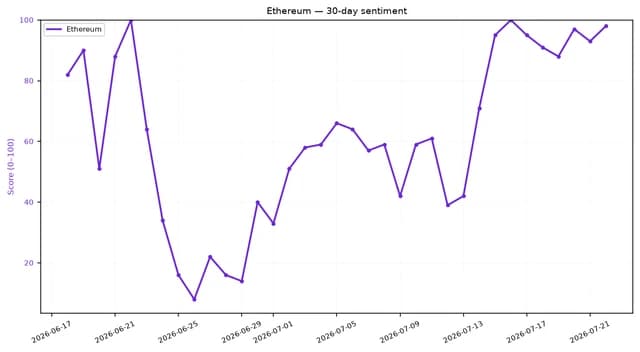
ETH was last trading near $1,932, after a grind higher from $1,904 and $1,928 in the previous sessions. The token is now nudging the upper edge of its Bollinger Band, a conventional technical indicator that often signals stretched momentum. Relative strength readings are elevated at 72.5, which typically means a market is overheating rather than just advancing. That lines up with Ethereum’s fear-and-greed snapshot from Adalytica.com, which shows sentiment at 98, firmly in “Extreme Greed,” while awareness remains neutral at 38.
The setup is important for investors because Ethereum is not moving in isolation. Bitcoin is also priced for perfection, with its own sentiment gauge at 100 and awareness still in “Extreme Fear.” In practice, that leaves both major crypto assets vulnerable if macro conditions wobble or if traders decide to lock in gains after a strong run. When leadership names are this crowded, rallies can extend — but they can also unwind fast.

Still, Ethereum’s longer-term case is not built on price momentum alone. The network continues to benefit from staking demand and institutional interest, and those are the kinds of forces that matter over years, not days. More than 40.8 million ETH are reportedly staked, underscoring how much supply has been effectively taken out of circulation. That kind of structural tightening can support prices over time, especially if ETF inflows remain steady and more institutions treat ETH as a core digital-asset exposure rather than a trading vehicle.
There is also a broader narrative at work here: Ethereum is increasingly being viewed as the blockchain infrastructure layer for tokenization, decentralized finance and on-chain settlement, while Bitcoin remains the cleaner macro hedge. If that split continues, Ethereum could attract investors looking not just for a store of value, but for a network with utility and cash-flow-like economics through staking participation. That is a compelling long-term story, even if the path is uneven.
The risk is that the market gets ahead of itself. Technicals can cool quickly, and an overbought reading near resistance is exactly where traders begin to test the exit. A failure to hold current levels could open the door to the kind of 6% downside implied by the seed outlook, which would not change the long-term thesis but would remind investors that crypto remains a high-volatility asset class.
For patient investors, the takeaway is straightforward: Ethereum still looks like a major secular winner in blockchain infrastructure, but the short-term chart says caution. If you already own it, think in years and not sessions. If you are looking to buy, a pullback may offer a better entry than chasing strength. Either way, ETH remains worth watching closely as the market decides whether this is the start of a durable advance or just another overextended swing.
| Entity | Gains | Losses |
|---|---|---|
| Ethereum long-term holders | ▲Network adoption; staking yield | ▼Near-term volatility |
| Short-term traders | ▲Volatility opportunities | ▼Sudden pullbacks |
| Ethereum treasury/institutional buyers | ▲Accumulation at scale | ▼Slippage on spikes |
| Late buyers | ▲Momentum exposure | ▼Overbought entry risk |