Ethereum tests $3,000 after 30% weekly surge
Ethereum is back at a make-or-break inflection point, and the question now is whether a 30% weekly surge is enough to carry ETH through the $3,000 level and force a broader revaluation of the asset into 2026.
That matters because Ethereum is not trading in isolation. It is the bellwether for the crypto complex after a brutal drawdown, and its rebound is already dragging sentiment across digital assets, exchange volumes and related infrastructure plays. When ETH starts reclaiming lost ground this quickly, the market is usually pricing not just a bounce, but a renewed appetite for risk and a possible rotation back into blockchain-linked equities.
The chart now shows why bulls are emboldened. ETH closed at $2,437.30 on Aug. 29, after a sharp run from $2,515.28 just two sessions earlier and a roughly 30% weekly gain from recent lows. At the same time, the 50-day moving average at about $1,991 and the 200-day moving average near $2,018 are both below spot, a classic sign that the longer-term trend has turned constructive. RSI readings remain elevated at 78.5, which says momentum is powerful but also stretched, while MACD remains firmly positive, confirming that buyers still control the tape.
The immediate hurdle is obvious: the $2,655 area near the upper Bollinger Band is the next technical ceiling, and a clean break above that zone would bring the psychological $3,000 level into focus fast. Until then, ETH is still in the messy middle of a recovery, vulnerable to profit-taking after such an extended run. But markets rarely wait for perfect setups. If Ethereum can hold above $2,400 and continue building on this week’s surge, the path of least resistance shifts higher.
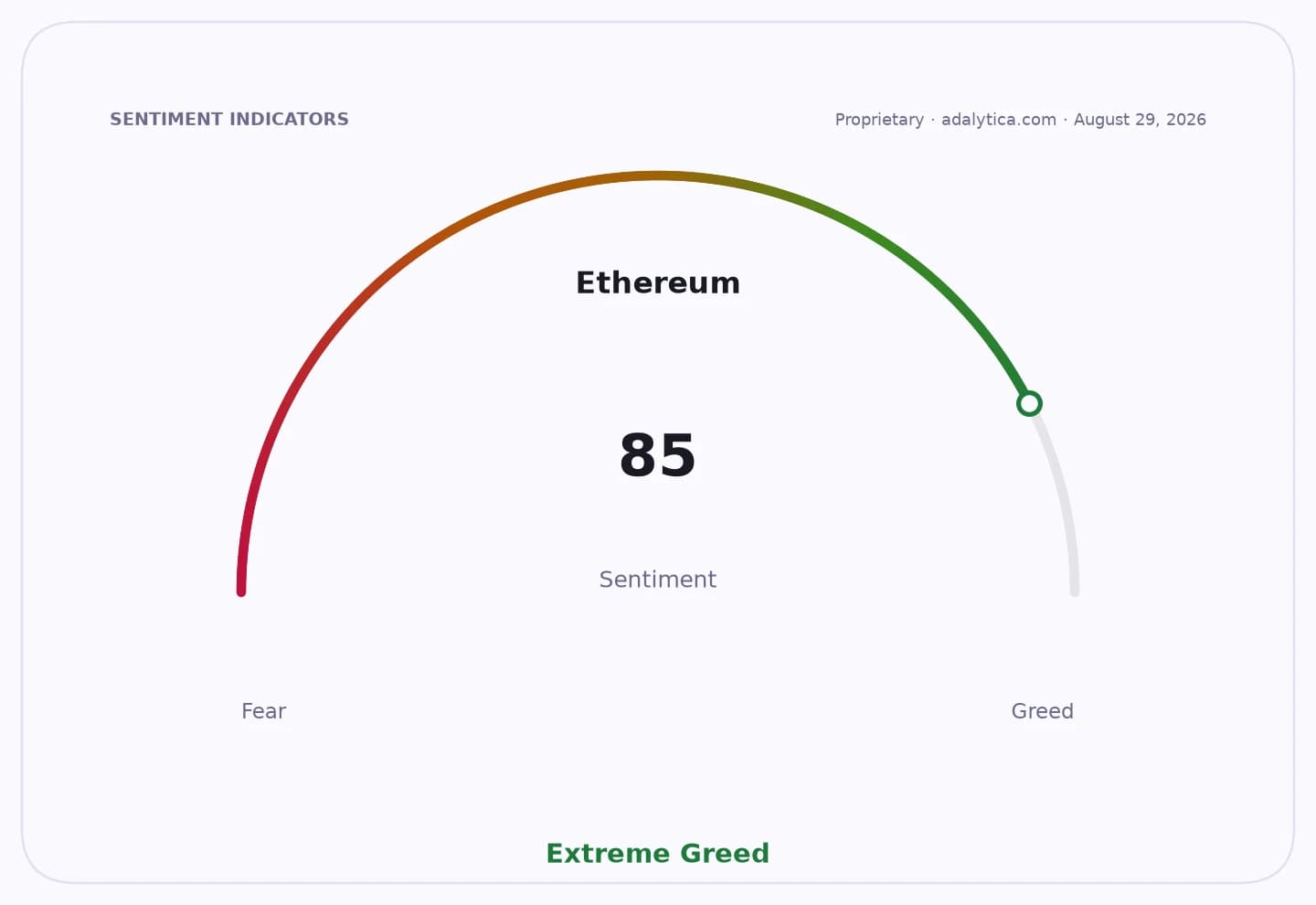
Bitcoin is reinforcing that message. BTC is trading at $77,724.64, with sentiment still in “Extreme Greed,” and Ethereum’s own Adalytica Fear & Greed reading sits at 85, or “Greed,” after a 40-point improvement over the past 30 days. That combination tells you this is not a single-asset anomaly; it is a broader risk-on move that tends to attract more capital if it sustains. In crypto, momentum itself is a catalyst, because rising prices pull in sidelined capital, improve liquidity and revive speculative appetite across the ecosystem.
For investors, the setup argues for selective exposure rather than blind chase. ETH remains the cleaner way to express a rebound in digital-asset infrastructure, while Coinbase offers leveraged exposure to trading activity and fee growth if volumes stay hot. A sustained Ethereum breakout would also favor the picks-and-shovels trade across crypto exchanges, custody, and blockchain-adjacent infrastructure, where earnings torque can outpace the coin move itself.
The real test comes next: if Ethereum can clear resistance and hold that breakout, the market will start treating $3,000 not as a stretch target, but as the next checkpoint in a larger 2026 recovery. If it fails here, the rally becomes just another violent bear-market bounce. For now, the asymmetry still favors the bulls, but only if they can defend this level and keep pressure on the ceiling.
| Entity | Gains | Losses |
|---|---|---|
| Ethereum bulls | ▲Momentum breakout | ▼Chasing a stretched move |
| Crypto exchanges like Coinbase | ▲Higher trading volumes | ▼Fading volatility |
| Bitcoin | ▲Spillover risk appetite | ▼Capital rotation into ETH |
| ETH shorts | ▲Squeezed positioning | ▼Rising mark-to-market risk |