EU Discusses Using Frozen Russian Assets for Ukraine
The European Union is keeping alive one of its most consequential wartime financing debates: whether to use frozen Russian sovereign assets to help fund Ukraine, even as Belgium continues to warn it should not be left carrying the legal and financial risk alone.
EU foreign policy chief Kaja Kallas said after an informal meeting of foreign ministers in Wicklow, Ireland, that “the discussion will continue” after several governments again raised the issue. Her comments matter because the bloc’s options for sustaining Ukraine’s financing are narrowing just as the war drags on and political support needs to be translated into cash.
The core economic question is no longer whether Russia should pay, but how Europe can turn immobilized assets into usable funding without creating precedent or exposure that could boomerang across the financial system. Kallas framed the issue as a matter of justice, saying Russia should pay for the destruction it caused. For investors and policymakers, the issue is more practical: if EU states can agree on a legally durable mechanism, Ukraine gains a potential source of financing without fresh borrowing from taxpayers; if they cannot, the burden shifts back to national budgets, multilateral aid and debt issuance.
Belgium remains the main obstacle because much of the frozen Russian money is held through Euroclear in Brussels, making the country central to any operational plan and unusually exposed to litigation or retaliation. Belgian Foreign Minister Maxime Prévot said in Kyiv last month that his government needs guarantees it will not be left alone with the costs. That concern helps explain why the debate has been pushed forward repeatedly but not resolved.
Pressure is still building for a solution. Sweden, the Netherlands, Spain and Poland have asked the European Commission to revive work on a mechanism to use frozen Russian sovereign assets for Ukraine, underscoring that a coalition inside the EU wants the funds to be mobilized rather than parked indefinitely. But reports of a harder Belgian line show how difficult it remains to turn political consensus into a structure that satisfies both hawkish member states and more cautious capitals.
The market relevance is broader than the sum of the funds themselves. A workable asset-seizure or asset-use framework would tighten the financial squeeze on Moscow and could encourage expectations of further sanctions-related measures. Failure would reinforce the view that Europe’s response to Russia is constrained by legal and internal political limits, which matters for sovereign risk pricing, war-related funding assumptions and the wider trajectory of sanctions policy.
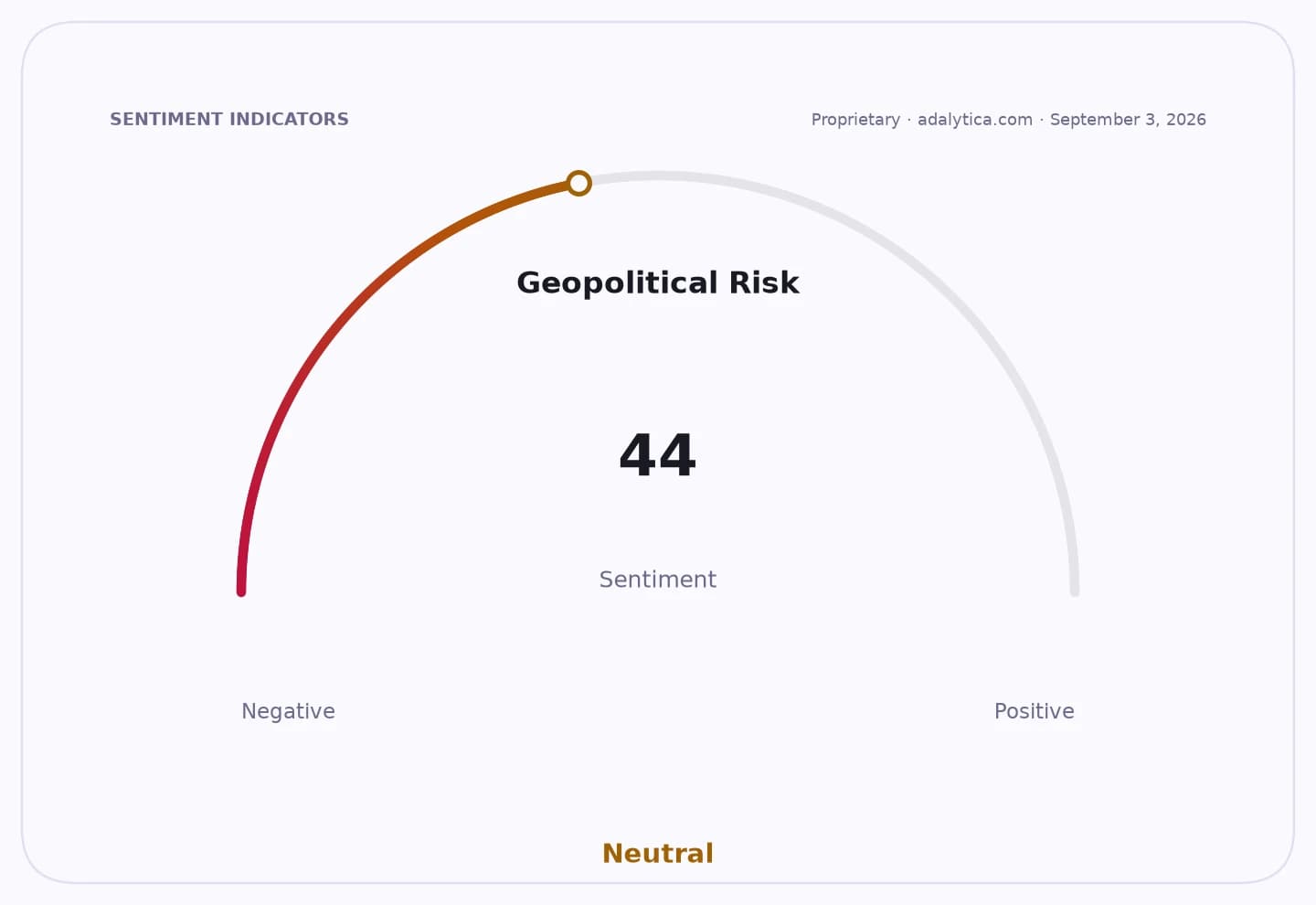
That uncertainty is showing up in broader risk gauges. Conventional market indicators on euro and equity proxies have been mixed, while Adalytica’s Global Stability Sentiment gauge slipped to neutral at 44, down 45 points over seven days, suggesting geopolitical uncertainty is still weighing on confidence even as markets remain orderly.
For Ukraine, the stakes are immediate: any delay forces allies to bridge financing needs another way. For Russia, the asset debate is part of a wider struggle to limit the economic cost of the war and preserve room to maneuver under sanctions. The next test is whether EU governments can move from repeated discussion to a legal framework that Belgium, the Commission and the key capitals can all accept.
| Entity | Gains | Losses |
|---|---|---|
| Ukraine | ▲Potential new funding source | ▼Delayed wartime financing |
| EU hawks | ▲Stronger pressure on Moscow | ▼Legal and political friction |
| Belgium | ▲Risk of limiting exposure | ▼Burden of holding the assets |
| Russia | ▲Avoids immediate asset use | ▼Faces deeper financial pressure |