EU Deepens Philippines Ties as South China Sea Tensions Rise
The European Union is moving closer to the Philippines as the South China Sea dispute hardens into a wider test of trade security, shipping access and alliance politics — a shift that matters because any attempt by China to tighten control over the waterway would ripple far beyond Southeast Asia and into global supply chains.
For Europe, the Philippines is becoming more than a diplomatic sideline. Brussels has strong incentives to support a rules-based maritime order at a moment when its exporters depend on uninterrupted Asian shipping lanes and when the bloc is seeking to reduce concentration risk across critical supply chains. A stronger EU role also broadens the coalition pushing back against unilateral changes to the status quo, even if Europe is still far less exposed militarily than Washington.
The immediate catalyst is China’s increasingly assertive posture in the South China Sea, including its move to frame Scarborough Reef as a national nature reserve, which the United States called a destabilizing tactic. That follows a series of collisions and confrontations around Philippine patrols, reinforcing the view in Western capitals that Beijing is using legal and administrative tools alongside coast guard pressure to normalize its claims without firing a shot. For Manila, outside support from the EU adds diplomatic weight; for Beijing, it raises the cost of portraying the dispute as a purely regional matter.
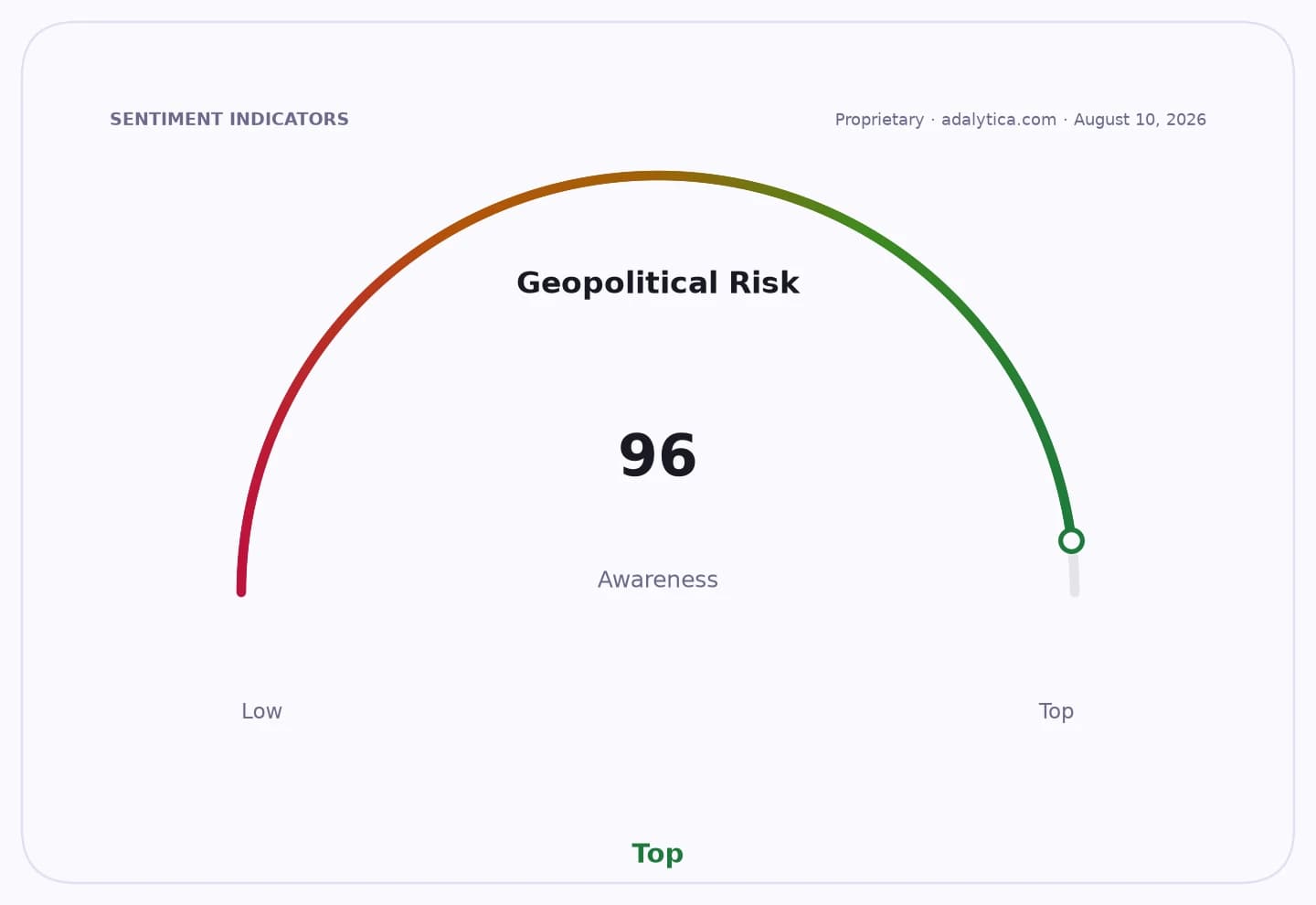
Markets are watching because the South China Sea is not just a sovereignty issue. It is a shipping artery for energy, electronics, commodities and container traffic linking China, Southeast Asia, Japan, Korea and Europe. A more fractured security environment raises the risk premium on trade routes and insurance costs, even if the disruption never reaches a full blockade. That is one reason global risk gauges remain elevated, while US–China relations sentiment in Adalytica’s snapshot sits at 4, in “Extreme Fear,” underscoring how thin investor confidence remains around any escalation.
The market read-through is clearest in broader Asia risk assets. FXI, the large-cap China ETF, has recovered to 36.38 from a recent low near 34.13, but it remains below its 200-day moving average of 36.86, suggesting investors are not yet pricing a durable de-escalation. EEM, the broader emerging-markets ETF, is holding above both its 50-day and 200-day averages, but its momentum has cooled after a sharp run-up, a sign that investors are still discriminating between countries with stronger policy support and those most exposed to geopolitical stress.
The bull case for deeper EU-Philippines ties is straightforward: greater diplomatic backing could help deter miscalculation, encourage crisis management and strengthen the case for freedom of navigation without requiring Europe to take a military role. The bear case is that symbolism may outpace substance. The EU lacks the hard power to change facts at sea, and China may treat European involvement as posturing unless it is paired with sanctions, technology restrictions or coordinated maritime deployments.
Still, the direction of travel is clear. The South China Sea is turning into a litmus test for whether middle powers can defend open sea lanes against incremental coercion. If Brussels continues to elevate the Philippines, investors should expect more friction in China-related assets, a firmer strategic premium across Asian shipping and defense names, and a lower tolerance for any headline that suggests the dispute is edging closer to a maritime crisis.
| Entity | Gains | Losses |
|---|---|---|
| Philippines | ▲More diplomatic backing | ▼Isolation risk |
| EU | ▲Greater Indo-Pacific relevance | ▼Higher China friction |
| China | ▲Narrative leverage | ▼Strategic pushback |
| Global shippers | ▲Clearer deterrence if tensions ease | ▼Higher insurance and route risk |