EU Survey Shows Weak Trust in Brussels
Europeans overwhelmingly still want a stronger, more united and more independent European Union, but a new six-country survey suggests the bloc’s central problem is no longer vision — it is credibility.
The study, published by the Guardian and based on 5,800 interviews in France, Germany, Italy, the Netherlands, Poland and the UK, found 68% of respondents described Europe in terms of “generalized deterioration” or a “loss of normality.” Only 12% saw the current moment as one of “European awakening and renewal,” a split that helps explain why far-right parties have been able to turn talk of decline into an electoral narrative.
That matters economically because confidence is not just a political mood; it shapes willingness to back joint borrowing, industrial policy, defense spending and cross-border reforms that Europe needs to lift growth and strategic autonomy. The survey found 74% think the EU is not handling its main challenges effectively, while 56% said the bloc’s future is at risk. That leaves policymakers trying to sell integration to citizens who still like the idea of Europe but doubt it can act.
The timing is awkward for Brussels. European Commission President Ursula von der Leyen is due to deliver her annual state of the union speech next week, and the report suggests the bloc may need fewer promises and more visible delivery. Among the biggest concerns cited were war, economic pressure and the need for greater autonomy — issues that map directly onto Europe’s energy security, defense procurement, supply chains and competitiveness agenda.
The survey’s most important finding for investors is that public support for European integration remains intact, but it is increasingly fragile and conditional. Some 73% still held a strong European vision centered on unity, peace, security and prosperity, while just 13% wanted less Europe or outright breakup of the bloc. But 39% fell into the “negative” camp, believing Europe’s best days are behind it, and that group included almost all supporters of radical right parties such as Germany’s AfD, France’s National Rally, the Netherlands’ PVV and Britain’s Reform UK.
That creates a familiar policy risk: more fragmentation, slower decision-making and less room for fiscal coordination at the very moment Europe needs scale. Almost a third of respondents referred to a “slow Europe,” and nearly as many said the EU struggles to stand up to stronger powers, with recent concessions to Donald Trump on tariffs cited as a humiliating example of weakness. For markets, that means any renewed push for joint defense, energy or industrial financing could face not just institutional hurdles but a harder political sell.
Pavel Zerka of the European Council on Foreign Relations, who authored the study, said the challenge is not that people stopped wanting a stronger Europe, but that they no longer believe it is achievable. That leaves the bloc’s “uncertain” voters — 31% of the sample — as the critical swing group. They still feel attached to the European project, but are put off by bureaucracy, slowness and the perception that Europe is geopolitically weak.
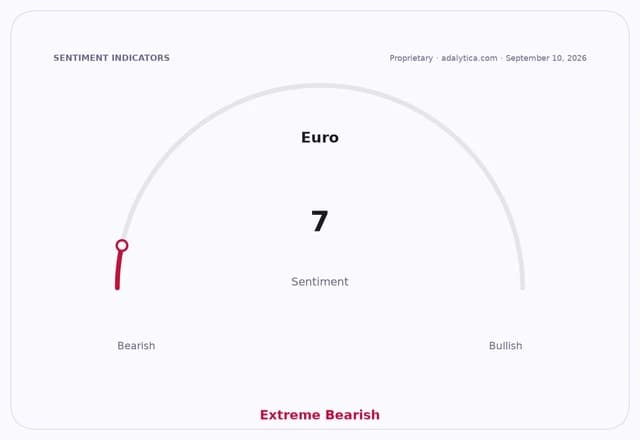
For investors, the message is that Europe’s political center still exists, but it is under pressure from a confidence gap that far-right parties can exploit. The bull case is that most voters still prefer more integration, not less. The bear case is that without tangible improvements in security, living standards and economic resilience, disillusionment will keep feeding parties that argue decline is inevitable. The next test is whether EU leaders can convert broad pro-European sentiment into visible action before the narrative hardens further.
| Entity | Gains | Losses |
|---|---|---|
| Far-right parties | ▲Decline narrative | ▼Pro-EU centrist blocs |
| EU integration advocates | ▲Public support for more Europe | ▼Political credibility |
| Brussels policymakers | ▲Mandate for action | ▼Trust from undecided voters |
| Investors in Europe | ▲Potential reform catalyst | ▼Policy certainty |