EU warns China on trade access by October

Europe is warning Beijing it must show concrete progress on trade and market access by October or face sanctions, a sharper line that raises the odds of a broader economic confrontation between the world’s second-largest economy and its biggest trading bloc.
That matters because the EU is moving from complaints to enforcement. A sanctions threat can quickly spill into tariffs, procurement restrictions, investment screening and export controls, all of which would hit Chinese manufacturers that rely on Europe for demand just as global trade flows are already under strain. For investors, the message is that China exposure in Europe is no longer just a growth question — it is becoming a policy-risk trade with direct implications for margins, supply chains and valuation multiples.
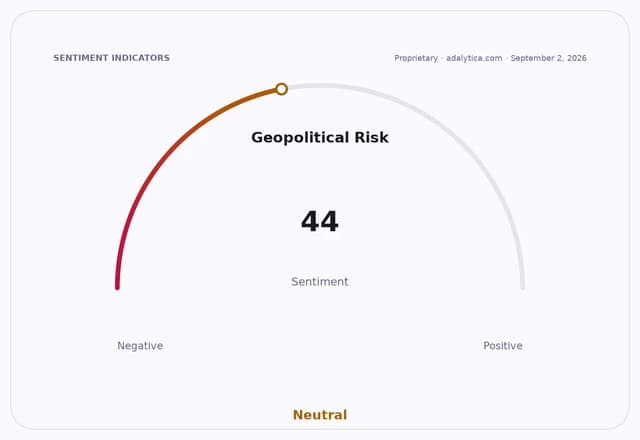
The timing is especially sensitive. Global stability gauges tracked by Adalytica.com have weakened over the past month, while US-China relations sentiment remains only neutral, underscoring how little room there is for another major trade shock. At the same time, the broad China ETF FXI is trading around 35.5, below its 200-day moving average of 36.53, suggesting investors are still pricing China with caution even before any European retaliation is formalized.
The market implication is asymmetric. If Beijing comes forward with credible concessions, the risk premium on Chinese exporters, industrial names and Europe-exposed supply chains could ease. If it does not, the EU has a clear political runway to act, and the losers would likely include China-facing manufacturers, European importers dependent on low-cost Chinese inputs and multinational firms caught in the middle.
This is why the October deadline matters far beyond diplomacy. It is a forcing event that could reshape trade policy into year-end and set the tone for 2027 capital allocation. I believe investors should treat this as an early signal to favor companies that benefit from re-shoring, supply-chain diversification, defense and strategic-industrials spending, while staying selective on China-linked cyclicals until the policy overhang clears.
| Entity | Gains | Losses |
|---|---|---|
| EU policymakers | ▲Leverage on trade demands | ▼Risk of retaliation |
| China exporters | ▲Concessions avert sanctions | ▼Sanctions, tariffs |
| Europe importers | ▲Smoother supply chains | ▼Higher input costs |
| Re-shoring beneficiaries | ▲More investment, orders | ▼Lose from status quo |