Euro Holds Above $1.15 as Dollar Pressure Builds

The euro is holding just above $1.15 while the US dollar remains under pressure from renewed foreign-exchange volatility, with traders watching whether official support for the yen and softer dollar momentum spread to broader currency markets.
The common thread for investors is that FX moves are again being driven less by isolated local stories and more by cross-border flows, central-bank action and commodity pressure. That makes currency hedging more important for exporters, importers and global portfolios, especially as dollar strength and weakness can quickly flip capital flows, trade costs and earnings translations.
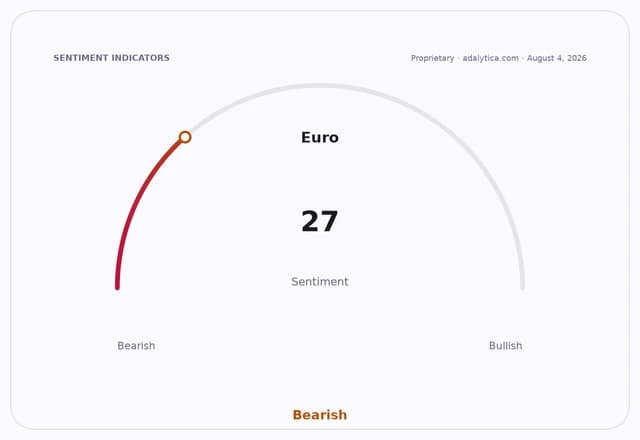
EUR/USD was last at 1.15 on Aug. 4, after peaking at 1.19 in mid-September before sliding back toward its 50-day average. The pair’s recent readings show a market that has cooled from overbought conditions, with the relative strength index near 60 and momentum flattening after the earlier rally.
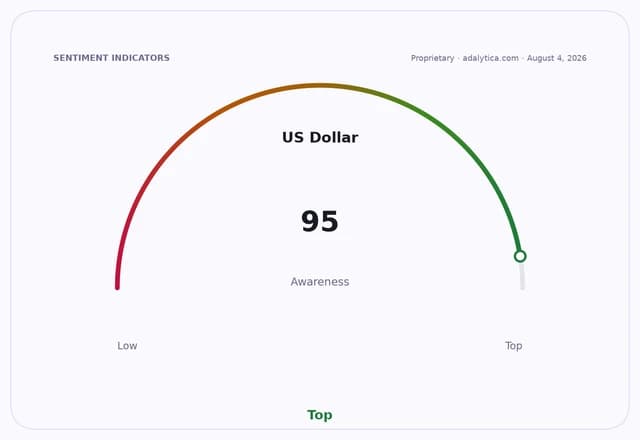
The dollar, meanwhile, is still attracting heavy attention even as its latest trade signal snapshot from Adalytica.com shows extreme greed, a sign of crowded positioning and elevated awareness. FX volatility is also flashing extreme greed, underscoring how quickly macro headlines can move currencies.
That backdrop matters beyond the euro-dollar pair. In Asia, the Indonesian rupiah has weakened to 18,029 per dollar on higher oil prices and a wider trade deficit, while the Indian rupee has also faced pressure from import-related dollar demand. For emerging markets, a firmer dollar can tighten financial conditions, raise import bills and complicate central-bank policy.
The yen is another key swing factor. The dollar has eased against the Japanese currency after coordinated intervention by the US and Japan to support the yen, helping cap further dollar upside and lending support to other major currencies such as the euro.
For investors, the immediate watchpoint is whether the dollar’s pullback becomes a broader trend or just a pause. If volatility stays elevated, currency-sensitive sectors, multinational earnings and sovereign bond markets are likely to see more dispersion, with hedged assets and countries with stronger external balances better positioned than import-dependent economies.
| Entity | Gains | Losses |
|---|---|---|
| Euro | ▲Holds above $1.15 | ▼Loses momentum near resistance |
| US dollar shorts | ▲Benefit from weaker dollar | ▼Risk squeeze if support returns |
| Import-heavy emerging markets | ▲Gain if dollar eases | ▼Hurt by dollar strength and oil prices |
| Exporters with euro revenue | ▲Benefit from firmer euro | ▼Lose if euro slips back |