Euro rises as dollar weakens on trade and rate outlook

The euro edged higher against the dollar on Tuesday as investors kept selling the greenback on mounting trade friction and a less supportive U.S. rate backdrop, leaving the single currency near recent highs after a period of consolidation.
The move matters because the dollar’s latest retreat is being driven less by day-to-day positioning and more by a deterioration in the macro story that usually supports U.S. assets: tariff escalation, lingering fiscal concerns and an interest-rate profile that no longer offers the same premium over Europe. The euro’s ability to hold gains even as spot trading has been quiet suggests the market is still building a modest anti-dollar case rather than treating the pullback as a one-off bounce.

That backdrop is visible in rates. The U.S. 2-year Treasury yield stood at 4.24%, while the 10-year was around 4.70%, levels that are still elevated by historical standards but have not prevented the dollar from weakening. Futures pricing implied the Federal Reserve funds rate around 3.63%, with only a slight decline expected next month, signaling that investors see limited room for another sharp U.S. rate advantage to emerge quickly. In Europe, the euro has been steady near $1.17, with technical indicators showing it trading above both the 50-day moving average and the 200-day moving average, while RSI readings in the mid-70s point to a strong, if somewhat stretched, trend.
For investors, the dollar’s slide has broader implications than the euro-dollar pair alone. A weaker dollar tends to ease financial conditions globally, supports non-U.S. risk assets and can improve returns for dollar-based holders of foreign assets. It also reflects the market’s growing discomfort with the policy mix in Washington, where tariffs are feeding inflation concerns even as businesses worry about demand and employment. That combination is awkward for the dollar, which usually benefits from U.S. growth resilience and policy clarity.
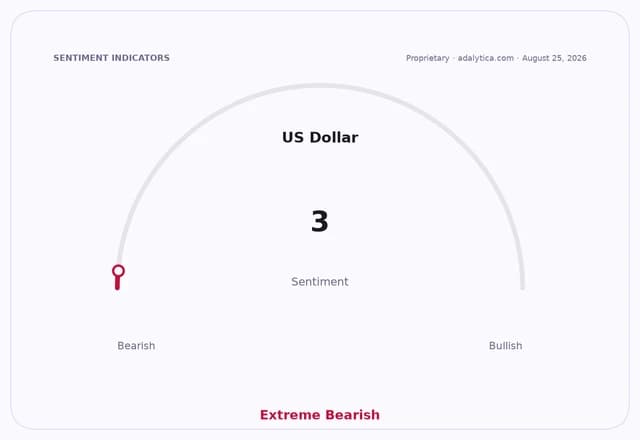
The euro’s relative resilience also speaks to the other side of the equation: Europe is not rallying on a particularly strong growth story, but it does not need one to benefit from a softer U.S. currency. When the market loses conviction in the dollar, the euro often becomes the main alternative reserve and funding currency, especially when volatility stays contained. The FX volatility gauge remained neutral, suggesting the latest move is still being expressed through spot positioning rather than panic.
The bull case for the euro is that the dollar’s domestic headwinds persist: tariff uncertainty, debt worries and a Federal Reserve that is not expected to reassert a hawkish edge in the near term. The bear case is that the euro’s advance is running ahead of fundamentals, with momentum already extended and the pair near the top of its recent range. For now, the market is giving the benefit of the doubt to the currency that is losing more trust, not the one suddenly gaining much more growth appeal.
If the dollar’s decline deepens, the next tests will be whether U.S. data and policy commentary can restore yield support, and whether trade tensions intensify enough to keep capital flowing out of the greenback. Until then, the euro looks set to keep drawing modest support from a U.S. backdrop that is becoming harder for dollar bulls to defend.
| Entity | Gains | Losses |
|---|---|---|
| Euro | ▲Relative currency strength | ▼Exporters to the U.S. |
| U.S. dollar | ▲— | ▼Reserve-currency appeal |
| European investors | ▲Higher FX translation returns | ▼Dollar hedges become costlier |
| U.S. importers | ▲Cheaper foreign purchases | ▼Inflation pressure from tariffs |