Euro Slides to $1.15 as Dollar Yields Rise

The euro has slid to $1.15, its weakest level in the latest move lower, as investors price in a widening growth and yield gap between Europe and the United States that continues to punish the common currency.
That matters because currencies do not fall in a vacuum: they reflect where capital expects higher returns, stronger growth and tighter policy. Right now, the euro zone is looking increasingly vulnerable on all three counts. U.S. Treasury yields keep climbing, with the 10-year near 5.04% and the 2-year at 4.75% in the latest forecast, while Europe remains mired in economic weakness that has dragged industrial activity, wages and confidence lower. The result is a classic capital-flow trade — money chasing dollar assets while the euro becomes the funding currency of choice.

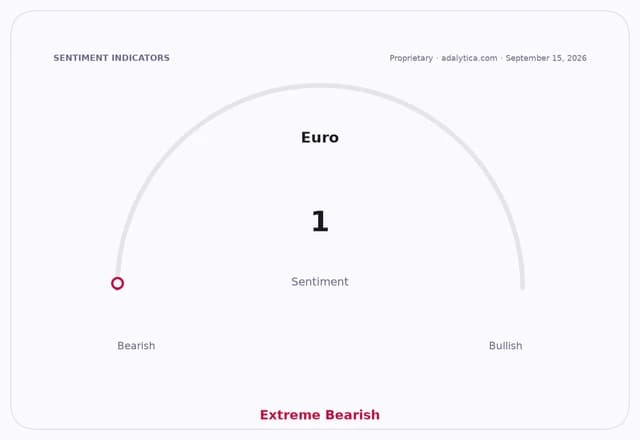
The market is already voting with its feet. FXE, the euro-tracking ETF, has slipped to 106.49 and is trading below its 200-day moving average of 107.0, with the RSI falling to 28.8, a level that shows the currency is deeply oversold by conventional technical measures. The euro-dollar pair is also sitting under its 200-day average near 1.16, reinforcing the idea that sellers remain in control. In Adalytica’s Euro Trade Signals, sentiment is pinned at 1 — extreme fear — while the 30-day change shows a 98% collapse in the reading, a sign that positioning has turned decisively bearish.
This is not just a chart story. Europe’s malaise is feeding the currency break. Reports point to declining industrial production, falling employment and shrinking purchasing power, especially among younger workers, with wages stagnating in countries such as France and Finland even as inflation pressure persists. That combination is toxic for a currency: weaker domestic demand reduces growth expectations, while political and fiscal strains limit the ability of governments to respond aggressively. Investors know that a softer economy usually means a softer currency, especially when the Federal Reserve can still keep U.S. rates elevated.
For investors, the implications run beyond euro bears. A weaker euro benefits European exporters that bill in dollars, but it also tightens the squeeze on importers, consumers and policymakers already coping with fragile growth. It can boost translated earnings for multinational companies with big overseas exposure, yet it increases the cost of energy and other imported inputs for Europe’s domestic economy. In portfolio terms, the trade is clear: long-dollar exposure, underweight euro-sensitive domestic cyclicals, and favor exporters and U.S. assets that benefit from capital fleeing weaker regions.
The bigger narrative is that the euro’s latest setback is less about one bad session than about a structural repricing of Europe versus the United States. Unless Europe can arrest its slowdown or U.S. yields retreat meaningfully, the path of least resistance for the currency remains lower. For now, the market is telling you to respect the dollar uptrend, not fight it.
| Entity | Gains | Losses |
|---|---|---|
| U.S. dollar | ▲Yield advantage, capital inflows | ▼— |
| Eurozone exporters | ▲Stronger foreign revenues | ▼Higher import costs |
| Eurozone consumers | ▲— | ▼Weaker purchasing power |
| FXE / euro bulls | ▲— | ▼Break below key moving averages |