Euro Stabilizes as Dollar Momentum Weakens

The euro held a constructive tone against the dollar even after easing from the previous session’s high, signaling that the broader downtrend in the greenback may be losing momentum rather than reversing outright.
That matters because FX moves are increasingly being driven less by euro-specific weakness and more by a softer U.S. dollar backdrop. The latest price action in the FXE exchange-traded fund, which tracks the euro, showed a small retreat to 105.58 on July 15 from 105.39 and 105.01 in prior sessions, but the move came alongside improving short-term momentum: RSI climbed to 64 from 56.7 and the MACD remained above its signal line. FXE is still trading below its 50-day and 200-day moving averages, however, which suggests the market is recovering inside a wider consolidation rather than confirming a full trend reversal.
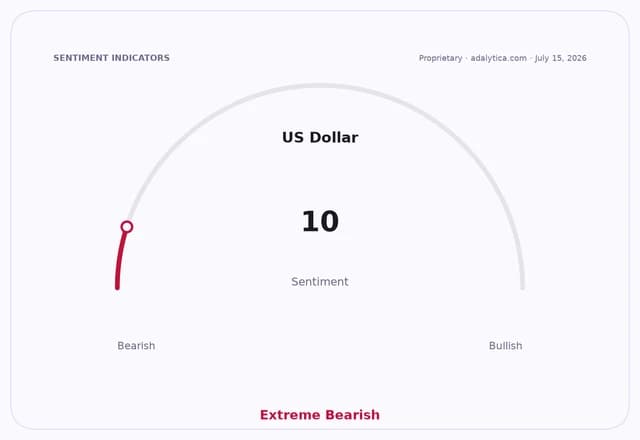
The dollar picture looks weaker still. UUP, the U.S. dollar ETF, slipped to 28.29 from 28.39 and 28.50, with RSI falling to 37 from 46.7 and 58 earlier in the week, a sign that bullish dollar momentum has faded quickly. The ETF remains above both its 50-day and 200-day moving averages, so the longer-term trend is not broken, but the short-term setup has clearly deteriorated. That combination helps explain why EUR/USD can hold firm even when it does not extend sharply higher.
The technical backdrop points to a market still trying to build a base. FXE has climbed from its early-July low of 104.95, while the dollar fund has come off recent highs near 28.50. The euro’s own trade signals from Adalytica.com remain in “Extreme Fear,” showing how fragile sentiment still is despite the price stabilization. In other words, the market is not yet embracing a strong euro thesis; it is merely finding less reason to chase the dollar higher.

For investors, the key implication is that the euro may continue to outperform on a relative basis if U.S. dollar longs keep unwinding, even without a fresh euro-zone catalyst. That would matter across asset classes: a steadier or firmer euro can ease imported inflation pressures in Europe, improve sentiment toward European risk assets and temper some of the support that a strong dollar has offered to U.S. multinationals. But as long as FXE remains below its longer-term averages, traders are likely to treat rallies as tactical rather than structural.
What to watch next is whether FXE can reclaim the 106.50-106.60 area and hold above it, while UUP stays under pressure near the low end of its recent range. A sustained break in the dollar would be the cleaner signal that EUR/USD’s bullish tone is becoming something more durable.
| Entity | Gains | Losses |
|---|---|---|
| Euro bulls | ▲Tighter downside | ▼Need a stronger catalyst |
| Dollar bulls | ▲Longer-term trend intact | ▼Short-term momentum |
| European equities | ▲Softer FX headwind | ▼Exporters on a stronger euro |
| U.S. multinationals | ▲Translate less FX support | ▼Domestic importers |