Europe AI Growth Gap and Semiconductor Trade

Christine Lagarde has tied Europe’s ability to compete in artificial intelligence to something the region has struggled to deliver for years: faster corporate growth.
That matters because AI is no longer just a software story. It is becoming a capital-spending cycle, a productivity race and, for Europe, a test of whether its companies can scale quickly enough to justify the infrastructure, talent and financing needed to stay in the game. If they cannot grow, the continent risks becoming a consumer of AI built elsewhere rather than an owner of the economics.
Lagarde’s message lands at a moment when the market is already trying to price the next phase of the AI trade. The VanEck Semiconductor ETF, which tracks chipmakers tied to the buildout, has surged from 324.33 on Oct. 10 to 569.77 on Aug. 18, even after a recent pullback from 655.89 on June 30. Its 50-day moving average near 590.82 and a still-elevated RSI of 71.1 suggest the sector remains stretched, not broken. Investors are still paying for AI infrastructure, but they are becoming more selective about who captures the value.
That selective phase is exactly where Europe’s problem becomes an opportunity. The region has the industrial base, the energy ambitions and the regulatory reach to matter in AI, but it lacks the kind of hyper-scaling platforms that turn adoption into explosive revenue growth. Anthropic’s reported sevenfold revenue jump underscores how quickly demand can compound when product-market fit is real. Europe’s challenge is that its companies often do not scale with the same speed, which limits reinvestment, margins and ultimately the return on AI capex.
For investors, that creates a clear divide. The winners are the picks-and-shovels names supplying compute, networking, memory and power equipment, along with European firms that can use AI to widen margins in manufacturing, logistics and financial services. The losers are incumbents that treat AI as a cost-cutting exercise rather than a growth engine, and any European policy regime that prioritizes restraint over scale.
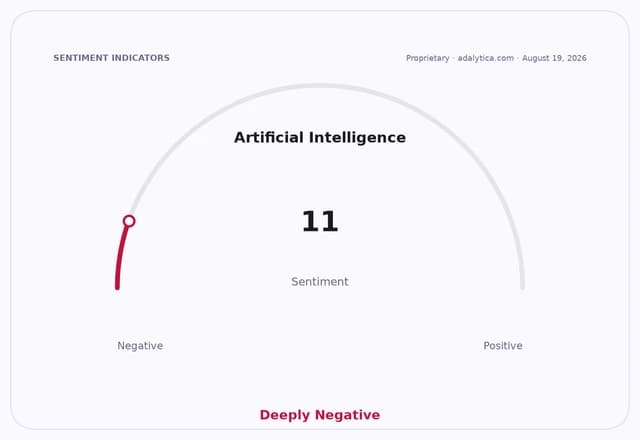
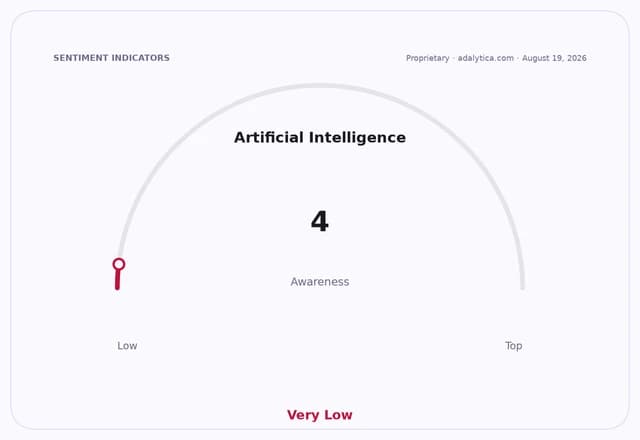
The market is already showing how unforgiving this can be. Europe-focused assets have been choppy, with the iShares MSCI Poland ETF trading at 62.72 after peaking at 63.27 on Aug. 14, and the broader semiconductor complex still volatile despite the long-term AI capex thesis. Even where sentiment has turned fearful — Adalytica’s AI snapshot shows extreme fear — that can be the setup for the next leg higher if corporate spending keeps accelerating and earnings follow.
The real investment takeaway is simple: Europe does not need to “win” AI everywhere to benefit, but it does need more companies that can grow fast enough to monetize it. Until that happens, the upside in Europe will remain concentrated in the infrastructure layer and a handful of scale-capable operators. The opportunity is to own the enablers now, before the market fully prices how much of Europe’s AI future will be built on someone else’s rails.
| Entity | Gains | Losses |
|---|---|---|
| AI infrastructure suppliers | ▲More capex demand | ▼Valuation resets if spending slows |
| European scale-capable firms | ▲Productivity and margin upside | ▼Smaller rivals |
| Legacy slow-growth incumbents | ▲Limited benefit | ▼Share loss in AI race |
| Europe policymakers | ▲Growth agenda leverage | ▼Credibility if firms cannot scale |