Europe far-right politics raise policy risk for investors

Far-right politics and anti-immigrant sentiment are moving deeper into Europe’s political mainstream, raising the risk of more volatile elections, harder migration policies and a more fractured policy backdrop for investors.
That matters because Europe’s growth model depends on open labor markets, cross-border trade and institutional predictability. When racism, Islamophobia and anti-migrant rhetoric become campaign staples rather than fringe talking points, the economic cost can show up in weaker labor supply, slower integration of foreign workers and more policy uncertainty just as the region is trying to stabilize growth and manage energy, defense and industrial policy pressures.
The clearest immediate implication is political risk. Germany’s election debate, where the far right was already central before results were known, is emblematic of a wider European pattern: immigration is no longer a side issue, but a defining fault line. That tends to pull mainstream parties toward tougher stances, even when the economics argue for labor-market openness in aging economies. For businesses, that can mean more restrictive hiring rules, tighter asylum policy and a harder operating environment for sectors reliant on imported labor, from construction to logistics and care services.
The narrative is not just about elections. It is about a continent trying to reconcile its liberal values with voter anxiety over migration, identity and security. The article’s focus on Islamophobia and migration pressure reflects a broader shift in political messaging that can also affect social cohesion and investment confidence. Markets generally dislike uncertainty that is driven by politics rather than fundamentals, especially when it spills into regulation, border policy and EU coordination.
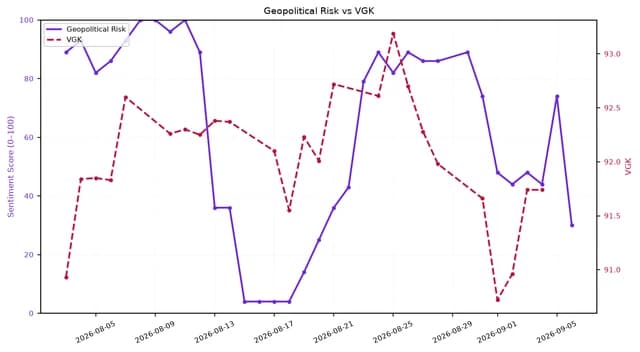
That backdrop helps explain the cautious tone in European assets. The euro area funds tracked here have been firmer recently, with VGK and FEZ both trading above their 50-day and 200-day moving averages, suggesting investors have not abandoned Europe entirely. VGK closed at 91.74 on Sept. 4, above its 50-day average of 90.38 and 200-day average of 85.84, while FEZ finished at 70.65 versus a 50-day average of 69.76 and 200-day of 65.78. EWG, which tracks Germany, also held a modest technical uptrend, closing at 43.89 above both its 50-day and 200-day averages.
Still, the technical picture also shows fragility. VGK’s RSI reading of 47.2 and FEZ’s 36.1 suggest neither market is in overheated territory, but neither is there evidence of a decisive risk-on surge. Germany’s EWG, despite its rebound, has only recently recovered from a deeper selloff and remains well below levels that would indicate strong conviction. The picture is consistent with an investor base that is willing to own Europe, but not to pay up for political stability.
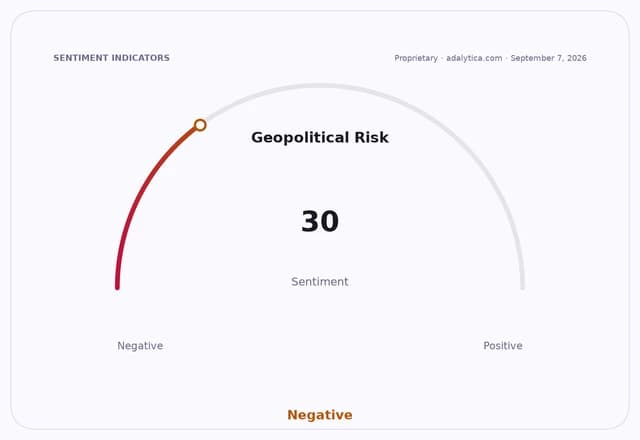
Adalytica’s Global Stability Sentiment gauge, which has dropped to a fear reading of 30 after sharp one-day and one-week declines, underscores that broader geopolitical anxiety is elevated. By contrast, Adalytica’s euro trade signals show greed at 75, a reminder that investors still see some relative value in European assets. The tension between those two readings captures the core story: Europe can attract capital on valuation and diversification grounds, but rising far-right politics can keep a lid on multiples by raising the policy discount.
For investors, the key question is not whether Europe will abandon democracy or integration, but whether repeated elections and a harder line on migration will slowly erode the continent’s labor supply, social stability and policy coherence. If that happens, the effect would be subtle at first: tighter labor markets, more wage pressure in selected sectors, and a greater premium on countries and companies seen as insulated from political volatility. If far-right influence keeps rising, those costs could become broader and more lasting.
| Entity | Gains | Losses |
|---|---|---|
| Far-right parties | ▲Electoral support | ▼Political isolation |
| Mainstream Europe | ▲Short-term voter appeal | ▼Policy coherence |
| Employers in labor-hungry sectors | ▲None | ▼Access to workers |
| Investors in stable EU policy | ▲Defensive entry points | ▼Higher political risk |