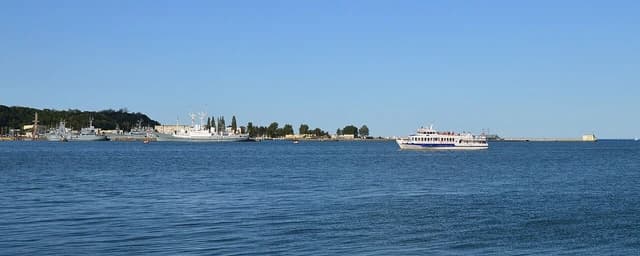
Germany’s call to make Kaliningrad a “costly strategic vulnerability” for Russia is more than rhetorical escalation: it underscores how Europe’s security map is being redrawn around deterrence, missile defense and long-cycle rearmament, a shift that should keep defense spending elevated even if front-line fighting in Ukraine eventually cools.
Europe’s rearmament keeps defense stocks bid
The economic significance is straightforward. A more confrontational posture toward Russia’s Baltic exclave raises the premium on air defense, long-range strike, electronic warfare and command-and-control systems across NATO’s eastern flank. That means more procurement, more replenishment of depleted inventories and more urgency behind industrial capacity expansion in the U.S. and Europe. In other words, this is not a one-off headline for generals — it is a demand signal for defense contractors, suppliers and the broader military-industrial base.
Markets are already treating that theme as durable. Northrop Grumman has recovered from a spring selloff and was trading at $530.98 on July 14, above its 50-day average near $540.56, with momentum healing as the RSI moved back to 58.0 and MACD turned less negative. Lockheed Martin, the most direct proxy for missile defense and advanced weapons demand, has rebounded to $517.38 after a deep drawdown and now sits near its 50-day average, with the shares stabilizing after a dramatic spring reset. RTX, another beneficiary of higher air-defense and interceptor demand, has climbed back to $194.47, well above its 50-day and 200-day averages, with RSI at 64.0, suggesting investors are starting to price a sustained geopolitical tailwind rather than a temporary wartime spike.
The macro backdrop reinforces that view. U.S. 10-year Treasury yields are around 4.58% and two-year yields about 4.22%, a reminder that capital is not being handed out for free anymore. That makes defense’s cash-flow visibility and government-backed order books more valuable, not less. When the cost of capital is this high, secular demand with budgetary support wins out over cyclical hope trades. Europe’s rearmament cycle, amplified by fear of a wider Russia-NATO confrontation, is one of the clearest long-duration capex stories in the market.
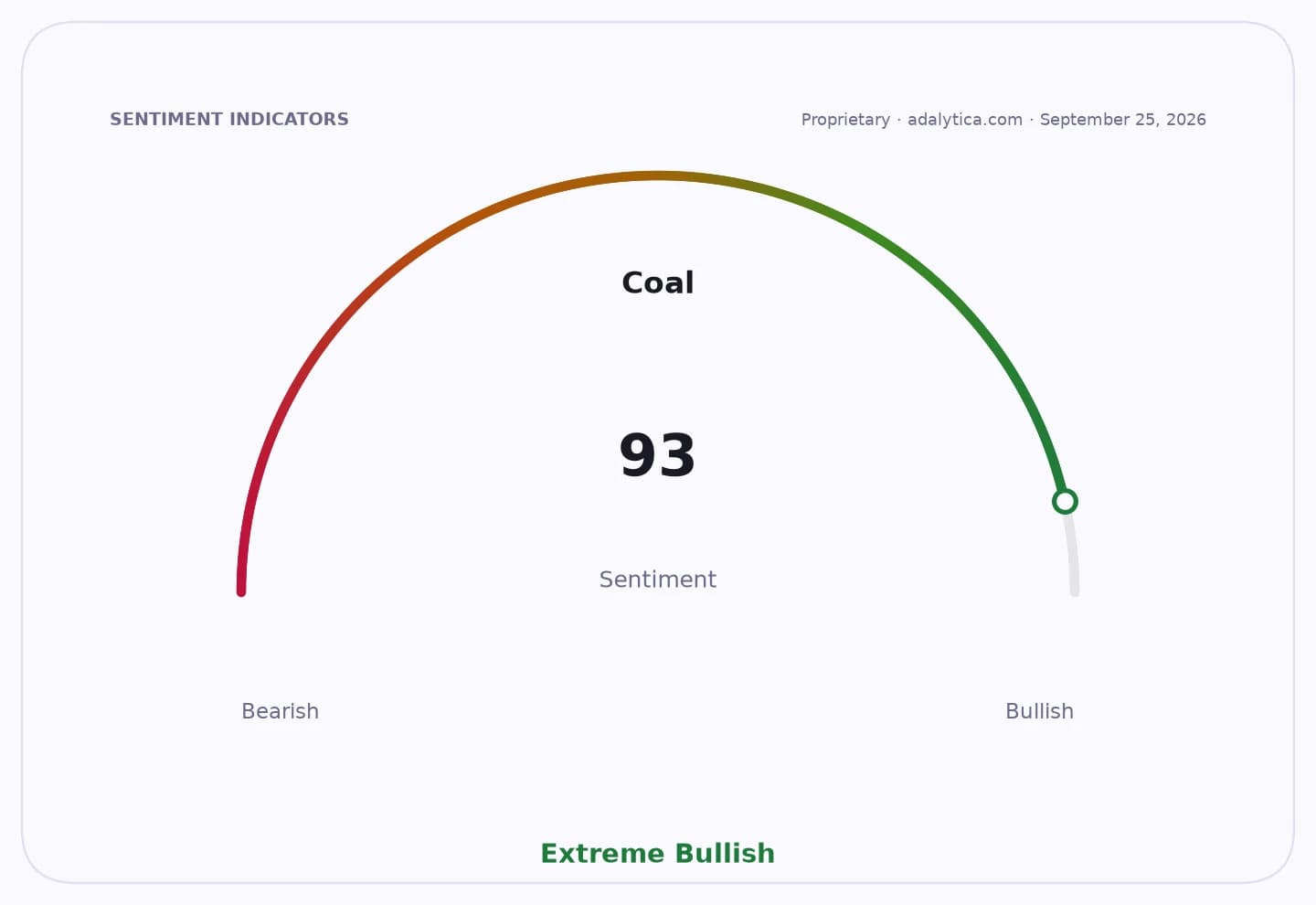
Geopolitical Risk — 30-day sentimentadalytica.com
Explore this data interactively — full history, time series and cross-market comparisons.Open AlphaPulse
Investors should also pay attention to who benefits indirectly. The real upside is not just in primes like LMT, RTX and NOC, but in the suppliers, electronics makers, propulsion names and ammunition producers that sit further down the chain. The market underestimates how long it takes to rebuild stockpiles, expand factories and qualify new systems. That lag creates pricing power and multi-year visibility for companies that can actually deliver hardware, not just headlines.
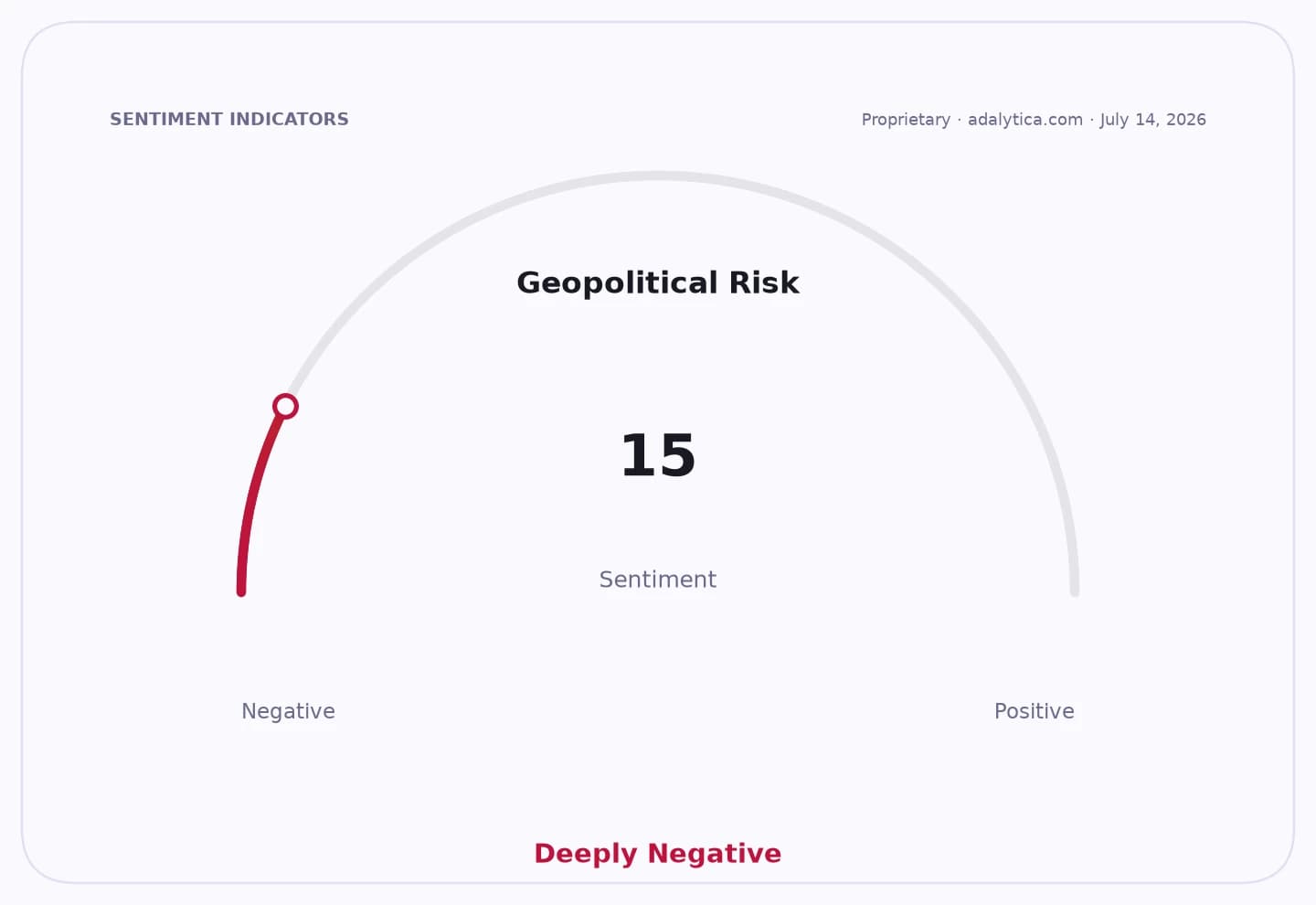
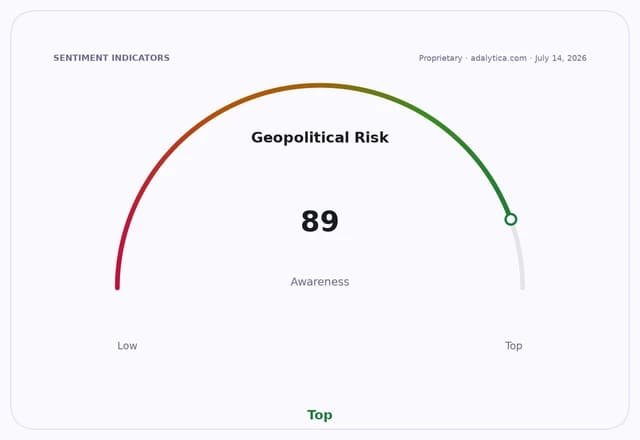
Adalytica’s Global Stability Sentiment sits at “Extreme Fear” even as awareness is at “Extreme Greed,” a combination that usually marks a market obsessed with the story but still underpositioned for the second-order beneficiaries. That is exactly where asymmetric opportunity lives. When geopolitical anxiety rises and procurement follows, the smartest money does not chase the headline — it buys the toll roads of rearmament before the next budget cycle confirms the trend.
The takeaway: this Kaliningrad warning is another sign that Europe’s security premium is becoming structural, not cyclical, and that defense remains one of the strongest multi-year investment themes in the market. I believe investors should stay overweight the primes and the enabling supply chain, with Lockheed Martin, RTX and Northrop Grumman at the center of the trade.
| Entity | Gains | Losses |
|---|---|---|
| Lockheed Martin (LMT) | ▲missile-defense demand | ▼budget uncertainty |
| RTX | ▲air-defense orders | ▼easing tensions |
| Northrop Grumman (NOC) | ▲long-cycle procurement | ▼wartime fade |
| Russia / Kaliningrad | ▲coercive leverage | ▼strategic exposure |