Europe survey shows rising doubt about EU future
Europeans still say they want a strong, united and independent Europe, but a new continent-wide survey shows many no longer believe such a project is achievable — a disconnect that is becoming politically dangerous and economically costly.
That finding matters because expectations shape policy. When voters conclude Europe is in decline and its institutions cannot respond, support rises for parties arguing that the EU is overreaching, ineffective or doomed to fragment. That makes it harder for governments to sustain the kinds of joint action needed on defense, industrial policy, energy security and competitiveness at a time when the bloc is already under pressure from war, trade friction and slower growth.
The European Council on Foreign Relations said its report, based on 5,800 interviews in France, Germany, Italy, the Netherlands, Poland and Britain and an analysis of how Europe is discussed in politics and media across 15 countries, found 68% of respondents spoke about Europe in terms of “general decline or deviation from the norm.” Only 12% saw an era of “European awakening and renewal.” At the same time, 74% said Europe was failing to address the challenges it faces, and 56% said its future was “under threat.”
The report suggests the problem is not a shortage of ambition. Seventy-three percent of respondents held distinctly European views, favoring unity and political integration, peace and security, or prosperity. Only 13% wanted Europe’s role to shrink or the EU to break up. The tension is between aspiration and belief: people can imagine the Europe they want, but not the route to get there.
That gap is fertile ground for the political right, especially populist and nationalist parties that have long argued that European integration is detached from everyday reality. Their message becomes easier to sell when wars, economic stress and the push for greater strategic autonomy are interpreted not as reasons for more Europe, but as evidence that Europe is failing.
For investors, the implication is less about sentiment data than policy capacity. A continent that doubts itself is a continent that moves more slowly on defense spending, fiscal coordination, industrial subsidies and reforms to improve competitiveness. It also raises the risk of policy fragmentation just as Europe faces the need to finance rearmament, protect supply chains and respond to American and Chinese economic pressure.
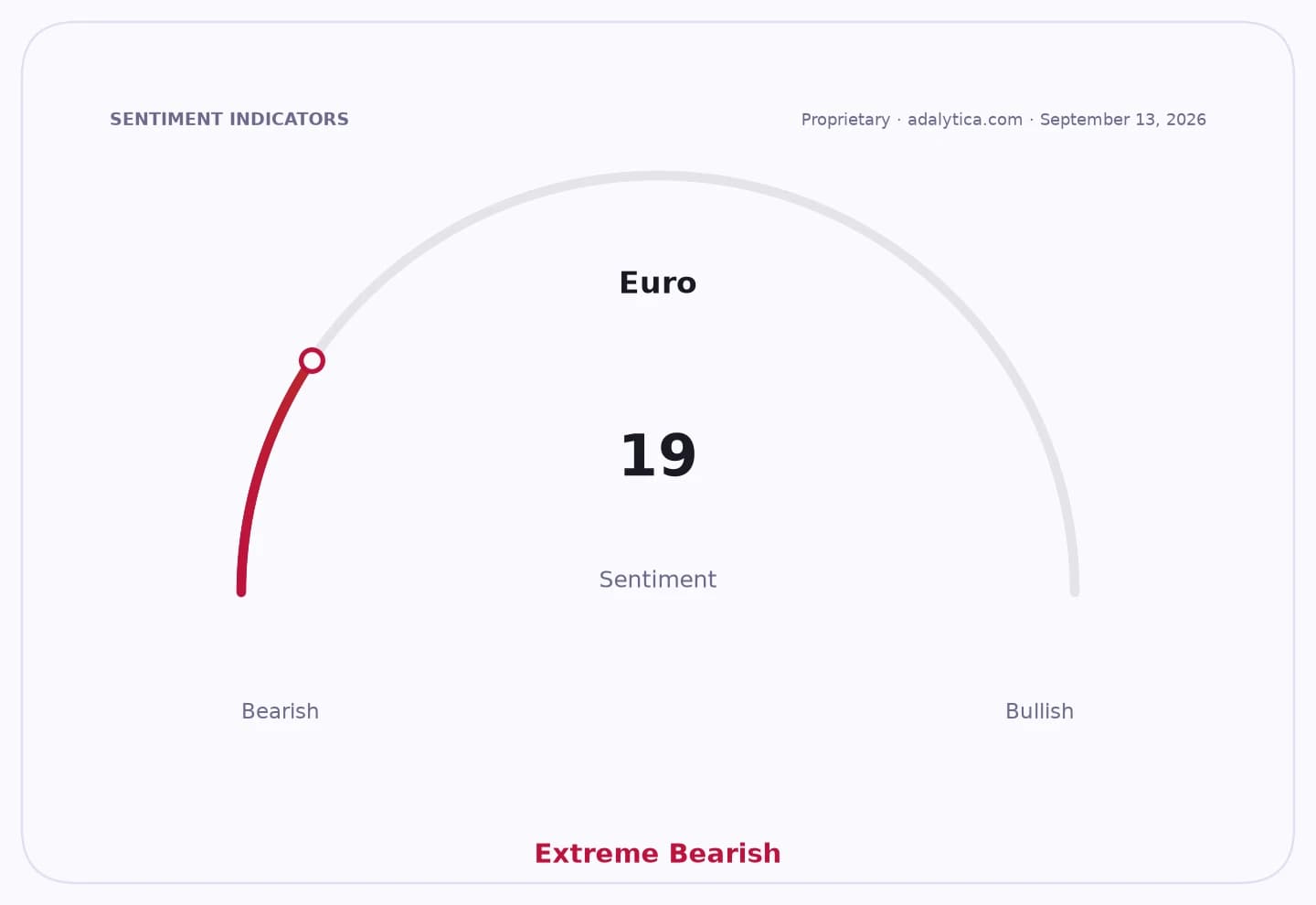
Markets have not priced this as a discrete shock, but the underlying strain is visible in European assets. The euro has been trading near 1.16 against the dollar and remains below its 50-day moving average, while its momentum readings have softened. Broad European equity trackers such as the Vanguard FTSE Europe ETF and the iShares MSCI Germany ETF have also lost some recent upward momentum, suggesting investors remain cautious even as the region avoids outright panic.
The bigger risk is political drift rather than immediate market disorder. A Europe that cannot convince its voters it has a credible future may still remain formally intact, but it will struggle to deliver the collective action required to compete with larger powers. The ECFR findings imply that the central battle is no longer only over Europe’s direction — it is over whether Europeans still believe direction is possible.
| Entity | Gains | Losses |
|---|---|---|
| Far-right parties | ▲Decline narrative | ▼Pro-EU consensus |
| EU institutions | ▲Wider mandate if trusted | ▼Credibility and urgency |
| European exporters | ▲Stronger integration, stability | ▼Fragmentation, policy drift |
| Euro and European assets | ▲Confidence revival | ▼Political pessimism |