European stocks rise on US-China talks

European shares opened higher on Tuesday as investors looked past Germany’s election result and focused instead on signs of continued US-China dialogue ahead of a possible meeting between Donald Trump and Xi Jinping.
The move matters because it points to a market still willing to buy risk on the expectation that politics will not derail trade, growth or capital spending. Germany’s vote had little immediate impact on trading, while the real catalyst was the prospect that Washington and Beijing will keep negotiating rather than escalate. That combination is supportive for exporters, industrials and the global supply chain — exactly the sectors that drive Europe’s earnings sensitivity to world trade.
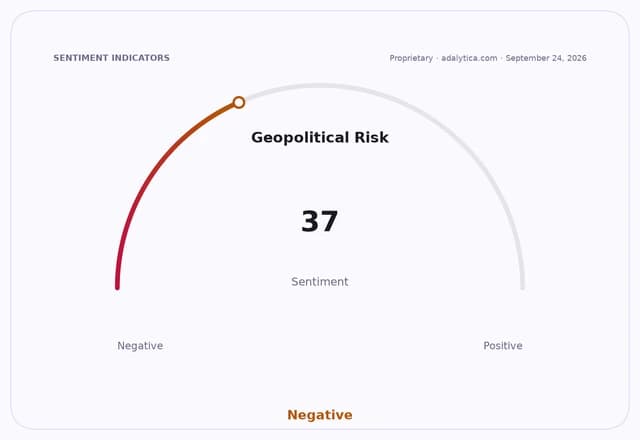
Frankfurt led the advance with a 0.74% gain, followed by Paris at 0.48% and London at 0.23%. The broad tone suggests investors are treating the German result as a domestic political event, not a threat to the euro zone’s growth path. That is important for markets because Europe has been trading at a discount precisely on the assumption that politics, weak manufacturing and external tensions would keep pressure on earnings.
The other signal worth watching is the fall in oil and gas prices, which eases some pressure on European households and corporates even as geopolitical risks remain elevated. Lower energy costs support margins for industry and reduce one of the biggest drags on European demand. For investors, that makes the region’s cyclicals and exporters more attractive if the US-China dialogue continues to de-risk global trade.
The implication is straightforward: Europe does not need a perfect macro backdrop to rally, only a reprieve from the worst geopolitical outcomes. If Trump and Xi do meet and the talks reduce tariff or supply-chain fears, the next leg higher could come from the continent’s most globally exposed companies rather than its domestic defensives. In that setup, the market’s opportunity is to stay positioned in Europe’s industrial and export complex before the consensus fully prices in a softer geopolitical backdrop.
| Entity | Gains | Losses |
|---|---|---|
| European exporters | ▲Better trade outlook | ▼Tariff uncertainty fades |
| Industrial cyclicals | ▲Higher risk appetite | ▼Geopolitical hedging demand |
| Energy-intensive companies | ▲Lower oil and gas costs | ▼None immediately |
| Safe-haven assets | ▲None | ▼Less demand if talks improve |