European Stocks Fall as Yields and Oil Rise

European stocks fell as a global bond selloff pushed borrowing costs higher and revived inflation worries, with rising energy prices adding fresh pressure to rate-sensitive equities and company valuations.
The move came as the U.S. 10-year Treasury yield climbed to 4.79%, its highest level in the data provided and up from 4.73% on Aug. 28, while the forecast for Sept. 2 points to 4.822%. The 2s10s yield spread held near 40 basis points, suggesting the market is still pricing a relatively steady growth backdrop even as long-dated debt becomes more expensive.

That matters for Europe because higher sovereign yields feed directly into financing costs for governments, banks and corporates already facing a fragile inflation outlook. The latest market anxiety is being driven by fears that energy costs could keep headline inflation sticky, making it harder for the European Central Bank to loosen policy and harder for equity investors to justify rich valuations.
European equity ETFs tracked the pressure. VGK fell to $90.72 on Sept. 1 from $91.66 a day earlier, while the euro-zone proxies EZU and FEZ dropped to $69.63 and $69.99, respectively. All three sat below their short-term trend markers, with RSI readings in the high 20s to mid-30s, a sign of weakening momentum rather than an isolated one-day pullback.
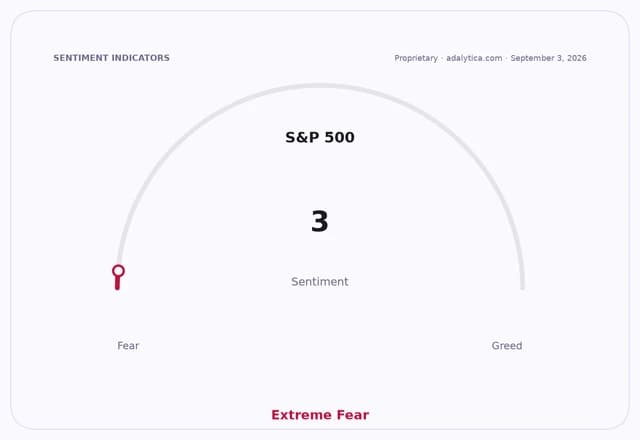
The broader risk backdrop is also deteriorating. Adalytica’s S&P 500 trade signals showed “Extreme Fear” with sentiment at 3, underscoring how quickly investor confidence has faded as bond volatility returns and oil-linked inflation concerns build.
For investors, the key question is whether yields keep climbing or stabilize before they inflict more damage on equities, especially in Europe where banks, utilities, property and other dividend-heavy sectors are more sensitive to discount-rate moves. Any further rise in long-end yields or another jump in energy prices would likely keep pressure on European shares into the next ECB signals and inflation prints.
| Entity | Gains | Losses |
|---|---|---|
| Bond investors | ▲Higher new-coupon yields | ▼Existing bond prices |
| Banks | ▲Wider lending spreads | ▼Mark-to-market bond holdings |
| Energy producers | ▲Better pricing backdrop | ▼Energy-consuming sectors |
| European equities | ▲— | ▼Lower valuations, tighter financial conditions |