Exxon, Chevron, ConocoPhillips Rise as Oil Rebounds
Oil and gas majors are leaning harder into growth just as crude prices recover and the market price for policy and geopolitical risk stays elevated, giving the industry a wider cash-flow runway and investors a clearer signal that capital discipline is colliding with a more constructive commodity backdrop.
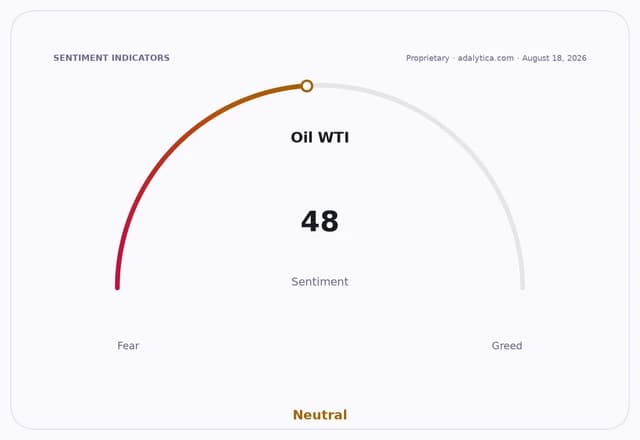
That matters because the sector’s growth ambitions are increasingly being funded by stronger operating cash flow rather than balance-sheet stress, and because oil near $87 a barrel is still high enough to support upstream spending, dividend cover and buybacks even as global demand forecasts are being nudged lower. The latest Adalytica WTI trade signals show neutral sentiment but extremely low awareness, suggesting traders remain wary after sharp swings in crude, while the broader geopolitical risk gauge sits in “extreme fear,” underscoring how quickly supply shocks can reprice the market.
Exxon Mobil’s shares have risen to $165.56, up from $112.42 in mid-December, while Chevron has climbed to $205.74 from $144.01, and ConocoPhillips to $129.72 from $88.81. The move is not just a reflection of higher oil prices; it also tracks a steady improvement in technical momentum, with all three names trading above their 50-day and 200-day moving averages and their relative strength readings holding in bullish territory. Exxon’s stock has pushed close to the upper end of its recent Bollinger Band range, while Chevron and ConocoPhillips have also remained firmly above long-term trend levels, indicating investors are paying up for cash flow, reserve quality and capital-return visibility.
The fundamental backdrop is equally important. Exxon said in its latest filing that higher prices and margins, along with advantaged upstream and energy-products investments, lifted earnings, while ConocoPhillips has guided 2026 capital spending to roughly $12 billion to $12.5 billion, only modestly below 2025’s $12.6 billion outlay. Chevron has said it aims to grow its oil and gas business while maintaining portfolio flexibility, a reminder that even the largest integrated producers are still prioritizing hydrocarbons despite longer-term energy-transition commitments.
For investors, the bull case is straightforward: if oil stays in the mid-$80s or higher, the majors can sustain production growth, reward shareholders and defend returns even if demand growth softens. The bear case is that the trade is crowded and vulnerable to a demand downdraft, especially if the US economy slows more sharply or if OPEC+ supply decisions undercut the price floor. West Texas Intermediate’s recent 7-day and 30-day declines in Adalytica’s trade-signal snapshot show that the market remains jumpy and that crude is still trading on headlines as much as fundamentals.
The broader narrative is that black gold is regaining strategic value. Conflict-driven supply risk, relatively firm US growth and still-resilient corporate balance sheets are helping the oil-and-gas complex reassert itself as a growth sector, even as the long-term energy transition keeps a lid on enthusiasm. The next catalyst is whether crude can hold current levels without another geopolitical shock; if it can, the majors’ growth goals look increasingly fundable, but if demand weakens, the market will quickly revisit how much expansion the cycle can really support.
| Entity | Gains | Losses |
|---|---|---|
| Exxon Mobil | ▲Higher cash flow, stronger share price | ▼Buyers if oil slips |
| Chevron | ▲Growth-capex flexibility | ▼Short crude if prices stay firm |
| ConocoPhillips | ▲Production growth optionality | ▼Demand-sensitive consumers |
| Oil consumers | ▲Lower inflation if prices ease | ▼Higher fuel and input costs |