Fed calendar overhaul and market impact

A smaller, more streamlined Federal Reserve calendar would matter far beyond the Fed itself because it could change how investors price interest rates, how banks make money and how much volatility markets have to digest.
That is the real takeaway from JPMorgan’s thinking around a possible Fed overhaul tied to former Governor Kevin Warsh’s reform ideas: fewer policy meetings and less procedural noise could make the central bank easier to read, but they would not make the rate cycle less important. For stock investors, the question is whether a more efficient Fed becomes a steadier backdrop for risk assets or simply concentrates market-moving decisions into fewer, bigger moments.

The timing is sensitive. The 10-year Treasury yield has climbed to about 4.68%, while the two-year sits near 4.53%, leaving only a modest gap of roughly 0.45 percentage point. That is not the kind of yield curve that gives banks or equity investors much room to relax. It says monetary policy is still restrictive enough to matter, even if markets are now leaning toward a hold in September rather than another hike.
That shift in expectations has already been visible in equities and bonds. The S&P 500 has pushed to record levels, helped by the belief that the Fed will stay cautious and avoid surprising markets with more tightening. At the same time, Treasury volatility has cooled after the 30-year yield recently hit a 25-year high, a reminder that duration risk has not gone away even as sentiment improves.
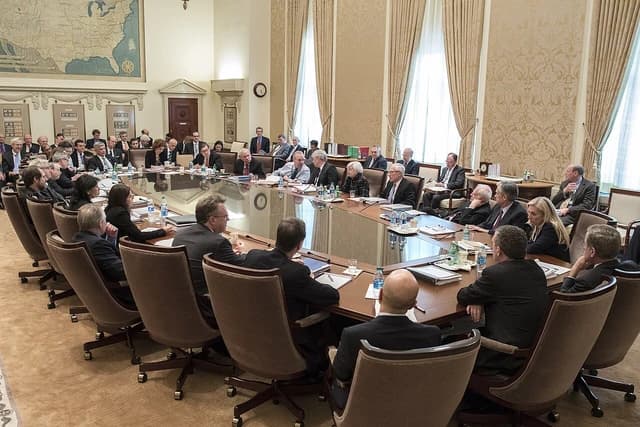
For long-term investors, the bigger question is what a leaner Fed schedule would do to the market’s discount rate. If policy makers meet less often, each decision, statement and press conference could carry more weight. That could be good for investors who want less headline churn, but it could also mean sharper moves around fewer dates. When rates are still close to 4.6% and the yield curve is only slightly inverted, even small changes in Fed credibility can ripple through valuations, especially for expensive growth stocks that depend on low borrowing costs and future earnings.
Banks like JPMorgan are naturally in the middle of this story. Higher short-term rates can support lending income, but they also raise funding costs and keep pressure on capital markets activity. JPMorgan’s own shares have climbed to around $356.50, well above both the 50-day and 200-day moving averages, showing investors still like the franchise even in a more uncertain rate environment. But the bank’s gains also reflect a market that is trying to balance strong earnings power against the possibility that monetary policy stays tighter for longer than hoped.
Bond investors are reading the same backdrop differently. The latest Adalytica signals show Treasury sentiment still in “fear,” even as awareness remains high, which fits a market where traders are alert to policy risk but no longer panicking about an imminent Fed surprise. The dollar, meanwhile, has weakened sharply in the same dataset, a sign that investors are increasingly pricing a pause rather than a fresh tightening campaign.
That matters because a quieter Fed does not mean a small Fed. If reform leads to fewer meetings, investors will likely spend more time watching economic data and less time reacting to every policy event. In practice, that could favor diversified portfolios built for the long haul rather than short-term rate bets. It could also reinforce the case for owning quality companies with durable cash flow, strong balance sheets and pricing power instead of trying to outguess every central bank turn.
The bottom line for investors is simple: a slimmer FOMC calendar would probably reduce noise, but not the importance of the Fed’s next move. If Warsh-style reform gains traction, markets may get fewer opportunities to react and more reason to focus on fundamentals. That is why this is worth watching, not trading around.
| Entity | Gains | Losses |
|---|---|---|
| Equity investors | ▲Less policy noise | ▼More impact from each meeting |
| JPMorgan and big banks | ▲Steadier rate backdrop | ▼Higher funding pressure if rates stay elevated |
| Treasury bulls | ▲Clearer pause expectations | ▼Less support if yields stay near 4.7% |
| Dollar bears | ▲Softer Fed pricing | ▼Stronger greenback if policy stays tight |