The Federal Reserve’s decision to keep buying about $10 billion of Treasury securities in the current operating cycle underscores that policymakers still see a non-trivial risk of reserves slipping too low as the Treasury rebuilds its cash balance in coming months.
Fed Reserve Backstop Supports Treasury Market
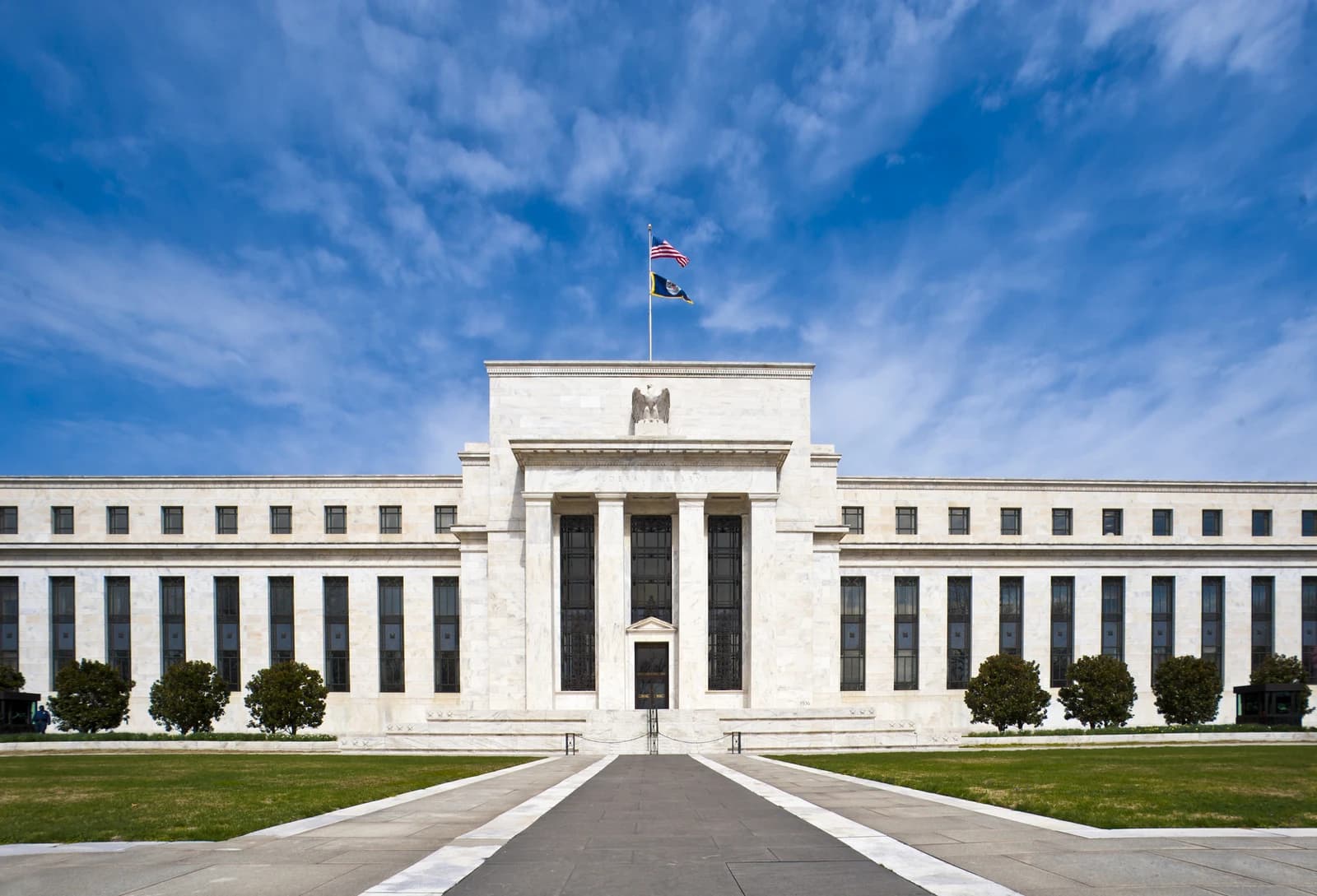
That matters because the move is less about broad monetary easing than about plumbing: the Fed is trying to preserve “ample reserves” in the banking system while the U.S. Treasury increases borrowing and shifts cash management around the government’s account at the central bank. In other words, the balance sheet is being used to prevent short-term funding strains from turning into a market problem.
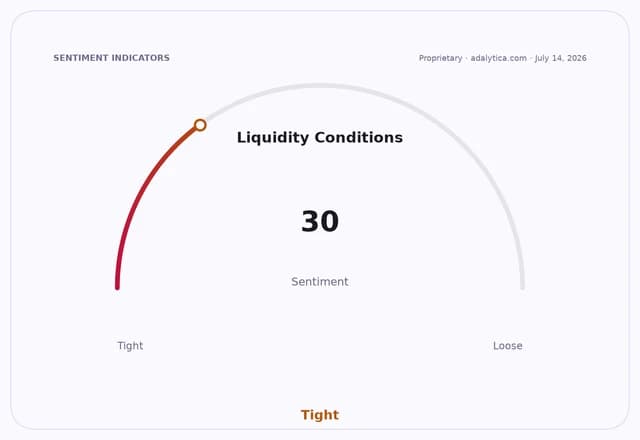
Sentiment IndicatorsⓘProprietary · adalytica.com · July 14, 2026
This is a snapshot — live sentiment, awareness and momentum for 130+ markets update continuously in the dashboard.Open AlphaPulse

The Fed’s Treasury holdings, measured by the balance sheet series WALCL, stood at about $6.74 trillion in early July, down sharply from the $8.73 trillion peak in 2023 and below the levels seen during the pandemic-era expansion. Keeping the purchase pace unchanged suggests officials are not yet confident that reserve conditions can absorb another round of Treasury cash build without tighter money-market conditions.
That is important for rates markets. When the Treasury raises cash, bank reserves can fall unless offset by the Fed’s balance sheet operations. If reserves tighten too much, the first pressure point is usually overnight funding, then repo markets, then broader Treasury market liquidity. By maintaining purchases, the Fed is signaling it wants to avoid that sequence, even if it has no intention of reviving quantitative easing in the classic post-crisis sense.
WALCL vs DGS10 — macro contextadalytica.com
Explore this data interactively — full history, time series and cross-market comparisons.Open AlphaPulse
Yields reflect that tension. The 10-year Treasury was around 4.56% in the latest data, while the two-year was about 4.21%, leaving the curve still relatively flat by historical standards. That level of yields remains restrictive for the economy and keeps duration risk high for bond investors, but it also means the Fed has limited room to misjudge reserve supply before volatility picks up.
The market reaction in longer-duration Treasuries has been cautious rather than celebratory. TLT, the long-duration Treasury ETF, has been volatile and still sits below its 50-day moving average, a sign that investors have not embraced a durable rally in government bonds despite the reserve-management backstop. Conventional technical indicators such as RSI readings and the MACD on TLT have also shown weakening momentum, consistent with a market that is still looking for confirmation that liquidity support will translate into lower yields.
For equities, the message is mixed. The S&P 500 remains well above its 200-day moving average, showing risk appetite has not cracked, but the Fed’s action also implies policymakers are attentive to latent funding stress rather than ready to loosen financial conditions broadly. That keeps the bull case for stocks tied to resilient growth and earnings, while the bear case rests on sticky rates, elevated term premia and the possibility that reserve scarcity eventually bleeds into risk assets.
A broader liquidity readout from Adalytica’s Financial System Liquidity sentiment gauge remains in “Fear,” with awareness still in “Extreme Fear,” even after a modest improvement in the latest snapshot. That does not replace hard market data, but it reinforces the same narrative: reserve conditions and dollar funding are being watched closely, and the Fed is acting defensively before stress becomes visible in prices.
For investors, the key question now is whether the Treasury’s cash rebuilding can be absorbed without forcing the Fed to expand purchases further or accept tighter money-market conditions. If the reserve drain is manageable, the current pace should be enough. If not, funding markets, front-end yields and long-duration Treasuries could all become more sensitive in the weeks ahead as the Treasury’s borrowing calendar and the Fed’s balance-sheet runoff logic collide.
| Entity | Gains | Losses |
|---|---|---|
| Fed / banking system reserves | ▲Liquidity buffer preserved | ▼Balance sheet stays large |
| Treasury Department | ▲Easier cash rebuilding | ▼More scrutiny on funding needs |
| Treasury bulls | ▲Support against reserve scarcity | ▼No clear easing signal |
| Bond bears | ▲Higher yields remain possible | ▼Fed backstop caps stress spikes |




