Ferrari Benefits From Higher U.S. Interest Rates

Higher U.S. interest rates are sharpening the case for Ferrari, whose scarcity-driven pricing power and wealthy buyer base make it far less exposed to the Fed than the broader auto industry.
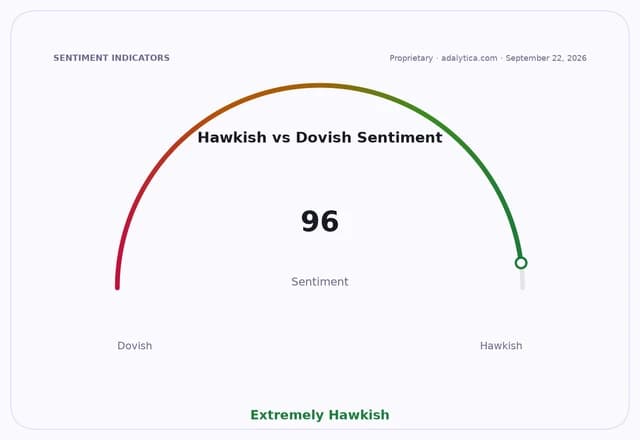
The Federal Reserve’s latest 25-basis-point hike to a 3.75%-4% target range has reinforced expectations that borrowing costs may stay elevated into year-end, a backdrop that typically compresses demand for rate-sensitive, big-ticket purchases. Yet Ferrari’s investment case is built on the opposite dynamic: ultra-high-net-worth customers who are less reliant on financing, more insulated from economic swings and willing to pay for exclusivity.
That makes the Italian luxury-car maker a rare beneficiary of a tighter money regime. Ferrari’s share price has risen 758% over the past decade, turning $10,000 into about $86,000, but the stock is still off 20% from its July 2025 peak. At roughly 38.3 times earnings, the valuation looks demanding next to the broader market, yet it remains below Ferrari’s five-year average multiple of 44.9 and reflects investor confidence in the brand’s ability to keep growing through cycle swings.
The company’s economics help explain why. Ferrari’s average quarterly operating margin has run at 27.5% over the past five years, a level that most automakers cannot approach because they compete on volume, incentives and financing. Ferrari instead sells limited-production supercars, often with seven-figure price tags, and benefits from rising personalization revenue that deepens margins further. Sell-side analysts expect revenue to grow at a 7.3% compound annual rate from 2025 to 2028 as production increases gradually.
The broader market message is that not all consumer stocks are created equal in a higher-for-longer rate environment. Mainstream auto makers, lower-income discretionary names and companies dependent on credit issuance face pressure as financing costs rise. Ferrari, by contrast, is closer to a luxury asset than a cyclical manufacturer, with demand tethered to global wealth rather than domestic credit conditions.
Still, the bull case has limits. Ferrari’s growth is steady rather than explosive, and the stock already embeds a premium multiple that leaves little room for operational stumbles or a sharp cooling in luxury demand. But for investors looking beyond the usual rate-sensitive trades, the company remains one of the clearest examples of a business that can keep compounding even as the Fed stays restrictive.
| Entity | Gains | Losses |
|---|---|---|
| Ferrari | ▲Pricing power and premium valuation support | ▼Less benefit from cheap credit boom |
| Luxury buyers | ▲Scarcity and status appeal | ▼Higher financing costs matter less |
| Mainstream automakers | ▲— | ▼Demand weakens as rates stay high |
| Rate-sensitive portfolios | ▲Defensive luxury exposure | ▼Cyclical auto exposure |