First-time home buyers are taking the largest share of U.S. home sales in two decades, underscoring how affordability pressures and a thin resale market are reshaping demand in favor of buyers chasing lower-priced homes.
First-time buyers gain share as housing stays strained

The shift matters economically because housing remains one of the most rate-sensitive parts of the U.S. economy, and a bigger first-time buyer footprint usually signals that households are stretching for ownership even as financing costs stay elevated. The 30-year mortgage rate was 6.55% on July 16 and the 10-year Treasury yield held near 4.56%, keeping borrowing costs well above the levels that fueled the last housing boom.
Sentiment IndicatorsⓘProprietary · adalytica.com · July 18, 2026
This is a snapshot — live sentiment, awareness and momentum for 130+ markets update continuously in the dashboard.Open AlphaPulse
That backdrop is still restricting overall activity. U.S. housing starts were running at an annualized 1.333 million in July’s forecast, after a volatile spring that saw starts at 1.199 million in May and 1.427 million in June, while mortgage rates remain high enough to keep many move-up buyers on the sidelines. In practice, that leaves more room for first-time purchasers, who are more likely to target entry-level homes and newly built stock where builders can use incentives to make deals work.
Investors are watching the trend because it has direct implications for homebuilders, mortgage lenders and housing ETFs. Builders such as Toll Brothers, D.R. Horton and Lennar have already been leaning on incentives and price cuts to clear inventory, while lenders including Rocket Companies and Zillow Home Loans benefit if purchase activity holds up despite weak broader sentiment. Homebuilder ETF ITB closed at 97.33 on July 17, below its 200-day moving average of 99.09, while home construction ETF XHB ended at 108.25, also just under its 200-day average of 106.62 after a choppy run, signaling a market that is still skeptical on the durability of the rebound.
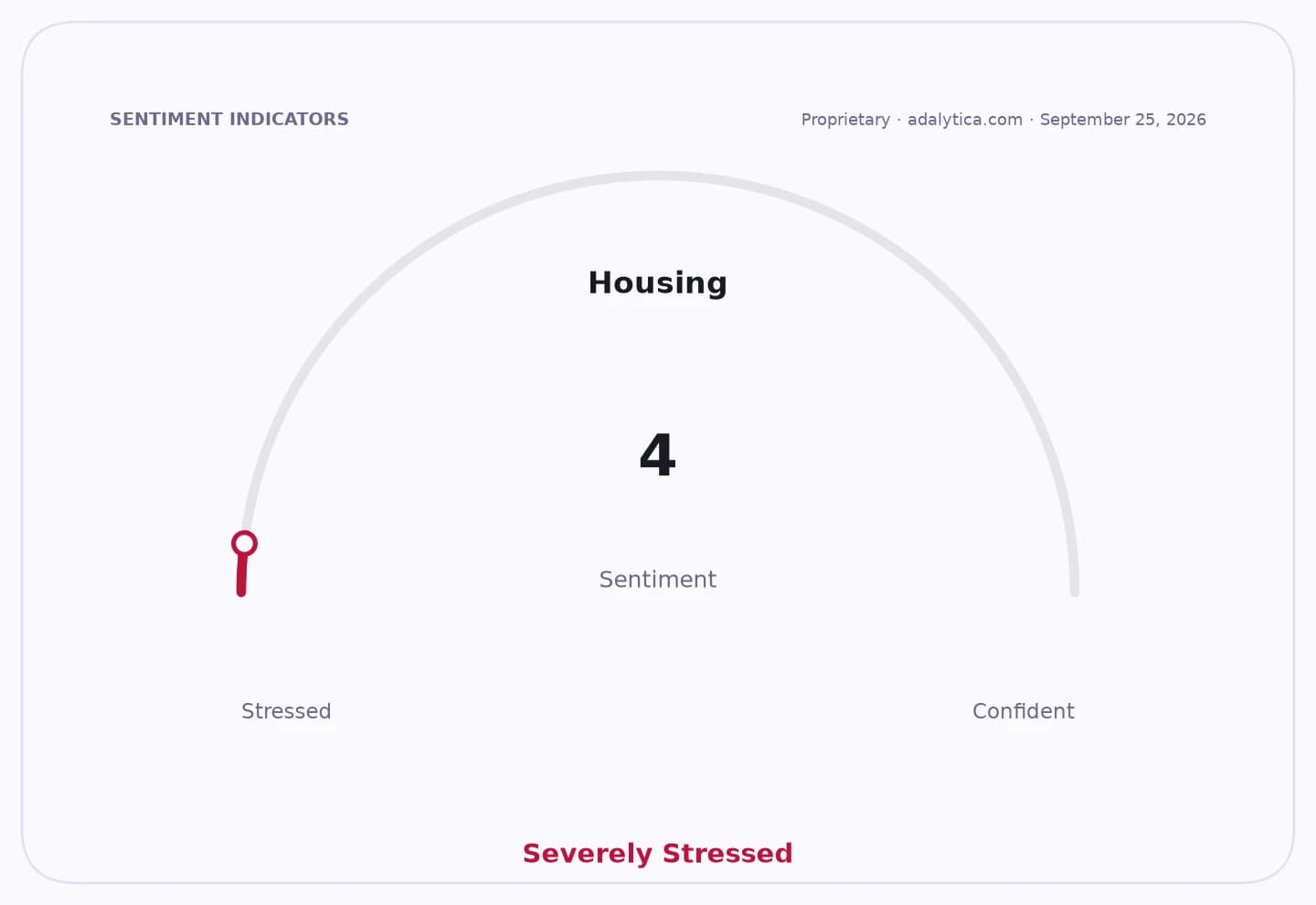
The first-time buyer gain also fits with a housing market where supply and pricing are pulling in different directions. More primary apartments and new homes are available after legal bottlenecks eased, but demand remains cautious, and builders are still using mortgage buydowns and other promotions to move product. Adalytica’s Housing and Rent Inflation sentiment gauge is neutral at 56, while awareness remains in “fear,” reflecting consumer unease even as affordability starts to improve at the margin.
The key question now is whether lower-priced buyers can keep carrying the market if mortgage rates stay near current levels. For investors, the next catalyst is the path of rates and any further evidence from builder earnings that first-time buyer demand is offsetting weakness elsewhere in the housing cycle.
| Entity | Gains | Losses |
|---|---|---|
| First-time buyers | ▲Bigger share of sales | ▼Higher financing costs |
| Homebuilders | ▲More entry-level demand | ▼Lower margins from incentives |
| Mortgage lenders | ▲Purchase-loan volume | ▼Weak overall transaction volumes |
| Existing homeowners / move-up buyers | ▲— | ▼Affordability and trade-up constraints |