Fitch warns EM borrowers on Iran war and oil shock
Emerging-market borrowers have so far absorbed the Iran war shock without a wave of ratings downgrades, but Fitch says the cushion is narrowing as higher oil prices, tougher funding conditions and weaker policy buffers begin to bite.
That matters because ratings agencies are not reacting to headlines alone; they are testing whether governments can fund themselves if the conflict keeps energy prices elevated and investor risk appetite deteriorates. Brent-linked oil has been volatile, with West Texas Intermediate recently jumping to around $109.76 a barrel in early May before slipping to $79.77 on Aug. 7 and rebounding to $84.77 two days later, underscoring how quickly the macro backdrop can turn. For importers, especially in emerging markets, every sustained dollar gain in crude widens current-account deficits, pushes up inflation and forces central banks to choose between growth and currency stability.
Investors should read Fitch’s warning as a signal that the market is moving from shock absorption to second-order damage. Sovereigns with low reserves, wide fiscal deficits or large external financing needs are the most vulnerable to a prolonged oil shock and a wider geopolitical premium in capital markets. The 10-year US Treasury yield, a benchmark for global funding conditions, has also climbed to 4.7%, keeping the cost of borrowing elevated even before any war-related spread widening is added. In that environment, frontier and lower-rated emerging-market credits have less room to absorb another hit.
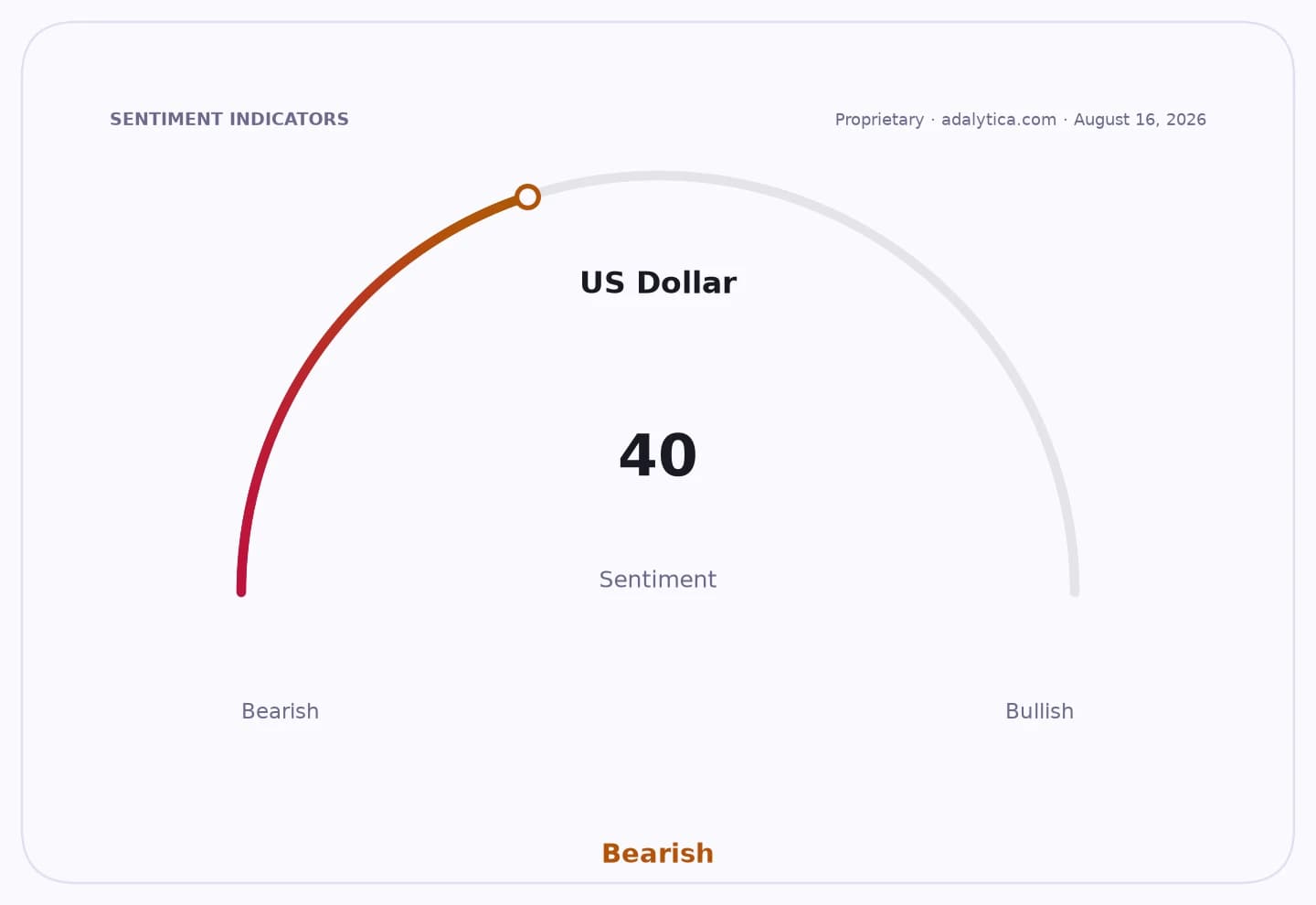
The market has not priced that fragility evenly. The iShares MSCI Emerging Markets ETF has recovered to $66.61 after a mid-July slide to $61.07, but that bounce masks how quickly sentiment can reverse when geopolitics collide with energy prices. MSCI itself has also been volatile, falling to $561 from $641.54 in early June before stabilizing near $569, a reminder that risk assets are still trading on thin confidence. Adalytica’s US dollar trade signals show neutral sentiment but elevated awareness, while oil sentiment remains firmly in “greed,” suggesting the market is still positioning for energy shocks rather than for the credit stress they create.
The real opportunity now is in the names and countries the market is underestimating on the downside: oil exporters, dollar earners and sovereigns with strong reserves should keep outperforming, while import-dependent EM credits face the first real test of the war premium. If the conflict broadens or crude stabilizes at a higher floor, ratings pressure will move from a warning to a downgrade cycle. For investors, that makes this a moment to favor hard-currency resilience, commodity-linked balance sheets and EM debt exposure with the strongest external buffers.
| Entity | Gains | Losses |
|---|