FMCG sales rely on pricing as volumes soften

Packaged-goods sales are still being propped up by price rather than volume, leaving the FMCG sector in a late-cycle holding pattern as inflation stays sticky, household demand softens and no clear catalyst emerges for a meaningful rebound before year-end.
That is the key investment message from the latest consumer and market data: nominal consumption is holding up, but real demand is not. U.S. consumer prices rose 0.35% in August on the latest forecast, leaving annual inflation still elevated, while core personal consumption expenditures has been running at 3.3%, a level that keeps the Federal Reserve from turning materially more supportive. At the same time, consumer confidence has fallen to a seven-month low, underscoring that shoppers are trading down, buying less and pushing back against discretionary spending.

For FMCG makers, that combination is a double-edged sword. It preserves top-line growth through pricing and mix, but it also caps unit volumes and forces companies to defend margins with promotions, cost cuts and selective price increases. Recent filings from Procter & Gamble, Coca-Cola, PepsiCo and Colgate-Palmolive all point to the same pressure points: commodity costs, foreign exchange, private-label competition and retailers demanding better terms or more shelf space efficiency. Walmart’s disclosures also highlight the broader strain from tariffs, capital-market volatility and weak consumer sentiment filtering through the retail chain.
The equity market is reflecting that tension. The Consumer Staples Select Sector SPDR ETF, XLP, has climbed above both its 50-day and 200-day moving averages, suggesting investors continue to favor the defensive qualities of staples, but the move has been choppy and momentum has not turned decisively bullish. By contrast, discretionary stocks in the Consumer Discretionary Select Sector SPDR ETF, XLY, remain more vulnerable to any further pullback in household spending, with recent price action showing weaker technical breadth and less conviction.
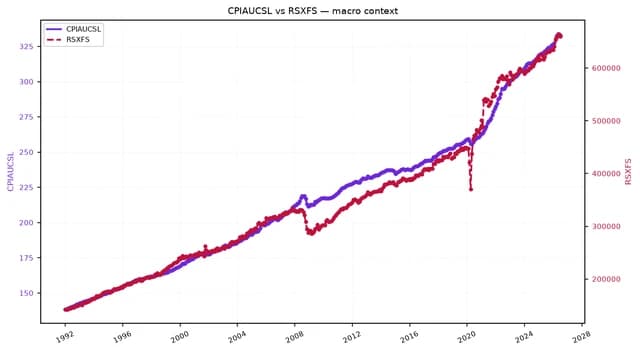
Adalytica’s trade signals for the S&P 500 remain neutral, while its gauge on confidence in the Fed’s 2% inflation target sits in fear territory, reinforcing the market view that rates are likely to stay restrictive for longer. That matters for FMCG because higher-for-longer borrowing costs and subdued wage confidence tend to keep households focused on essentials, value packs and promotions rather than premiumization.
The bull case for the sector is that staples are one of the few places where pricing power still exists, particularly for global brands with scale, advertising reach and distribution leverage. The bear case is that the inflation umbrella under which revenue has been growing is also eroding affordability, setting up a slower second half if consumers continue to cut back on basket sizes or shift further into private label.
For investors, the near-term playbook is less about a broad consumer recovery than about relative defensiveness, margin discipline and market share. Unless inflation eases enough to lift real wages and sentiment together, FMCG will likely remain a low-growth sector with selective winners rather than a clean reopening trade.
| Entity | Gains | Losses |
|---|---|---|
| FMCG staples makers | ▲Pricing power, defensive demand | ▼Volume growth, margin comfort |
| Consumers | ▲Short-term access to essentials | ▼Purchasing power, basket sizes |
| Private-label retailers | ▲Share gains from trade-down | ▼Branded producers’ shelf space |
| Consumer discretionary stocks | ▲— | ▼Demand resilience, sentiment recovery |