Food prices diverge as beans rise and staples fall
Food commodity prices are diverging, with staples such as eggs, pasta and tea falling while beans are rising, a split that underscores how uneven supply conditions are shaping grocery inflation and consumer spending.
The shift matters because food remains one of the most visible channels through which supply shocks feed into household budgets. When prices move in different directions across basic items, it usually points to specific bottlenecks rather than a broad demand-driven inflation trend. That is important for policymakers trying to cool food inflation, for retailers managing margins and for consumers already showing signs of strain in spending behavior.
In this case, the broader backdrop remains one of fragile supply rather than politics alone. The latest market context points to production disruptions, logistics costs and fertilizer shortages as the main forces behind higher food costs, including pressure linked to tensions around the Hormuz Strait and the knock-on effect on import and input prices. Weather risk, including the potential for El Niño-related volatility, adds another layer of uncertainty. Against that backdrop, a fall in eggs, pasta and tea suggests at least some temporary relief in specific supply chains, but not a clean reversal in the food inflation story.
For investors, the implications run through the food retail, restaurant and packaged goods complex. Lower prices for some staples can ease input costs for consumer-facing businesses and support gross margins if they hold. But a rise in beans and other protein-rich or processed food inputs can offset that benefit, especially for firms with limited pricing power. Supermarkets and food distributors are likely to remain sensitive to category-level inflation rather than overall basket averages, while companies exposed to agricultural sourcing could face continued volatility in working capital and inventory management.
The market picture also suggests caution in reading too much into one day’s moves. On conventional technical indicators, the soy-bean proxy SOYB has been trading above both its 50-day and 200-day moving averages, with momentum still positive but no longer stretched after recent swings. US Foods Holding has also recovered sharply from earlier weakness, though the stock has given back part of its latest advance, showing how quickly sentiment can shift when investors reassess food-cost trends and demand resilience. That combination points to a market still looking for confirmation that inflation in the food chain is cooling rather than merely rotating between categories.
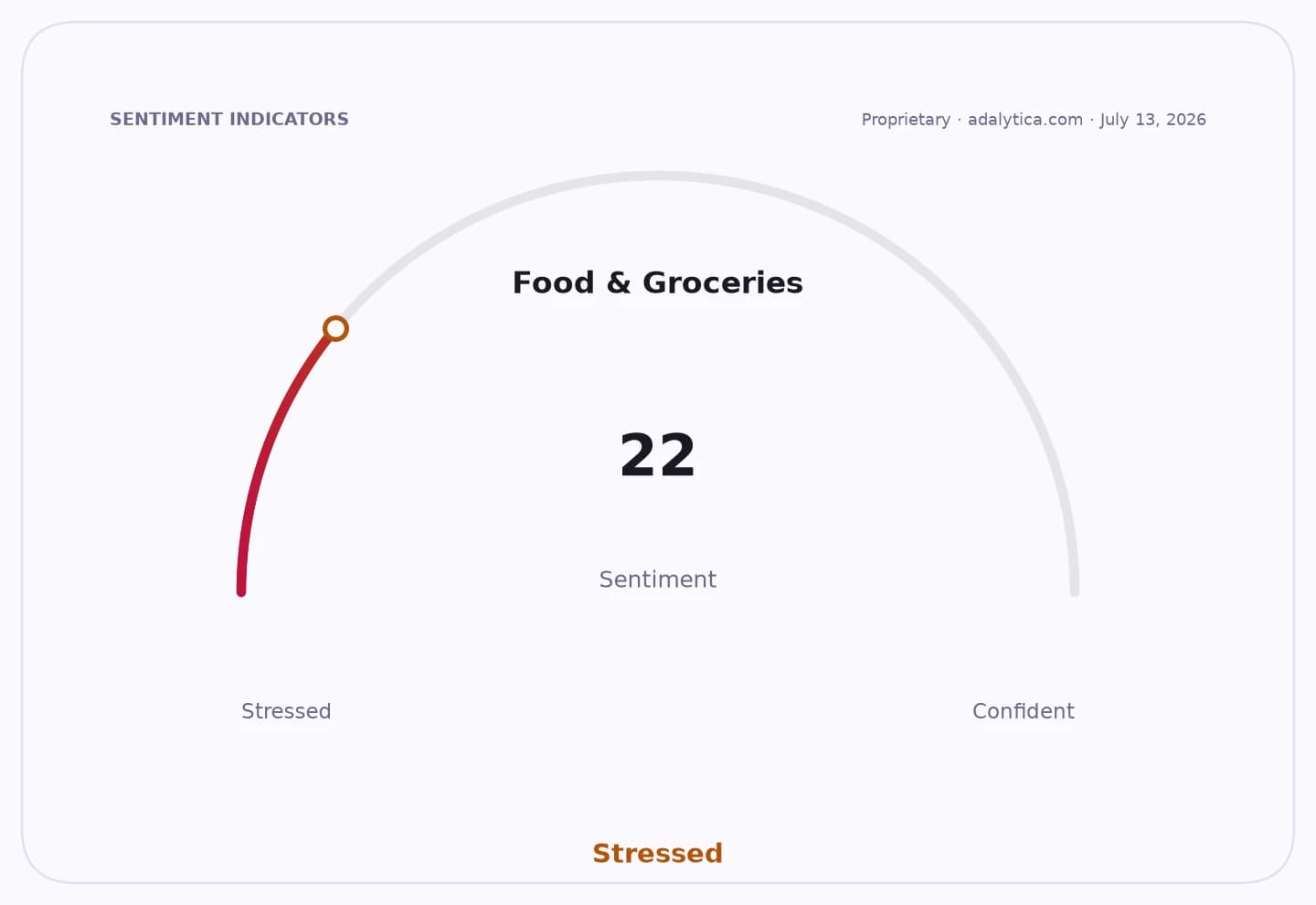
Adalytica’s Food and Grocery Spending Sentiment gauge reinforces that caution. The reading has fallen to fear, with sentiment down sharply over the past week, implying households remain uneasy even when some prices ease. That matters because weaker consumer confidence can eventually curb discretionary food spending, squeeze trade-up behavior and force retailers to lean harder on promotions.
The key issue now is whether lower prices in some staples are broadening out or whether the market is simply seeing another turn in a volatile food cycle. If fertilizer costs, shipping pressures and weather risks persist, beans and other dependent commodities could stay firm even as pockets of relief appear elsewhere. For investors, that argues for watching not just headline food inflation, but the dispersion inside the basket — because that is where the next margin surprise is likely to show up.
| Entity | Gains | Losses |
|---|---|---|
| Consumers | ▲Cheaper eggs, pasta and tea | ▼Higher bean prices |
| Food retailers | ▲Lower costs in some staples | ▼Margin pressure from mixed inflation |
| Food suppliers | ▲Pricing power in beans | ▼Weaker pricing on eggs/pasta/tea |
| Longs in food commodities | ▲Upside in beans | ▼Softer exposure in declining staples |