Fortinet’s nearly 9% weekly surge reflects a bigger shift in the market: investors are moving back into cybersecurity as artificial intelligence raises, rather than reduces, the value of digital defenses.
Fortinet Rises as AI Security Demand Grows
The immediate catalyst was a sharp reset in sentiment across the group, helped by fresh warnings from AI developers themselves about how quickly the technology is advancing. That has pushed traders toward companies that sell the digital “picks and shovels” of the AI era — security platforms that sit in front of critical data, networks and infrastructure. Fortinet has been one of the beneficiaries because it is not just a software story but a hardware-and-software security platform with recurring demand tied to enterprise spending.
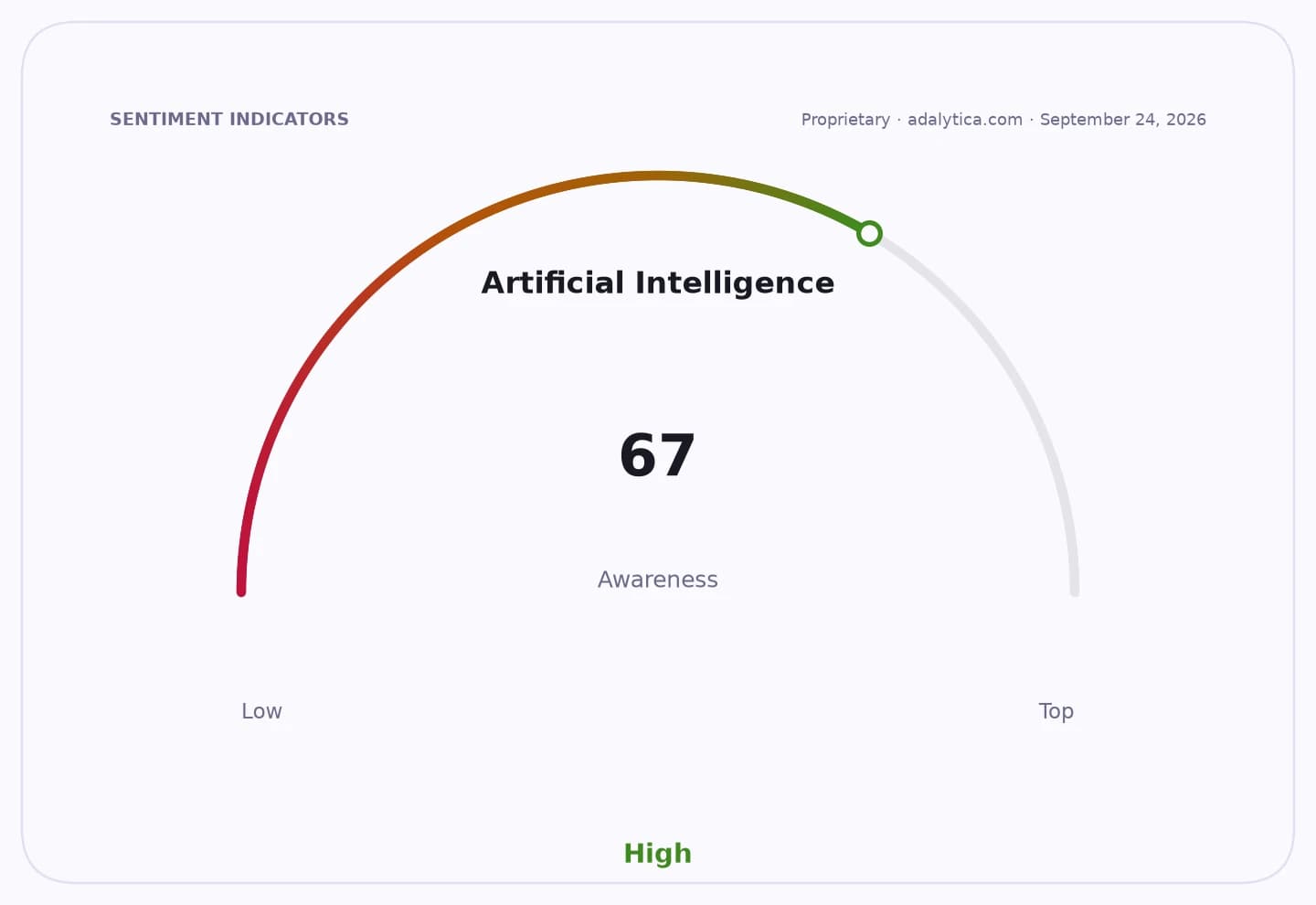
Sentiment IndicatorsⓘProprietary · adalytica.com · September 21, 2026
This is a snapshot — live sentiment, awareness and momentum for 130+ markets update continuously in the dashboard.Open AlphaPulse
Bernstein SocGen Group added fuel to the move on Thursday, lifting its price target on Fortinet to $145 from $102, even while keeping its equivalent of a hold rating. The market treated that as a meaningful vote of confidence. Fortinet’s shares still finished this week’s run well above that target, closing at $174.55 on Monday, underscoring just how aggressively investors have re-rated the cybersecurity trade.
The broader sector move matters because it shows where capital is chasing protection. If AI expands attack surfaces, automates phishing, accelerates code generation and increases the risk of model abuse, then cybersecurity becomes a structural spending priority, not a discretionary line item. That is why names such as Palo Alto Networks and CrowdStrike have also been in demand. Palo Alto Networks traded at $369.41 on Monday after a volatile summer, while CrowdStrike finished at $247.95, both reflecting a market that is again rewarding scale, platform breadth and mission-critical exposure.
Fortinet’s own fundamentals help explain why the stock has caught a bid. In its latest filing, product revenue rose 46% in the first half of the year, driven by higher unit shipments and recent pricing actions. The company also said demand benefited from higher-performance products and deployments tied to AI infrastructure. That is an important tell: the AI buildout is not only lifting compute and chips, it is also creating a second-order wave of spending on security, networking and control.
The technical picture has turned more constructive too. Fortinet’s shares are trading far above their 50-day and 200-day moving averages, a sign the rally has broken out of the slower-moving trend that dominated earlier in the year. The stock’s relative strength remains elevated, showing momentum investors have not been frightened off by the move. Adalytica’s sentiment reading on the S&P 500 still shows fear, which makes the rotation into cybersecurity stand out even more: in a cautious tape, defensive growth with real spending visibility tends to win.
The investment case here is straightforward. The market may still be underestimating how much AI will force companies to spend on defense, monitoring and zero-trust architecture. That is a multi-year capex cycle for cybersecurity vendors with integrated platforms, global reach and the ability to sell into both enterprise and infrastructure buildouts. Fortinet’s custom silicon and FortiOS operating system give it a durable product edge, and its installed base gives it a long runway for monetization.
For investors, the opportunity is not just in Fortinet, but in the entire cybersecurity value chain — especially the companies positioned as essential infrastructure for the AI economy. If AI remains the defining secular theme, cybersecurity is becoming one of its most obvious toll roads. I believe the market is still early in pricing that reality.
| Entity | Gains | Losses |
|---|---|---|
| Fortinet | ▲Higher valuation | ▼Short sellers |
| Palo Alto Networks | ▲Sector multiple expansion | ▼Investors expecting a pullback |
| CrowdStrike | ▲Fresh demand for security platforms | ▼Buyers chasing the move late |
| Enterprise customers | ▲Stronger defenses | ▼Discretionary IT budgets |