UNI is offering free training in artificial intelligence, programming and cybersecurity, and that matters because the biggest investment theme in the AI boom may not be the chips or the chatbots — it may be the people who can actually build, secure and deploy them.
Free AI Training Highlights Skills Gap
For investors, that is the part of the story that compounds. AI adoption is no longer just a question of whether companies want to automate more work; it is becoming a question of whether enough workers, students and small businesses can keep up. When a university opens the door to free training, it helps widen the talent pipeline at a time when demand for digital skills is running far ahead of supply. That can lift productivity over the long term, strengthen local labor markets and make entire economies more attractive for technology investment.
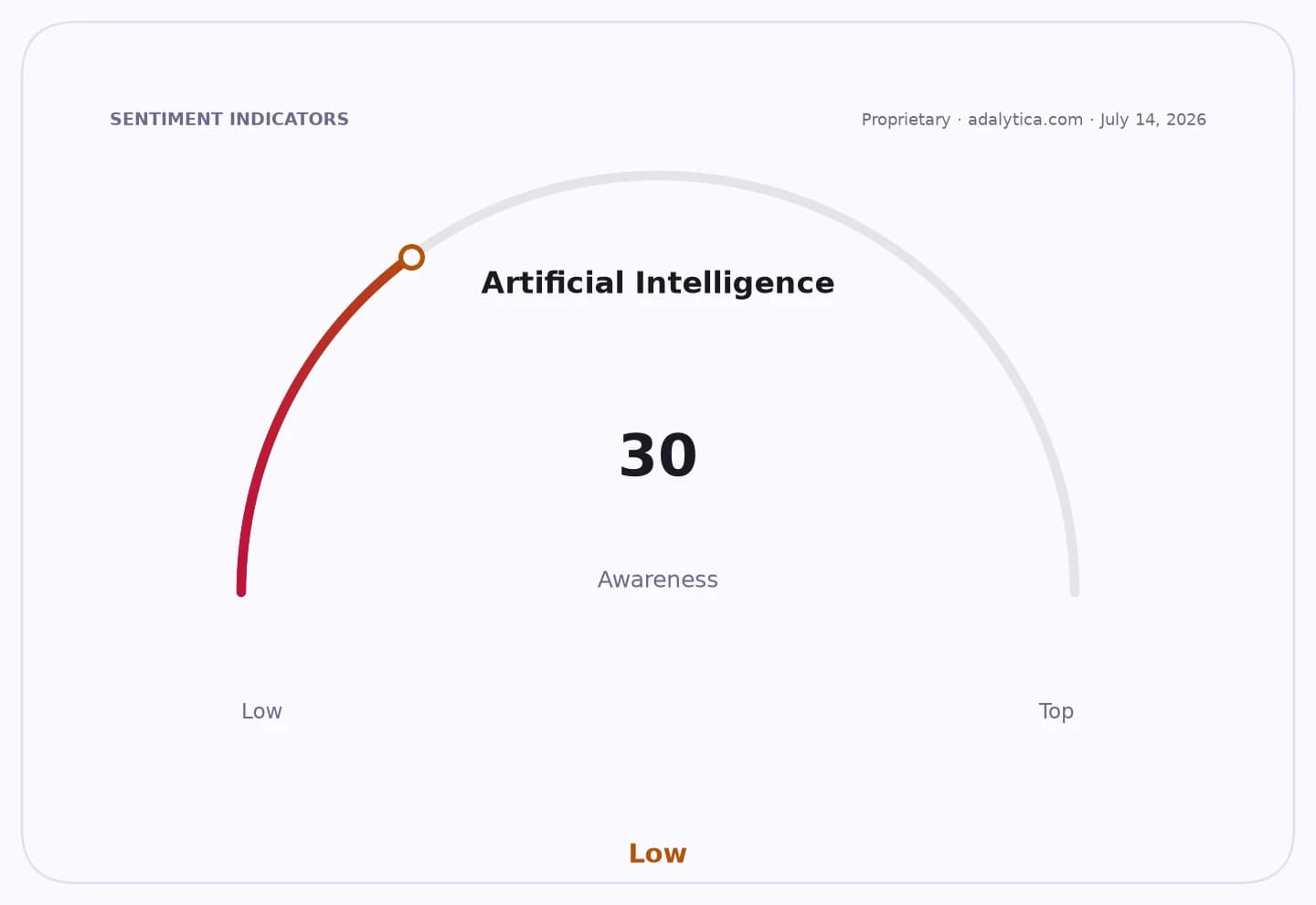
Sentiment IndicatorsⓘProprietary · adalytica.com · July 14, 2026
This is a snapshot — live sentiment, awareness and momentum for 130+ markets update continuously in the dashboard.Open AlphaPulse
The timing is important. Across the world, policymakers and corporate leaders are still trying to answer a basic question: how do you make AI accessible without creating legal, security and workforce bottlenecks? Anthropic chief executive Dario Amodei’s call for clearer intellectual property rules in Australia shows that the next phase of AI is not just about model size or computing power. It is about governance, training data rights and the ability to develop a skilled workforce without choking innovation. At the same time, grassroots efforts such as school and teacher training in AI and robotics reflect a broader realization that AI literacy is becoming as essential as basic computer literacy once was.
That is why free training programs matter far beyond the classroom. They help turn AI from a headline into a practical skill set, and they reduce one of the most durable obstacles to growth: the skills gap. Companies do not just need more software. They need more people who can write code, defend networks, automate workflows and adapt as AI changes job descriptions. For long-term investors, that makes education providers, cybersecurity companies, cloud platforms and AI infrastructure firms part of the same secular growth story.
Microsoft, Nvidia and Apple remain useful bellwethers for that broader theme. Microsoft’s shares have rebounded from a deep midyear slide, but the stock is still well below its longer-term peak, showing how quickly sentiment can swing even around companies at the center of AI and cloud spending. Nvidia remains the clearest pure-play beneficiary of the AI buildout, while Apple’s steadier technical profile suggests investors still see value in companies that can monetize software, devices and ecosystem lock-in over many years. The common thread is that AI demand is real, but the next leg of growth depends on execution, regulation and talent.
There are risks, of course. Free training alone will not solve weak broadband, uneven access to devices or the shortage of experienced instructors. And as Amodei’s remarks show, clearer rules are still needed if governments want to encourage innovation without turning AI development into a legal minefield. But those are not reasons to dismiss the opportunity. They are reminders that the companies and countries that solve the skills problem first are likely to capture the most durable gains.
For investors thinking in years, not weeks, the message is straightforward: the AI revolution is increasingly about workforce readiness as much as hardware. UNI’s free program is worth watching because it speaks to a bigger trend — the democratization of high-value digital skills. In a market still obsessed with the next chip cycle, that may be the more powerful compounding story.
| Entity | Gains | Losses |
|---|---|---|
| Students and job seekers | ▲Free access to in-demand skills | ▼Those without internet or devices |
| UNI | ▲Stronger reputation and reach | ▼Training costs and execution risk |
| Employers in tech and security | ▲Larger talent pipeline | ▼Scarcity premium for skilled hires |
| AI leaders and cloud firms | ▲More adoption and use cases | ▼Slower rollout if skills lag |