French field fire adds wheat weather premium
A field fire between Dieppe and Yvetot that destroyed 27 hectares of wheat and straw is a fresh reminder that dry, windy weather is turning Europe’s grain belt into a supply-risk market again.
The blaze is small in global crop terms, but it matters because wheat markets are already sensitive to any sign of tighter near-term supply, especially after a season marked by heat, drought and repeated fire incidents across parts of Europe. For farmers, every lost hectare is direct yield destruction; for traders, it is another reason to keep a weather premium in the market.
Chicago wheat futures have been supported by that risk backdrop, with the WEAT wheat ETF rising to $23.72 on July 10 from $22.70 a day earlier, while trading above its 50-day and 200-day moving averages. The ETF’s RSI reading of 59.2 and a near-flat MACD signal suggest momentum is improving without yet looking stretched.
Corn has also stabilized after a sharp June selloff, with CORN closing at $17.48 on July 10 and moving back toward its short-term average, even as its RSI recovered to 58.6. Soybeans are firmer too, with SOYB at $25.17, leaving grain investors increasingly focused on whether weather losses in Europe and dryness in other producing regions can keep a floor under prices.
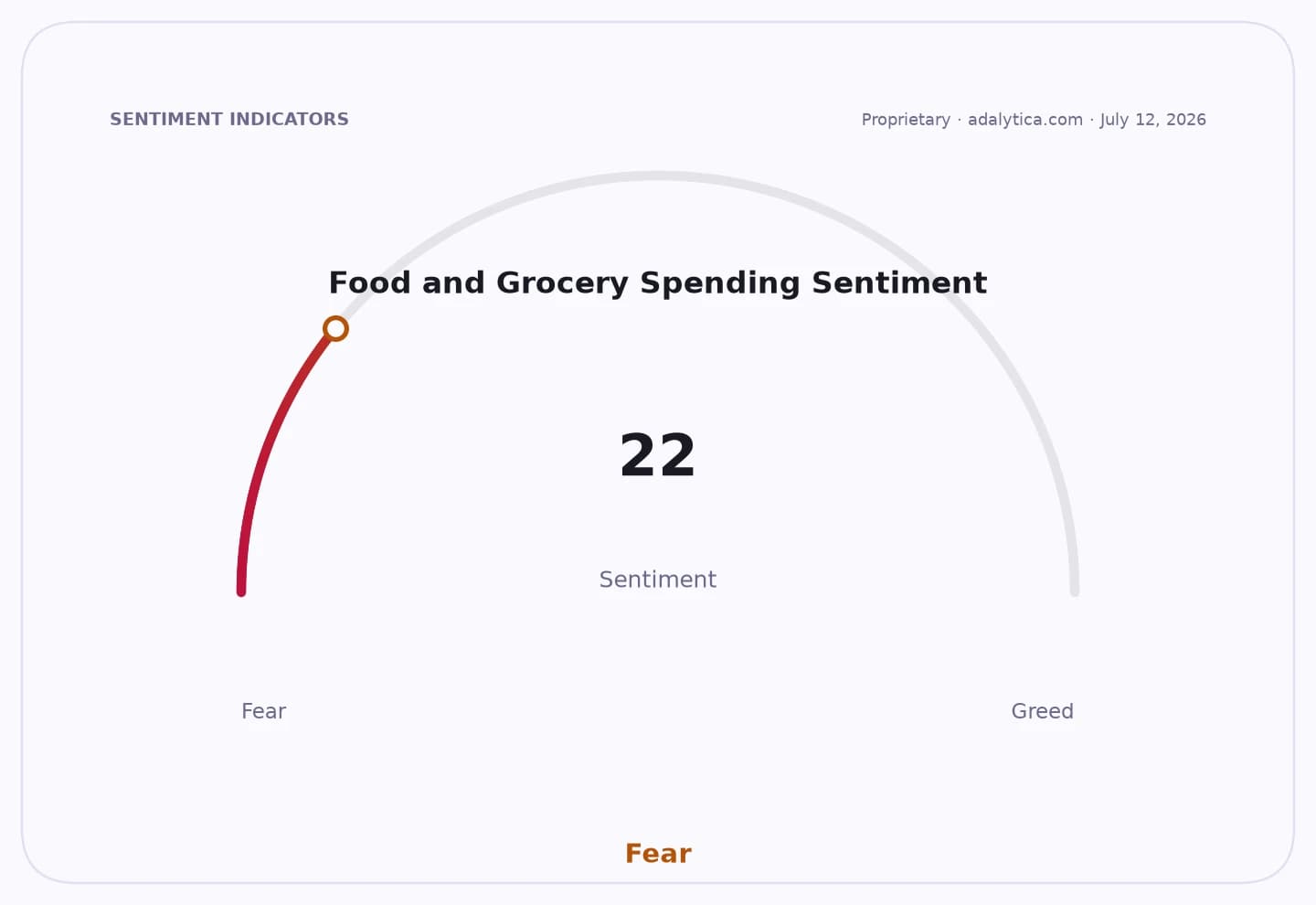
The broader economic impact runs through food inflation and farm income. U.S. core producer prices are projected to keep rising, while consumer inflation excluding food and energy remains elevated, leaving little room for another food shock if crop losses accumulate across Europe and elsewhere. Adalytica’s Food and Grocery Spending Sentiment gauge has also swung back into “Fear,” signaling households remain sensitive to any fresh pressure on grocery bills.
The immediate risk for investors is that localized fire damage becomes part of a wider weather narrative that supports agri-commodity volatility, boosts hedging demand and lifts revenues for traders, grain handlers and insurers. The next test is whether more hot, windy conditions trigger additional field fires or crop quality downgrades in France and neighboring wheat regions, which would keep the market premium alive into the next pricing cycle.
| Entity | Gains | Losses |
|---|---|---|
| Wheat bulls | ▲Weather premium, higher prices | ▼None if losses stay isolated |
| Wheat farmers in Normandy | ▲Limited support if insured | ▼Direct crop loss, lower output |
| Grain traders/hedgers | ▲Volatility, hedging volume | ▼Short positions, unhedged buyers |
| Consumers/importers | ▲None | ▼Higher food costs, tighter supply |