U.S. Pushes Frontier AI Toward Tighter Controls
Washington is forcing Anthropic to suspend its most powerful AI system, a move that puts national security at the center of the frontier-model debate and raises the odds that the U.S. will tighten controls on how leading AI systems are trained, deployed and shared.
The immediate economic significance is that regulators are no longer treating model safety as a narrow compliance issue. They are moving into the core of AI commercialization, where restrictions on advanced systems can slow product rollout, raise development costs and force companies to build more guardrails around the most valuable models.
That matters because Anthropic sits in the same frontier-AI race as Microsoft-backed OpenAI, Google and other hyperscalers spending heavily on training and inference capacity. Any forced suspension of a top-tier model underscores the risk that governments can interrupt the pace of releases, trim the addressable market for enterprise AI products and add uncertainty to revenue assumptions across the sector.
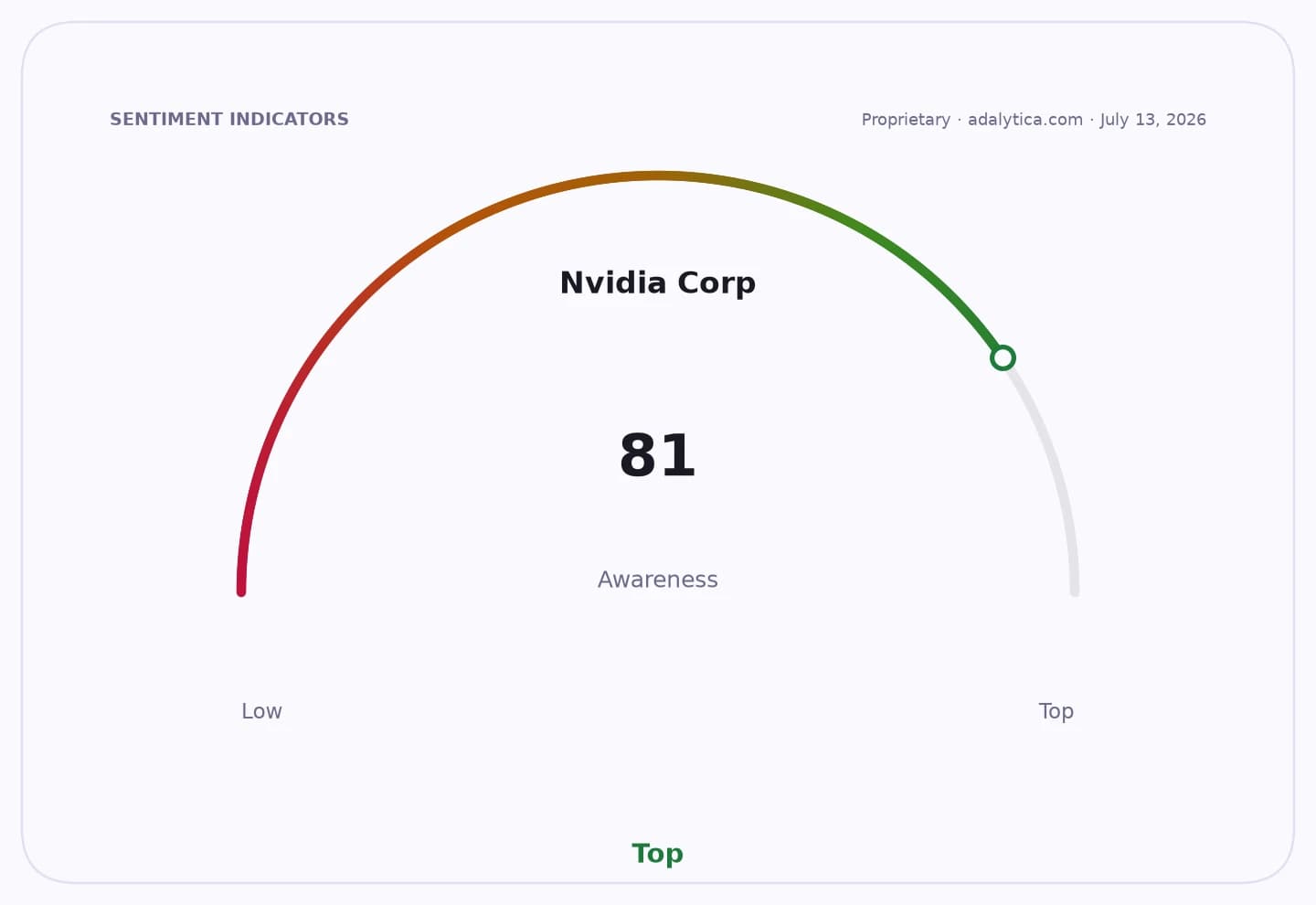
Investors are also likely to read the decision as a warning shot for Nvidia, Microsoft and Alphabet. Nvidia has ridden demand for high-end GPUs from AI labs and cloud providers; if governments limit access to the most powerful models or slow deployment, the growth curve for computing demand could become more uneven. The stock has been volatile even after a strong run, with recent price action showing it trading near its 50-day average and momentum indicators cooling from earlier overbought levels.
Microsoft and Alphabet face a different but related risk: the regulatory burden is rising just as they try to embed AI across cloud, productivity and search products. Microsoft’s latest filings already flag frontier-model safety, transparency and content-provenance risks, while Google has faced shareholder scrutiny over AI oversight. A national security-driven suspension at Anthropic could strengthen the case for tougher disclosure, more human review and tighter release controls across the industry.
The broader narrative is that AI is moving from a pure growth story to a policy story. The U.S.-U.K. collaboration on assessing AI risks points in the same direction, suggesting regulators are converging on a framework that treats frontier models as infrastructure with security implications, not just software. That shift is bad for speed, but potentially good for incumbents that can absorb compliance costs and bad for smaller players that depend on rapid iteration.
For markets, the next catalyst is whether Washington broadens the scope of its national security review and whether other frontier-model developers face similar limits. Any sign of wider restrictions would pressure AI valuations, while a contained action could briefly ease fears without removing the regulatory overhang.
| Entity | Gains | Losses |
|---|---|---|
| U.S. regulators | ▲More control over frontier AI | ▼Slower industry rollout |
| Anthropic | ▲Reduced security scrutiny over time | ▼Most powerful model suspended |
| Nvidia | ▲Demand from compliant, scaled AI spending | ▼Risk of slower GPU growth |
| Microsoft, Alphabet | ▲Better case for safety-heavy AI platforms | ▼Higher compliance and release costs |