The British pound’s resilience against the New Zealand dollar is keeping GBP/NZD near 2.3471, underscoring a broader shift in sterling demand that matters for importers, exporters and anyone moving money between the UK and New Zealand.
GBP/NZD Holds Near 2.3471 as Sterling Strengthens

The move is significant because the exchange rate is being driven less by idiosyncratic New Zealand factors than by a firmer pound profile across major pairs. Sterling has recently hit a 16-month high against the euro and also strengthened versus the US dollar, helped by hotter UK inflation that has reinforced expectations that policy will stay tighter for longer. For GBP/NZD, that leaves the pound better supported even as global FX markets remain sensitive to shifts in rate expectations and risk appetite.
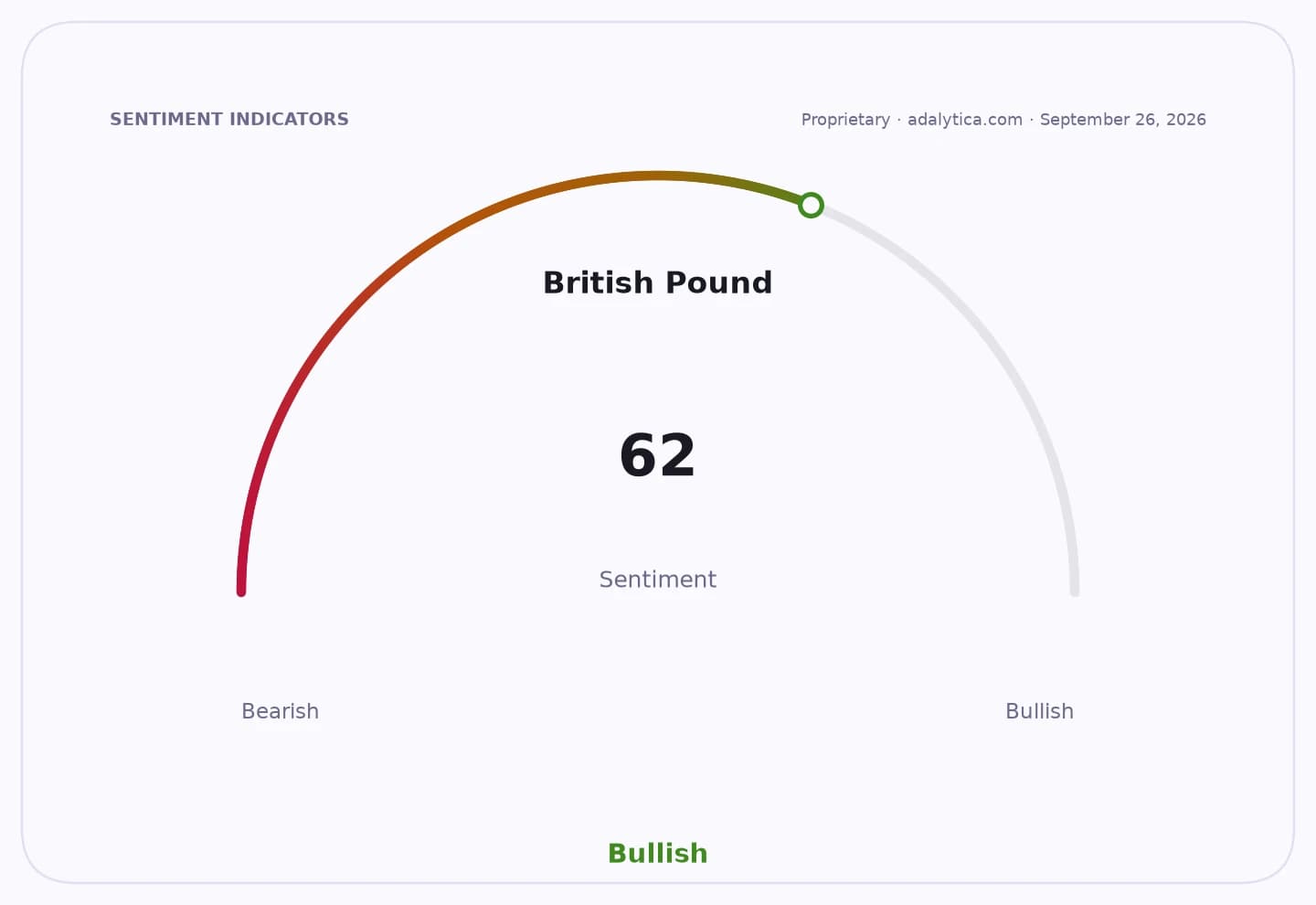
Sentiment IndicatorsⓘProprietary · adalytica.com · October 23, 2026
This is a snapshot — live sentiment, awareness and momentum for 130+ markets update continuously in the dashboard.Open AlphaPulse
For British buyers of New Zealand dollars, the near-2.35 level implies a stronger sterling conversion rate than would typically be available when the pound is under pressure, which can improve the economics of paying suppliers, financing travel or settling offshore expenses. On a £10,000 transfer, the difference between a specialist broker and a high-street bank can still amount to hundreds of New Zealand dollars, making pricing dispersion more than a theoretical issue.
Market structure is also helping the pair stay orderly. FX volatility readings have fallen sharply, with Adalytica’s FX volatility trading signal in “Extreme Fear” but showing a 30-day decline of 77 points, suggesting the market is less reactive than earlier in the year. That usually narrows intraday swings and can make executed prices look more stable, even when the directional bias remains intact.
Technical signals on sterling are constructive but not euphoric. The pound ETF, tracked via FXB, has been trading above both its 50-day and 200-day moving averages, while recent RSI readings around the high-60s indicate strength without obvious breakdown risk. MACD has turned positive, another sign that momentum has improved. Still, the pattern leaves room for a pullback if inflation data or central bank messaging disappoints.
The bull case for sterling is straightforward: sticky UK inflation keeps rate-cut expectations muted, supporting the pound against currencies tied more closely to commodity cycles or softer domestic growth. The bear case is that a stronger pound could eventually meet resistance if UK data cools, global risk sentiment improves, or New Zealand’s yield and commodity backdrop regains traction.
For investors and corporate treasurers, the key question is whether GBP/NZD can hold above current levels or whether the pair is entering a range-bound phase after sterling’s recent outperformance. Near term, the balance of risk still favors a relatively firm pound, but the next leg will likely depend on UK inflation, Bank of England guidance and broader market volatility.
| Entity | Gains | Losses |
|---|---|---|
| UK importers | ▲Cheaper NZD purchases | ▼Export margin pressure |
| New Zealand exporters | ▲Stronger GBP receipts | ▼Less competitive pricing |
| British pound | ▲Rate support | ▼Risk of overbought pullback |
| FX option buyers | ▲Lower volatility pricing | ▼Fewer dislocation opportunities |