GBP/USD Holds Near 1.35 Before CPI and UK GDP
GBP/USD was stuck in a tight range as investors held off on fresh bets before U.S. inflation data and UK growth figures that could reset expectations for Federal Reserve and Bank of England policy.
The pair has hovered around 1.35, with the 50-day and 200-day moving averages both near 1.34, underscoring a market that has largely priced in near-term uncertainty rather than a clear directional break. The latest technical readings point to consolidation rather than conviction: RSI is in the low 60s, while MACD remains modestly positive, suggesting modest momentum but not enough to force a breakout.
For the dollar, the key issue is whether July consumer prices revive concern that inflation is still too sticky for the Fed to ease aggressively. U.S. CPI rose sharply over the long run and is forecast to edge up 0.89% in July after a 0.42% decline in June, a sequence that would keep the Fed cautious if price pressures broaden beyond a few soft categories. The Treasury market is already pricing a 10-year yield around 4.72%, a level that keeps U.S. rates attractive relative to sterling assets and limits how far cable can rally on its own.
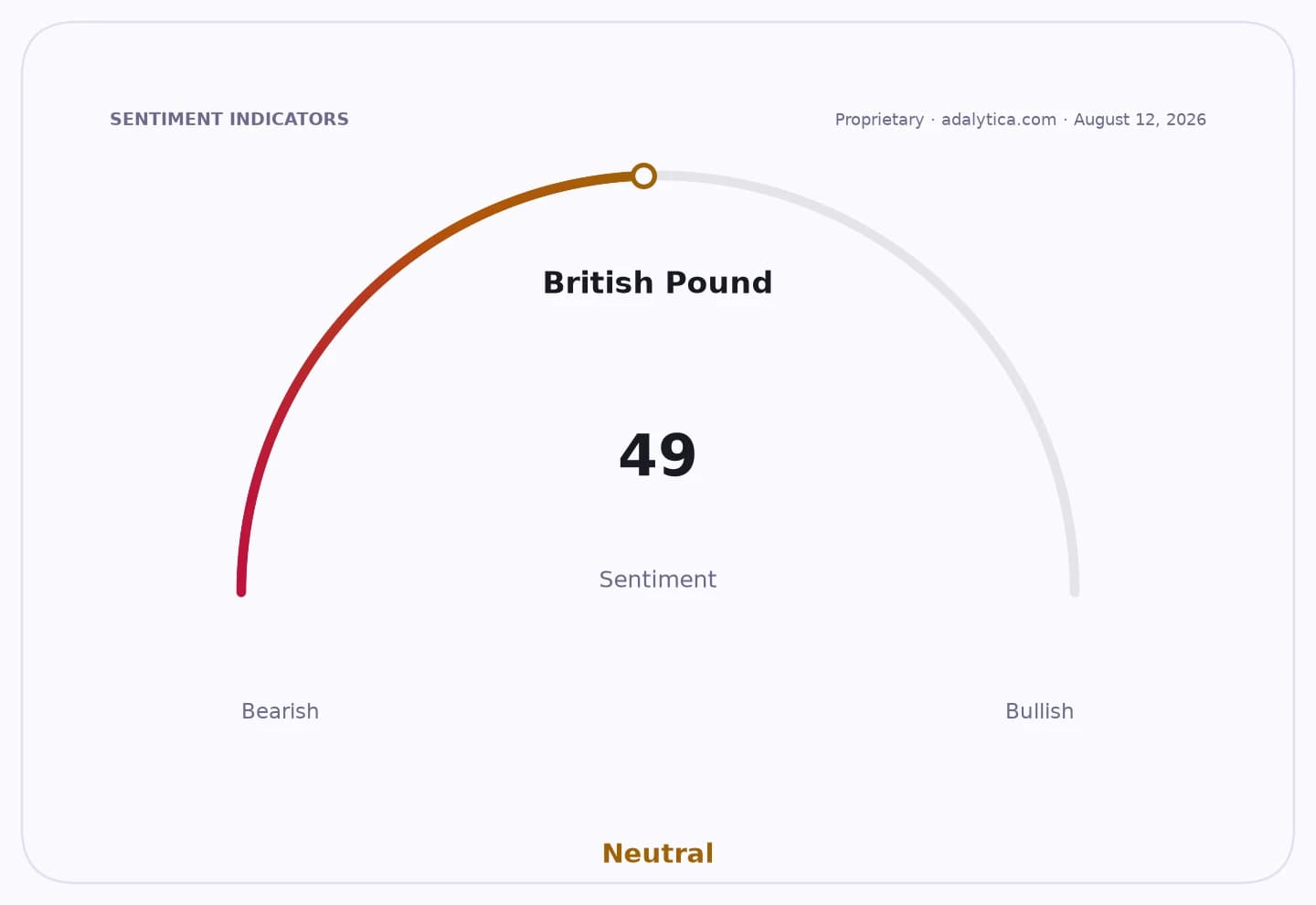
Sterling, meanwhile, is waiting on UK GDP to show whether the economy is gaining enough traction to justify firmer expectations for Bank of England policy. Britain’s labour market has remained relatively tight, with unemployment at 4.1%, but that has not been enough to break the pound decisively higher against a dollar still supported by higher U.S. yields and persistent policy uncertainty. Adalytica’s pound trade signals show sentiment at neutral, even as awareness remains extremely elevated, a sign that positioning is active but not yet committed to a strong trend.
That leaves GBP/USD vulnerable to whichever data point surprises more. A hotter-than-expected U.S. inflation print would reinforce the dollar’s yield advantage and pressure the pair lower. A firmer-than-expected UK GDP reading could give sterling a short-term lift by reviving the case that the BoE can stay tighter for longer. But with both economies facing slowing growth risks, the more likely near-term outcome is continued range trade until one of the reports forces a reassessment.
| Entity | Gains | Losses |
|---|---|---|
| U.S. dollar bulls | ▲Higher-yield support | ▼If CPI cools |
| Sterling bulls | ▲Stronger UK GDP | ▼If UK growth disappoints |
| Federal Reserve hawks | ▲Sticky-inflation case | ▼Dovish rate-cut bets |
| GBP/USD range traders | ▲Sideways volatility | ▼Trend followers |