Gen Z Consumer Confidence Rises as Inflation Cools
Gen Z is emerging as the most upbeat generation on the state of the money economy, a sign that cooling inflation and a still-resilient labor market are shaping expectations even as older Americans remain more cautious.
That matters because consumer confidence is not just a mood metric; it feeds directly into spending decisions, savings behavior and the outlook for everything from restaurants and apparel to credit card balances and travel. A generation that feels better about its finances is more likely to spend, trade up and take risk, while a generation that feels squeezed tends to delay purchases and build precautionary savings.
The backdrop helps explain the split. U.S. consumer prices are forecast to rise 0.9% in July after a flat June reading, according to the data context, suggesting inflation has come down sharply from the pandemic-era surge and is now moving more in line with the Federal Reserve’s comfort zone. At the same time, the unemployment rate is seen at 4.09% in August, near historically low levels by postwar standards, which supports income security even if wage gains are no longer as dramatic as they were earlier in the cycle.
For younger consumers, that combination can be more important than the level of prices alone. Gen Z is entering the workforce, building credit histories and making first-time discretionary purchases, so its optimism is often tied to employment access and rising earnings rather than memories of the inflation shock that still shapes older cohorts. That can make the group more willing to spend on branded goods, streaming, eating out and experiences — categories where sentiment often matters as much as income.
Investors should care because the divide in consumer attitudes can show up quickly in earnings across consumer-facing companies. Starbucks, which has a larger exposure to premium discretionary spending, has seen its shares climb to about $104.65, above both its 50-day and 200-day moving averages, suggesting the market is already rewarding signs of demand resilience. Nike, by contrast, has fallen to about $42.11, well below its 200-day moving average near $53.17, reflecting skepticism about broader apparel demand and margin recovery. Snap, which depends on younger users and advertisers chasing them, has also rebounded from its April lows to around $5.35, although the stock remains below its 200-day average, underscoring how fragile the recovery still is for ad-dependent media.
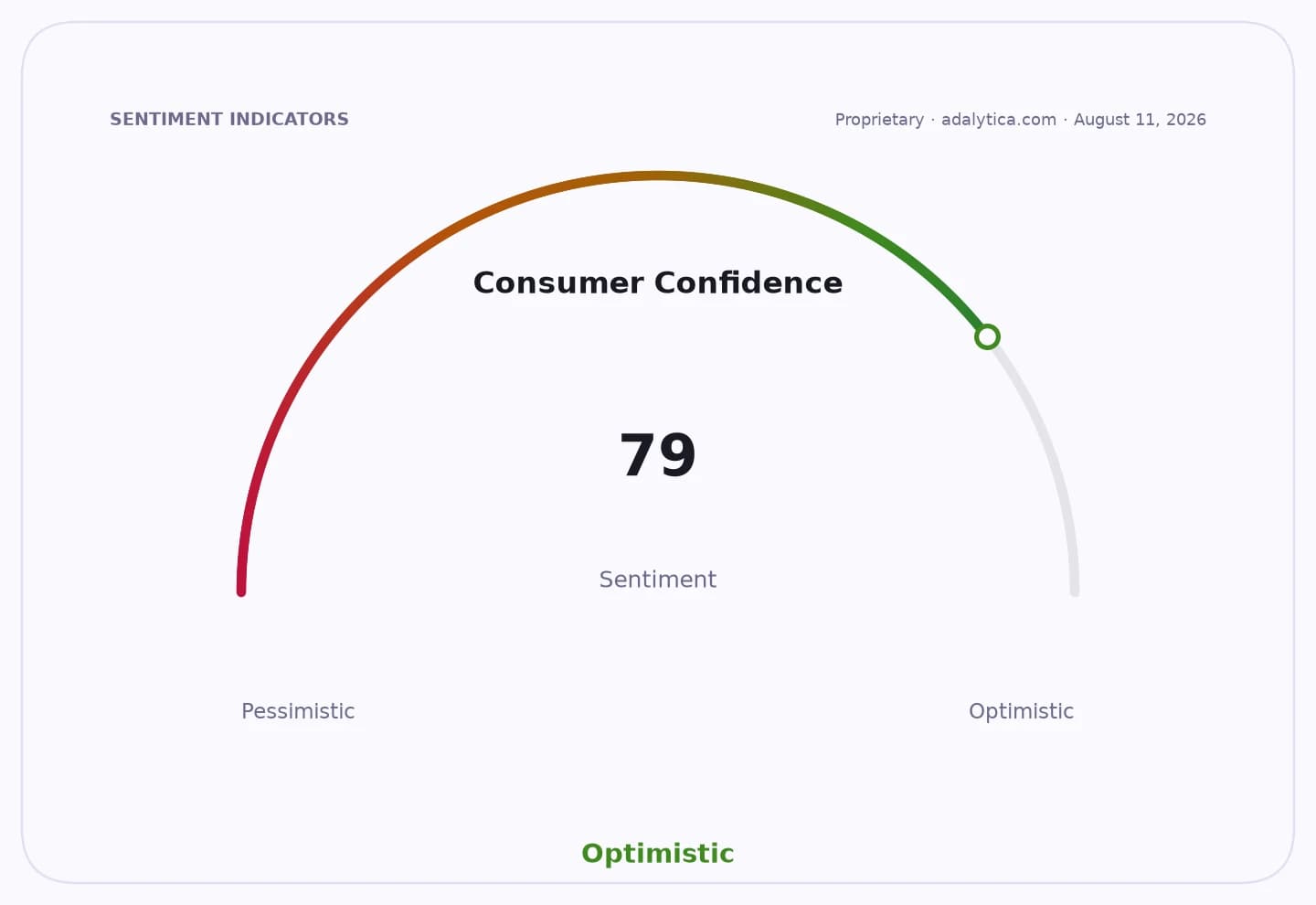
Adalytica’s Consumer Confidence Recession Sentiment gauge also points to a sharp recent jump in optimism, with sentiment at 79 and awareness at 89, both in the “Greed” range. While such proprietary indicators should not be treated as a substitute for hard data, they reinforce the idea that the market is watching the consumer mood closely, especially as investors have also pushed the S&P 500 sentiment gauge into “Extreme Greed.”
The bull case is that Gen Z optimism will translate into durable spending power as the labor market remains firm and inflation stays contained. The bear case is that younger consumers may be the most willing to spend, but also the most exposed to high housing costs, student debt and weaker job prospects if the labor market cools. That would make today’s confidence reading less a broad-based recovery than a narrow, age-specific pocket of optimism.
What investors watch next is whether the confidence gap widens or narrows as the summer inflation prints and labor-market data come in. If price pressures keep easing and unemployment holds near 4%, Gen Z’s optimism could prove to be an early signal that consumer demand is stabilizing rather than fading — a constructive backdrop for discretionary retail, travel and advertising stocks.
| Entity | Gains | Losses |
|---|---|---|
| Gen Z consumers | ▲Better spending outlook | ▼Less urgency to save |
| Consumer-facing companies | ▲Stronger demand potential | ▼Weaker demand if optimism fades |
| Older cohorts | ▲Lower inflation relief | ▼Continued caution |
| Nike / discretionary apparel | ▲Higher youth demand if spending improves | ▼Pressure if wallets stay tight |