Geopolitical risk lifts Treasuries, hits Taiwan tech
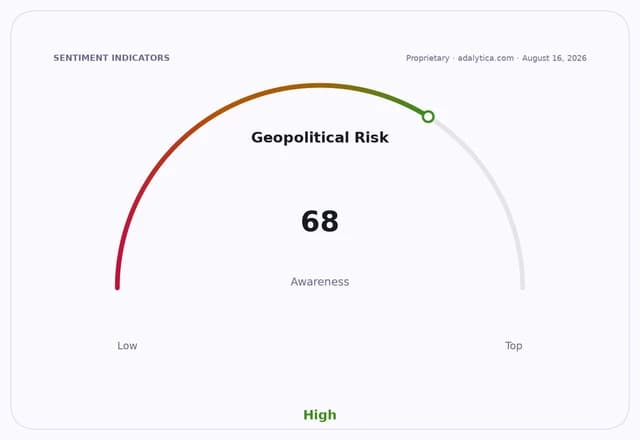
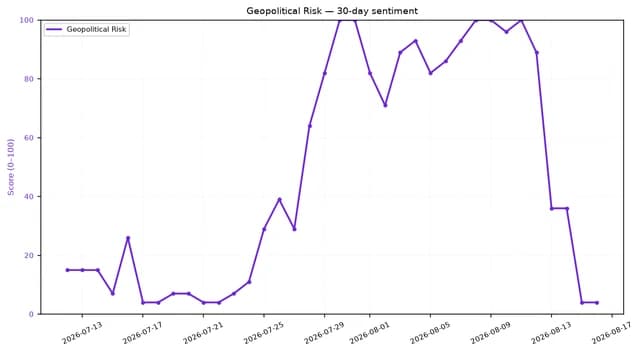
A surge in geopolitical risk is rippling through global markets as investors confront the prospect of simultaneous conflict flashpoints involving Iran, Ukraine, North Korea and Taiwan.
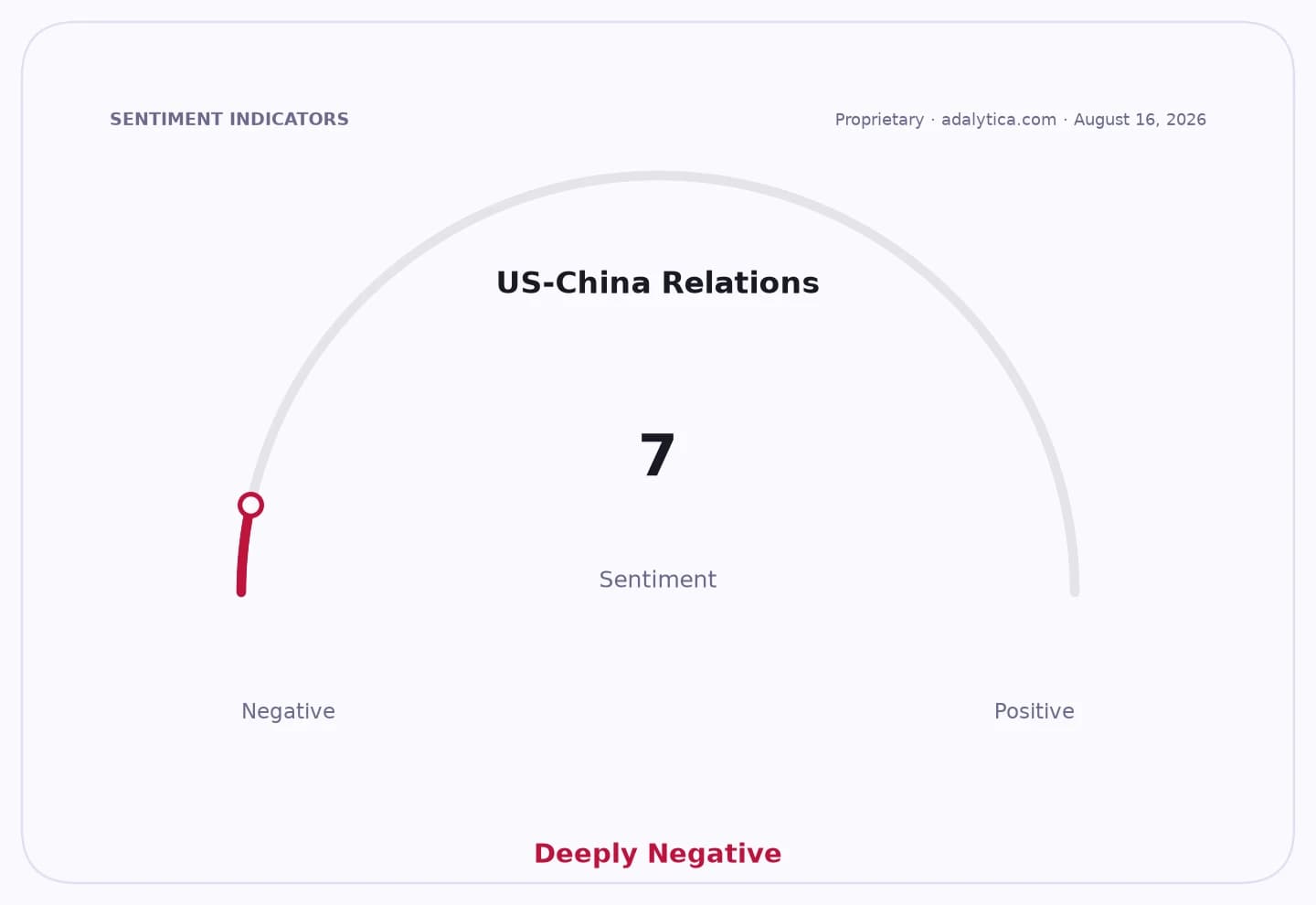
The immediate market consequence is a flight to safety. Adalytica’s Global Stability Sentiment gauge has collapsed to 4, or “Extreme Fear,” from 36 a day earlier and 86 in early June, while its US–China Relations Sentiment reading has plunged to 7, also “Extreme Fear.” That kind of cross-asset stress matters because it tends to lift government bond demand, widen credit spreads and weaken cyclical and trade-exposed assets even before any military escalation becomes fact.
The benchmark 10-year US Treasury yield, at 4.652% in the latest forecast, remains near recent highs, but the move lower from 4.70% on Aug. 11 to 4.63% on Aug. 13 suggests investors are already reaching for duration as a hedge against tail risk. High-yield credit is also holding more defensively, with the Bloomberg high-yield spread gauge at 2.717 percentage points, only slightly above recent levels but well below the blowout seen in prior risk episodes. That mix implies markets are not yet pricing systemic damage, but they are clearly building in a higher geopolitical premium.
The pressure is most visible in Asia-facing assets. Taiwan-focused EWT has rebounded sharply to $107.07 from $89.41 on July 29, but the ETF remains vulnerable to any shift from rhetoric to actual conflict around the island. Its 50-day moving average at $102.34 and 200-day average at $80.59 show the longer-term trend is still constructive, yet the recent rally leaves it exposed if supply-chain fears hit semiconductors. By contrast, FXI, the China large-cap ETF, is trading at $34.89, below its 200-day moving average of $36.8, reflecting a market that has not fully repaired its discount for policy and trade risk.
Taiwan Semiconductor Manufacturing Co. sits at the center of that exposure. TSM closed at $426.35, just above its 50-day moving average of $425.06 and well above the 200-day average of $362.32, but the stock has been volatile enough to show how quickly investors can toggle between AI-driven optimism and geopolitical caution. Technical indicators point to a still-positive longer-term setup, with RSI at 64.5 and MACD back in positive territory, yet any disruption in the Taiwan Strait would hit not only TSM’s valuation but also the global AI supply chain, from chip designers to cloud providers and handset makers.
The economic stakes are broader than equity prices. A simultaneous rise in conflict risk across the Middle East, Europe and East Asia threatens shipping lanes, energy flows, defense outlays and capital spending. For importers and manufacturers, the danger is higher input costs, insurance premia and inventory hoarding. For exporters and technology suppliers, the bigger risk is demand disruption and sanctions exposure. That is why semiconductor names, Asian equities and high-beta credit typically react first to geopolitical shocks, even when the conflict has not yet changed earnings estimates.
The bull case for risk assets is that this is mostly a repricing of headlines, not a deterioration in cash flows. The bear case is that the market is underestimating how quickly a regional crisis can feed through to energy, trade and electronics supply chains. With global stability sentiment near panic levels and US–China relations sentiment at extreme fear, investors are being asked to fund a world in which multiple geopolitical premiums can stack at once.
What matters now is whether the fear reading becomes a durable risk-off regime or fades if rhetoric cools. If the current backdrop persists, the likely winners are Treasuries, defense shares and select energy names; the losers are emerging-market equities, Asian cyclicals and the most supply-chain-sensitive technology names.
| Entity | Gains | Losses |
|---|---|---|
| US Treasuries | ▲Safe-haven demand | ▼Yield-sensitive sellers |
| Defense stocks | ▲Higher spending hopes | ▼Peace-driven valuation support |
| Energy producers | ▲Geopolitical premium | ▼Importers and refiners |
| Taiwan tech supply chain | ▲None from escalation | ▼Semis, exporters, Asian equities |