German travelers are Greece’s biggest tourism spenders, and that matters because it points to a durable source of foreign cash for one of Europe’s most travel-dependent economies.
German Spending Supports Greek Tourism

For investors, the takeaway is bigger than a vacation statistic. Tourism is still a core engine for Greece, supporting jobs, hotel rates, restaurants, airlines, cruise operators and airport traffic. When Germans lead spending, it signals that demand is not just broad-based but coming from one of Europe’s wealthiest and most travel-prone markets, which helps cushion Greece against softer domestic demand and gives the country a more reliable flow of hard currency.
Sentiment IndicatorsⓘProprietary · adalytica.com · July 14, 2026
This is a snapshot — live sentiment, awareness and momentum for 130+ markets update continuously in the dashboard.Open AlphaPulse
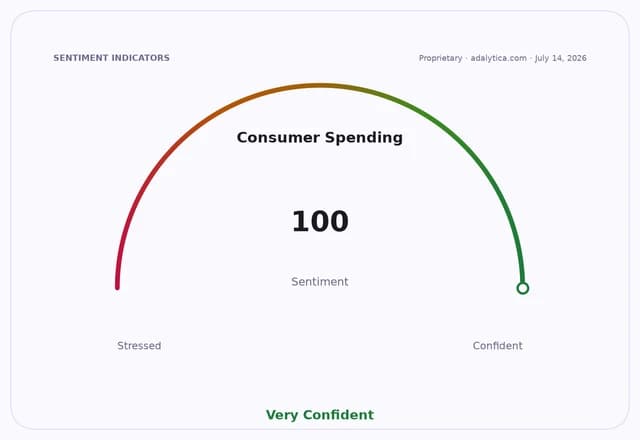
That is especially important in a year when consumer sentiment around discretionary spending has been mixed globally, even as Adalytica’s Consumer Spending Sentiment gauge shows extreme greed and retail-goods spending sentiment remains elevated. In other words, travelers are still willing to spend on experiences, and Greece is capturing a meaningful share of that wallet.
The appeal is obvious. Germany remains a giant outbound travel market, and Greece offers the mix that keeps long-haul holiday spending sticky: sun, islands, culture and a price point that still looks attractive versus some Western European alternatives. For Greek tourism operators, that is good news for pricing power and occupancy. For airlines, package-tour groups and cruise lines, it supports load factors and revenue visibility into future seasons.
That also helps explain why travel names can often outperform even when the broader market is choppy. North American cruise operator Norwegian Cruise Line, for example, has seen its shares swing with the usual technical signals around its 50-day and 200-day moving averages, but the bigger story remains demand for leisure travel. When key source markets like Germany keep spending in destinations like Greece, it reinforces the case that the sector’s long-term recovery is not just a rebound — it is becoming a compounding growth story.
Still, investors should not confuse strong tourism with a straight line higher. Europe’s travel economy remains exposed to fuel costs, geopolitics, airfare capacity and the strength of the euro against major currencies. Greece also has to keep investing in infrastructure, labor and sustainability if it wants to avoid the classic tourism trap of overdependence on a single season or a single customer base.
For long-term investors, the message is simple: Greece’s tourism model still works, and German travelers are one of the most important reasons why. That makes the country worth watching not only as a destination, but as a barometer for consumer confidence, Mediterranean leisure demand and the earnings power of travel-linked businesses. If you want exposure, think in years, not weeks, and focus on companies and funds with diversified demand, strong cash flow and the ability to compound through the cycle.
| Entity | Gains | Losses |
|---|---|---|
| Greek hotels and resorts | ▲Higher occupancy and pricing power | ▼Seasonal demand risk remains |
| Airlines and tour operators | ▲Stronger load factors | ▼Fuel and capacity costs |
| German travelers | ▲Broad destination choice | ▼Higher holiday spending |
| Competing Mediterranean destinations | ▲Pressure on market share | ▼Lose affluent European demand |