Germany Retail Sales Fall 3.4% in July
Germany’s retail sector posted its sharpest monthly decline in five years in July, a sign that Europe’s largest economy is still struggling to translate easing headline growth into actual consumer spending.
Real retail sales fell 3.4% from June, the biggest drop since July 2021 and far weaker than economists had expected, underscoring how high energy costs, renewed inflation pressure and labor-market uncertainty are continuing to suppress household demand. The slump matters because German consumption is supposed to be one of the main stabilizers for an economy that has already been bruised by weak industry, soft export demand and fragile business confidence.
The fall was broad-based. Sales at petrol stations dropped 9.1% after temporary fuel subsidies ended, suggesting households are cutting back on driving as energy costs make private car use more expensive. Non-food retail fell 4.8%, while online and mail-order sales declined 5.6%, showing the weakness is not limited to bricks-and-mortar stores. Food retail slipped only 0.8%, a sign that consumers are still protecting essentials even as they pull back on discretionary purchases.
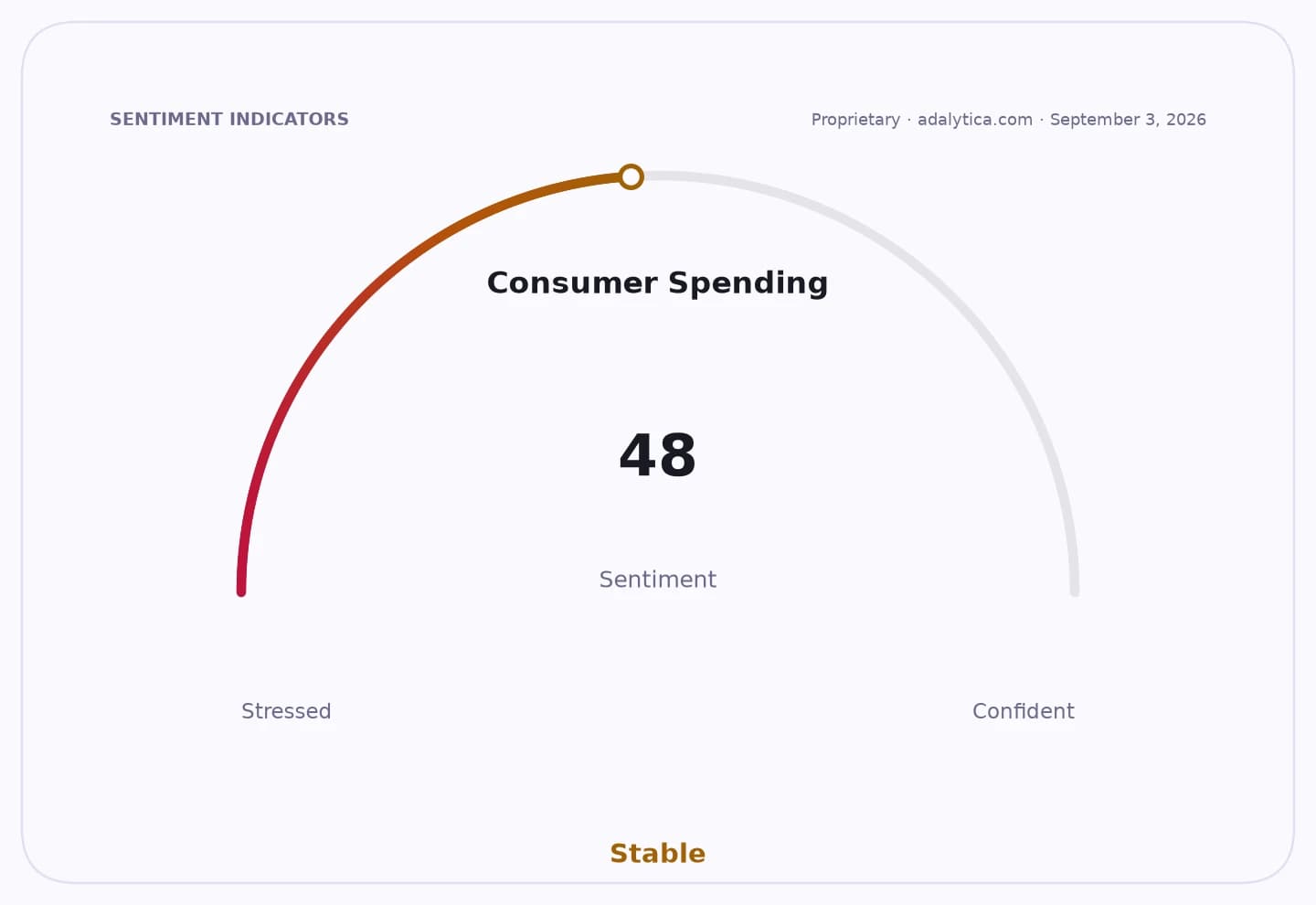
The data also complicates the outlook for the third quarter. Inflation in Germany rose to 2.9% in August, while real wages are improving only slowly, leaving purchasing power under pressure. HDE, the country’s retail association, said sentiment remained weak enough to resemble the second lockdown phase of the pandemic, an extreme comparison that reflects how little momentum the sector has been able to build despite periods of optimism elsewhere in the economy.
For investors, the key implication is that domestic demand is unlikely to provide the growth engine Germany needs in the near term. That weighs on retailers, consumer-facing companies and transport-related businesses, but it also reinforces a broader macro risk: if household spending stays subdued, the economy becomes even more dependent on exports and industrial activity at a time when both remain vulnerable. It may also keep pressure on the European Central Bank to balance still-elevated inflation against a weakening consumption backdrop.
The bear case is that the July drop marks more than a one-off weather or energy shock and instead points to a consumer that is retrenching again just as the recovery was supposed to broaden. The bull case is that some of the decline was distorted by the end of fuel support and unusually hot weather, meaning spending could stabilize if inflation cools and labor-market fears ease. For now, though, German retail is still waiting for a durable rebound.
| Entity | Gains | Losses |
|---|---|---|
| Consumers | ▲Essential spending resilience | ▼Discretionary purchases |
| German retailers | ▲— | ▼Sales volumes |
| Energy suppliers | ▲Higher pricing power | ▼Fuel-demand sensitivity |
| German economy | ▲— | ▼Domestic growth momentum |