Gold and Bitcoin Draw Demand on Debt Fears
Rising sovereign debt is pushing investors to rethink what a defensive asset looks like, and both gold and bitcoin are drawing capital as markets question the durability of government balance sheets.
The shift matters because the scale of public borrowing is no longer a background macro concern; it is becoming a portfolio construction issue. The IMF projects average G7 debt to climb to 123.7% of GDP in 2026, while France’s finance ministry has warned its debt may reach the highest level since 1978 by 2027. In the U.S., debt keeps rising with little political appetite for tax increases or other painful fiscal fixes. That backdrop is helping explain why assets outside the traditional sovereign credit system are finding more demand.
Gold remains the more established refuge. Central banks bought about 1,000 tonnes a year on average between 2022 and 2025, roughly double the previous decade’s pace, according to the data cited by 3iQ president Tommaso Mancuso. Sovereign institutions now hold more than 36,000 tonnes of physical gold, valued at nearly $5 trillion. That demand reflects a preference for an asset with no issuer risk and a track record as a reserve store of value when fiscal credibility weakens.
Bitcoin is benefiting from the same broad thesis, but for different reasons. It is increasingly embedded in the financial system through spot exchange-traded funds and corporate balance sheets, giving institutions a way to express distrust in fiat money without buying bullion. Bitcoin traded around $81,232 on Sunday, near the upper end of its recent range, while GLD, the largest gold-backed exchange-traded fund, was last at $401.17, above its 50-day moving average of $392.97 but still below its 200-day average of $416.22.
The case for owning both is not that they are interchangeable. Gold is the lower-volatility hedge, with historical annualized swings of about 12% to 15%, while bitcoin’s volatility has been far higher at 40% to 50%, with drawdowns of 70% to 80% not unusual. That makes gold the more conventional ballast for institutions wary of fiscal stress, and bitcoin the higher-beta bet on the same macro narrative: that monetary debasement and sovereign risk will matter more, not less, over time.
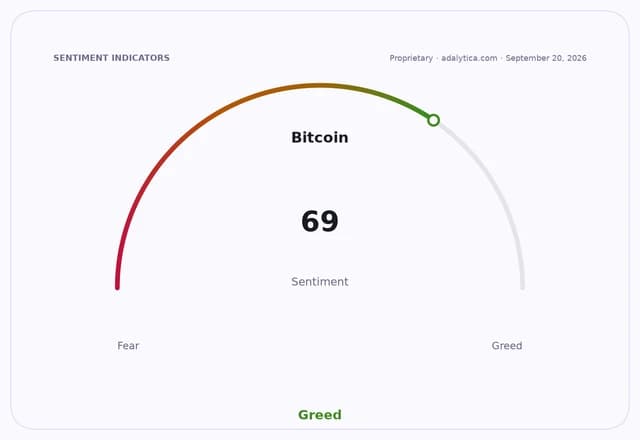
The argument is also reinforced by market behavior. Adalytica’s Bitcoin Fear & Greed Index was at 69, neutral but still elevated after a 42-point rise over seven days, while U.S. dollar trade signals showed extreme greed at 99, suggesting a crowded dollar view even as confidence in paper assets appears fragile. Gold’s technical picture remains constructive despite a recent pullback, with GLD sitting above its 50-day average and its relative strength index recovering to 44.3 from deeply oversold levels earlier this year.
The newer twist is tokenized gold, which tries to marry bullion’s credibility with blockchain infrastructure. Products such as Tether Gold and Pax Gold now link tokens to vaulted bars while allowing around-the-clock trading and use as collateral. The market has topped $6 billion, still tiny versus the roughly $30 trillion above-ground gold market, but large enough to show that the line between traditional hard assets and digital finance is narrowing. The trade-off is that tokenized structures add smart-contract, counterparty and liquidity risk that physical bars do not carry.
For investors, the message is less about choosing a winner than about understanding function. Gold is the defensive reserve asset; bitcoin is the more volatile monetary alternative with asymmetric upside if distrust in fiat deepens. In a world of persistent deficits, rising refinancing needs and geopolitical fragmentation, both can belong in the same hedge against sovereign excess — provided position sizes reflect the very different risk profiles.
| Entity | Gains | Losses |
|---|---|---|
| Gold investors | ▲Lower-volatility hedge | ▼Misses upside vs bitcoin |
| Bitcoin holders | ▲Higher-beta monetary hedge | ▼Bigger drawdowns |
| Central banks | ▲Reserve diversification | ▼Reliance on sovereign debt |
| Fiat currencies | ▲Short-term usage support | ▼Eroded confidence |