Gold in Egypt Holds Near 5,870 Pounds Per Gram
Gold prices in Egypt are holding near record-sensitive levels, with 21-karat jewelry gold steady at 5,870 Egyptian pounds per gram on Wednesday, underscoring how global bullion strength is still feeding directly into local pricing.
That matters because gold in Egypt is no longer just a consumer purchase — it is a store of value, an inflation hedge and, for many households, a substitute for a weakening currency. When the local price stays pinned at these elevated levels, it tells you global gold remains the dominant force, not domestic retail demand. It also means Egyptian buyers, especially in jewelry and small savings bars, are facing a persistently expensive market even if day-to-day prices pause.
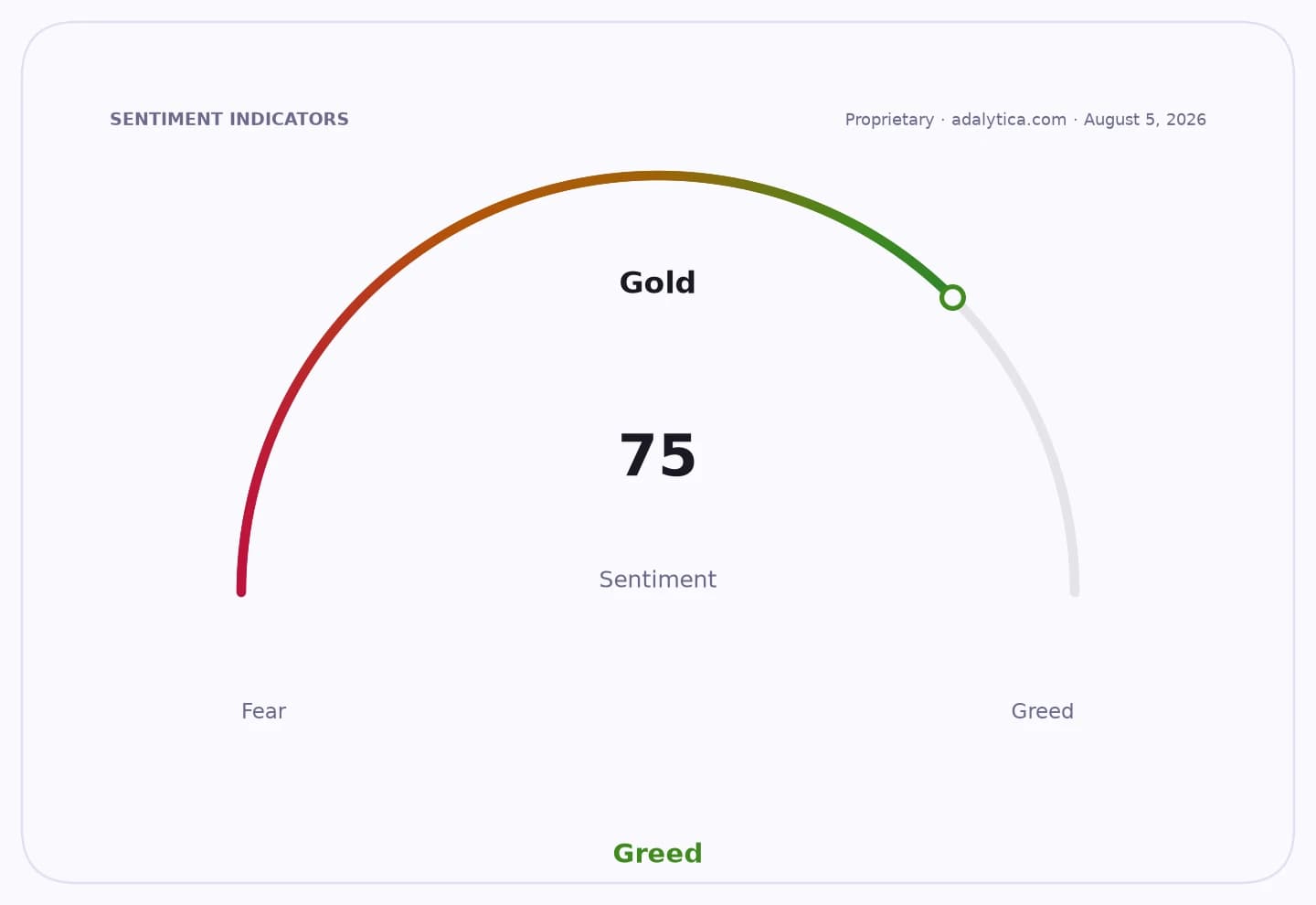
The international backdrop helps explain why. Gold futures were trading around 4,198.6 dollars an ounce on Aug. 5, well above the 50-day moving average of 4,184.15 and back above the upper Bollinger Band, with RSI at 61.2 — a sign of a market that has reset from late-July weakness and is regaining upside momentum. Adalytica’s Gold Fear & Greed Index puts sentiment at 75, in “Greed,” with awareness at 100, or “Extreme Greed,” showing the metal remains one of the market’s most crowded conviction trades.
That momentum is being reinforced by the macro picture. The US 10-year Treasury yield is forecast around 4.76%, after jumping sharply from 4.68% on July 30, while Adalytica’s dollar signals are flashing “Extreme Greed” for the greenback. Usually a stronger dollar and firmer yields are headwinds for gold, but bullion has held its ground, suggesting investors are still buying it as a hedge against policy uncertainty, fiscal stress and geopolitical risk. In other words, the market is willing to pay up for insurance.
For investors, that keeps the trade centered not just on bullion itself, but on the second-order winners. Gold miners with low all-in sustaining costs, royalty companies, and physically backed funds remain the clearest beneficiaries if prices stay near these levels or move higher. Newmont’s latest filing showed all-in sustaining costs per gold ounce rose sharply, which makes the spread between miners’ costs and bullion price especially important. A sustained gold market above 4,000 dollars an ounce supports cash generation, buybacks and balance-sheet repair across the sector.
In Egypt, the price action also has a local economic edge. Higher gold prices can dampen jewelry demand, channel savings toward harder assets and keep pressure on consumers already contending with living-cost stress. That makes the 5,870-pound level more than a retail quote: it is another signal that inflation hedging behavior remains deeply embedded in the economy.
The key question now is whether gold can hold above the technical pivot near 4,200 dollars. If it does, Egypt’s 21-karat price may not just stabilize — it may be preparing for the next leg higher, leaving late buyers chasing a trend that remains supported by macro fear, currency doubt and persistent central-bank-style demand for hard assets.
| Entity | Gains | Losses |
|---|---|---|
| Gold investors | ▲Inflation hedge | ▼Higher entry prices |
| Gold miners | ▲Wider margins | ▼Cost pressure |
| Egyptian households | ▲Savings protection | ▼More expensive jewelry |
| Dollar bulls | ▲Yield support | ▼Gold upside cap |