Gold Price Forecast: UOB Sees $5,400 by 2027
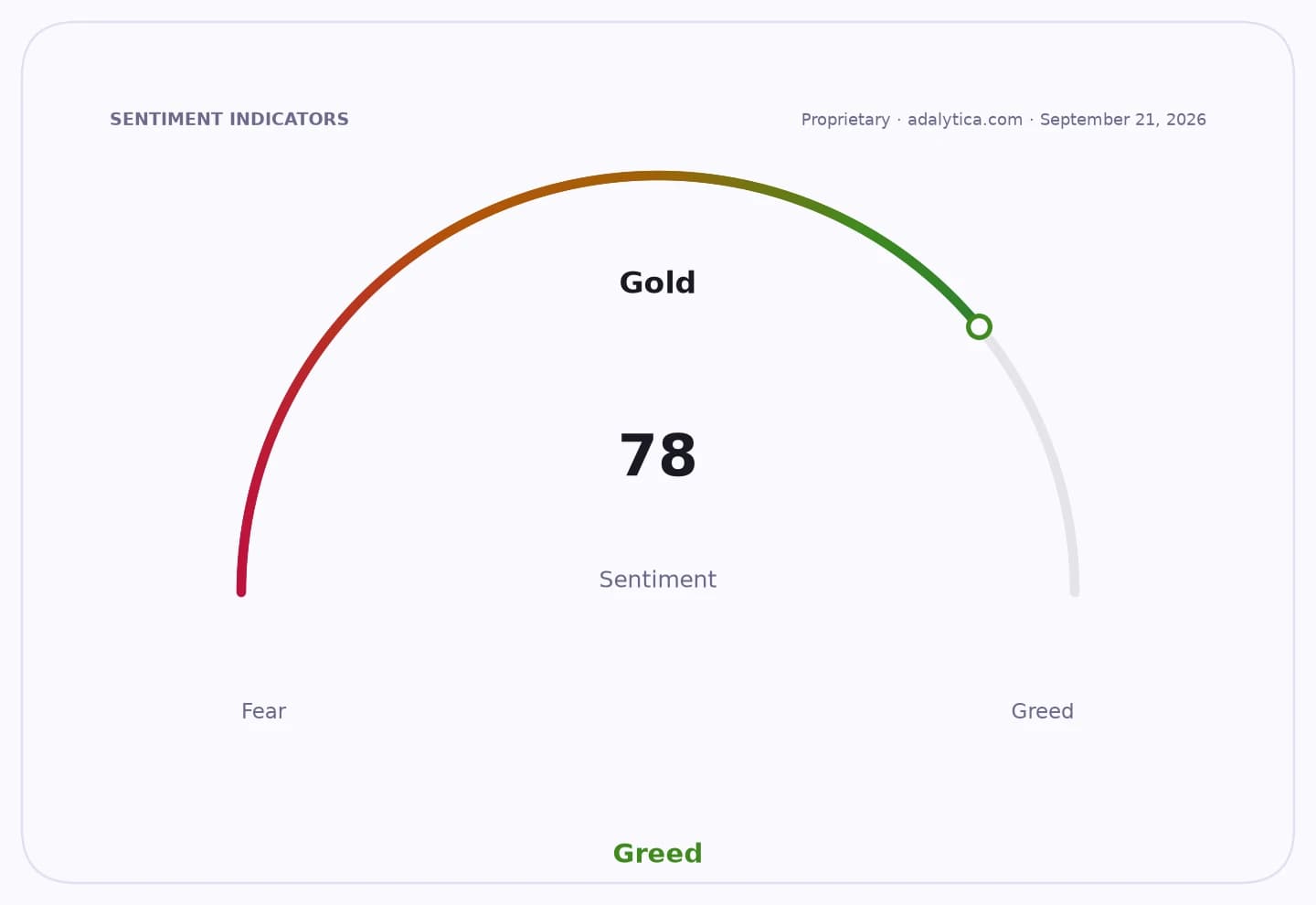
Gold’s next big move may still be up, and the market underestimates how powerful the backdrop can be when U.S. rates stay elevated, the dollar firms and central banks keep stretching the cycle. UOB is calling for gold to reach $4,500 an ounce by the end of 2026, then climb to $5,100 in the second quarter of 2027 and $5,400 in the third quarter, even as the Federal Reserve keeps signaling a higher-for-longer policy path.
That matters because the trade is no longer just about near-term rate cuts. It is becoming a macro hedge against prolonged real-rate pressure, geopolitical risk and a structurally weaker appetite for risk assets when funding costs remain restrictive. UOB said the Fed’s latest move to lift rates to 4% was not the surprise; the message was that inflation remains sticky and policy may stay tight for longer than investors expected. In that kind of regime, gold can shake out traders in the short run, but it continues to attract long-term allocations as a store of value.
The bank’s forecast also fits the market’s broader setup. The dollar has been strengthening sharply after the Fed decision, recovering some of its lost ground, while U.S. Treasury yields remain a key transmission channel for global liquidity. That is usually a headwind for bullion in the very short term because the opportunity cost of holding a non-yielding asset rises. But the longer the market accepts persistent policy tightness, the more gold becomes a portfolio insurance trade rather than a purely momentum trade.
The recent price action shows that tension clearly. Gold futures have retreated from earlier highs, with the metal trading around $4,381 an ounce in the latest session, below the 50-day moving average and still under the 200-day average. Standard technical indicators show momentum has cooled from overbought levels, but that is not the same as a broken trend. UOB’s call is essentially that the pullback is a consolidation inside a larger secular advance, not the start of a lasting reversal.
The investment case extends beyond bullion itself. Gold-backed vehicles such as GLD have been tracking the metal’s swings, and miners with disciplined cost structures stand to benefit if UOB’s price path plays out into 2027. When gold grinds higher in stages rather than exploding in one move, it can support margins, cash flow and capital returns for the better operators while forcing weaker producers to defend economics. That is where investors should focus: not just on the metal, but on the operating leverage inside the mining complex.
For Vietnam, the same global rate backdrop cuts both ways. UOB still sees the economy expanding about 8.5% this year, a strong number that reinforces the view that domestic growth remains resilient even as the Fed tightens conditions abroad. The bank said pressures on the dong, foreign funding costs and portfolio flows are manageable thanks to stable FDI, external buffers and foreign-exchange reserves. That is important for investors watching Southeast Asia because it suggests the region can absorb tighter global financial conditions without derailing the growth story.
The real takeaway is that gold and Vietnam are being pulled by the same macro force: a Federal Reserve that is not done, a stronger dollar and a world in which capital is becoming more selective. If UOB is right, that is bullish for hard assets and for economies with credible buffers. Investors who want exposure should be positioned for the second-order winners — bullion, gold ETFs, and quality miners — before the next leg higher becomes consensus.
| Entity | Gains | Losses |
|---|---|---|
| Gold bulls | ▲Higher prices into 2027 | ▼Short-term volatility |
| GLD and bullion ETFs | ▲Follow the uptrend | ▼Rate-sensitive traders |
| Quality gold miners | ▲Wider margins, cash flow leverage | ▼High-cost producers |
| Vietnam policymakers | ▲Strong growth narrative, manageable buffers | ▼Importers facing dollar pressure |