Gold Rises as Treasury Yields Ease
Gold prices climbed nearly 1% last week as easing pressure from U.S. Treasury yields kept the metal supported and investors stayed positioned for a volatile macro backdrop.
The move matters because gold has been trading more like a macro hedge than a simple commodity, with rate expectations and real yields shaping demand just as much as physical buying. When long-dated U.S. yields stop pushing higher, the opportunity cost of holding bullion falls, and that tends to lift both the metal and gold-linked funds.
That relationship showed up in the ETF market. SPDR Gold Shares, the largest bullion-backed exchange-traded fund, ended the period at $401.48 on Aug. 14, up from $398.96 a day earlier and well above its 50-day moving average of $381.30, while the 200-day average sat at $412.35. The fund’s RSI reading of 71.1 points to a stretched but still strong trend, and its MACD remained firmly positive.
Gold miners and bullion proxies also gained. VanEck Gold Miners ETF rose to $89.97 from $88.27, extending a sharp rebound from June’s $73.81 low, while iShares Gold Trust edged to $82.28. Both have recovered above their 50-day moving averages, a sign that traders are leaning back into the trade after the spring selloff.
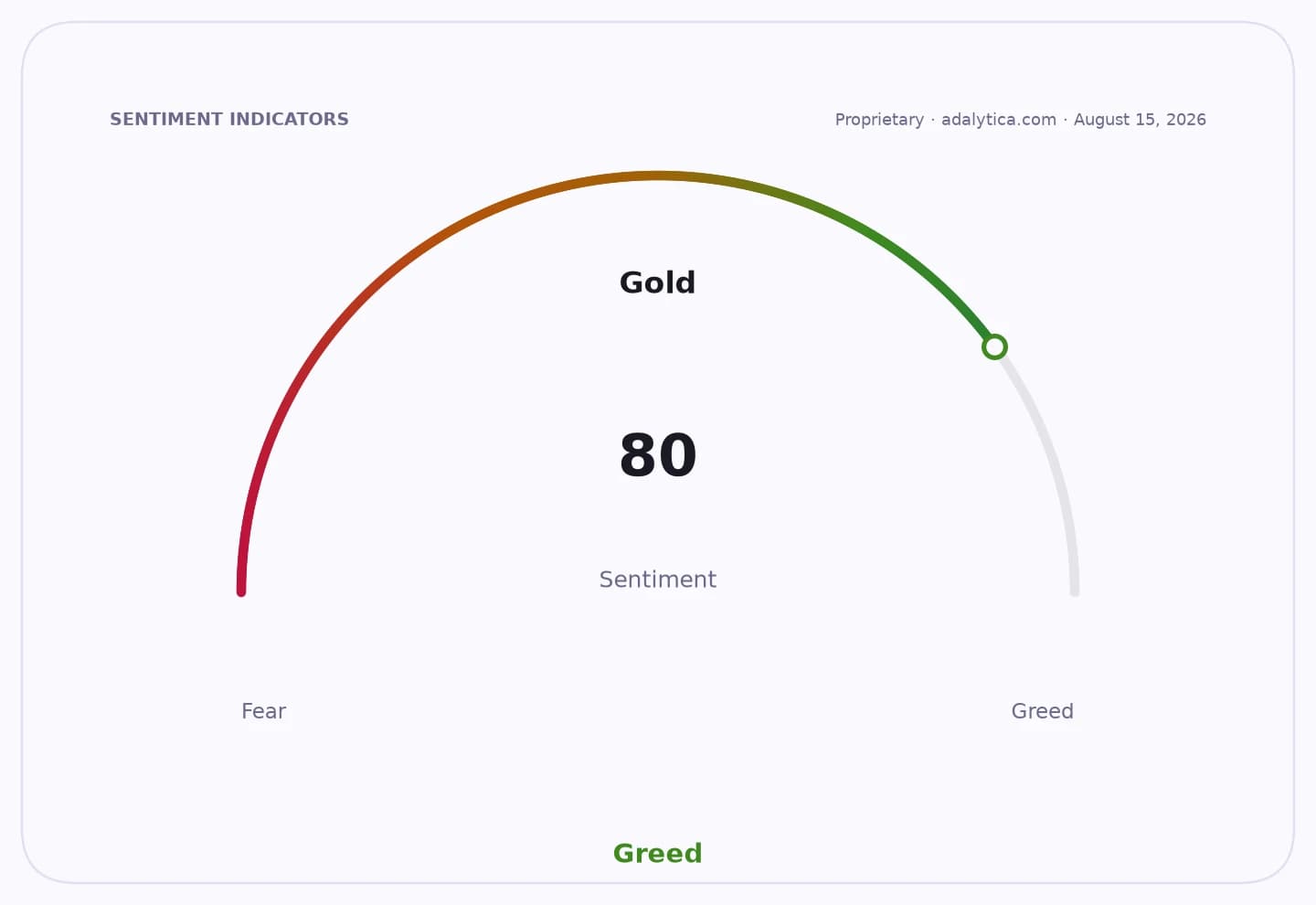
The backdrop is a Treasury market that has not fully resolved its next direction. The 10-year U.S. yield was forecast at 4.652% for Aug. 14 after slipping from 4.70% earlier in the week, and that kind of moderation typically helps non-yielding assets such as gold. Adalytica’s Gold Fear & Greed snapshot still reads “Greed” at 80, though it has eased from 95 two days earlier, suggesting enthusiasm remains elevated but less extreme.
For investors, the key question is whether gold can hold recent gains without another leg higher in yields. If rates stabilize or fall further, bullion and gold miners could keep attracting inflows; if yields resume climbing, the rally could fade quickly. The next catalyst is likely to come from U.S. rate expectations and any fresh move in Treasury markets, which remain the main driver of gold’s direction.
| Entity | Gains | Losses |
|---|---|---|
| Gold bulls | ▲Higher bullion prices | ▼Near-term profit-taking risk |
| GLD holders | ▲ETF gains and hedging value | ▼Reversal if yields rise |
| Gold miners | ▲Leverage to spot prices | ▼Margin pressure if gold cools |
| Treasury yields | ▲Holders of cash-like assets | ▼Bullion buyers seeking hedges |