Gold Outlook: SocGen Sees $5,250 by Q3 2027
Gold’s recent pullback looks more like a buying opportunity than a regime change, and Société Générale is betting the metal still has room to run as central banks struggle to get ahead of inflation, the dollar stays vulnerable and reserve managers keep shifting away from Treasuries.
That matters because the gold trade is no longer just about crisis hedging. It is increasingly about capital preservation in a world where inflation is sticky, real rates may fall later in the cycle and sovereign balance sheets are deteriorating. SocGen’s message is clear: the market is underpricing the structural bid from official-sector buying and the cyclical lift from softer real yields.

The French bank kept its gold allocation at 10% in its multi-asset portfolio and said it remains overweight commodities heading into the fourth quarter of 2026. It sees gold at $4,750 an ounce in the quarter, then $5,000 by the second quarter of 2027 and $5,250 by the third quarter. It also raised equities to 58% from 55% while trimming government bonds to 12% from 15%, underscoring its view that fixed income is no longer the cleanest shelter in a world of heavy debt burdens.
That call is rooted in a simple macro thesis: central banks are tightening, but not fast enough to outrun inflation. SocGen pointed to U.S. debt dynamics as a key reason. The bank said Washington now faces not only a primary-deficit problem but an interest-cost problem, with net interest outlays projected to rise toward 5% of GDP by the mid-2030s. It said the average interest rate on U.S. debt, around 4%, is already well above the 2.3% level needed to stabilize the debt ratio.
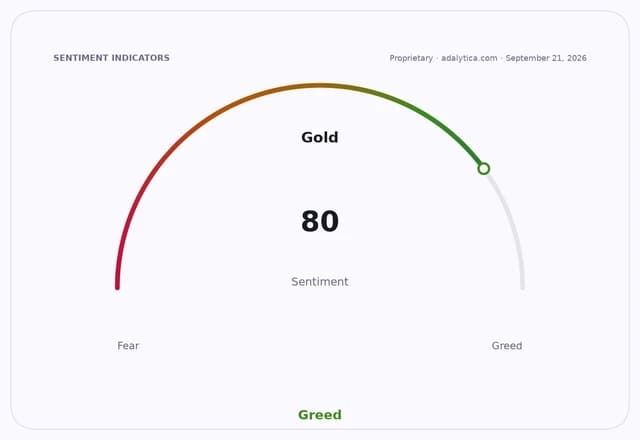
For investors, that is the real bull case for gold. The metal has always thrived when confidence in fiat assets erodes, but this cycle adds a new layer: central banks are diversifying reserves even as private capital begins to return through exchange-traded funds. SocGen said global gold ETF holdings have moved back toward 3,000 tonnes, a sign that investment demand is rebuilding after a period of weakness.
The market backdrop supports that view. Gold has already shown it can rip when fear and liquidity align: the underlying metal and gold-backed funds have spent the past year swinging sharply as inflation, the Fed and the dollar have alternately tightened and loosened conditions. The conventional technical setup in GLD now looks less stretched than it did during previous spikes, with the ETF trading around $401 after a violent spring drawdown and rebound, while COMEX gold sits near $4,400 an ounce after recovering from sub-$4,000 levels in July.
The macro mix is what makes this trade asymmetric. If real rates drift lower, gold’s opportunity cost falls. If the dollar weakens, overseas buyers get a tailwind. If sovereign debt worries intensify, reserve managers have even more reason to keep buying bullion instead of paper. Those forces can all work at once, and they do not require a recession to sustain the bid.
SocGen’s broader portfolio stance reflects the same logic. It favors a 60/20/20 allocation split, with 60% in equities and 20% each in bonds and commodities, arguing that commodities are an essential hedge against geopolitical and climate risk. That is an important shift for asset allocators who still treat commodities as a tactical sleeve rather than a strategic necessity.
The implication for investors is straightforward: the market may be too focused on short-term rate hikes and not focused enough on the longer arc of monetary debasement, reserve diversification and debt sustainability. If SocGen is right, the next leg higher in gold will not be driven by panic alone, but by persistent, institutional demand that can keep lifting the floor under prices.
For portfolios, the takeaway is to stay long the gold theme, own the miners with operating leverage and treat pullbacks in bullion and gold ETFs as opportunities rather than warnings. The banks are late to the realization that inflation is not going away cleanly — and that is exactly why gold still has a higher ceiling.
| Entity | Gains | Losses |
|---|---|---|
| Gold bullion | ▲Higher reserve demand | ▼Real rates staying high |
| Gold miners | ▲Operating leverage to price gains | ▼Cost inflation |
| Central banks buying gold | ▲Diversified reserves | ▼Treasury exposure |
| U.S. Treasuries | ▲None | ▼Reserve allocation share |