Google AI search shifts traffic from publishers
AI search is forcing public relations and digital publishing away from keyword-driven tactics and toward conversational answers, a shift that could redraw how brands win visibility and how websites get paid for their content.
Google’s use of its search infrastructure to power AI products is drawing criticism from publishers who say the model extracts value from human-generated pages while sending less traffic back to them. That matters because search has long been the cheapest, most scalable way for companies to reach customers and for media and content businesses to monetize audiences.
The stakes are rising as Google faces closer scrutiny over data collection practices and market dominance, while rivals push harder into generative AI. Meta’s plan to open-source its most advanced models adds another layer of pressure, suggesting the race to control AI interfaces is intensifying even as the economics of content distribution come under strain.
For investors, the issue reaches beyond PR and into the cash flow of the broader internet ecosystem. If AI summaries and conversational search reduce clicks to publishers, marketing budgets may shift, ad pricing may weaken and the value of high-quality proprietary content could rise. At the same time, companies with strong first-party data, direct audience relationships or brand recognition may be better insulated from the traffic loss.
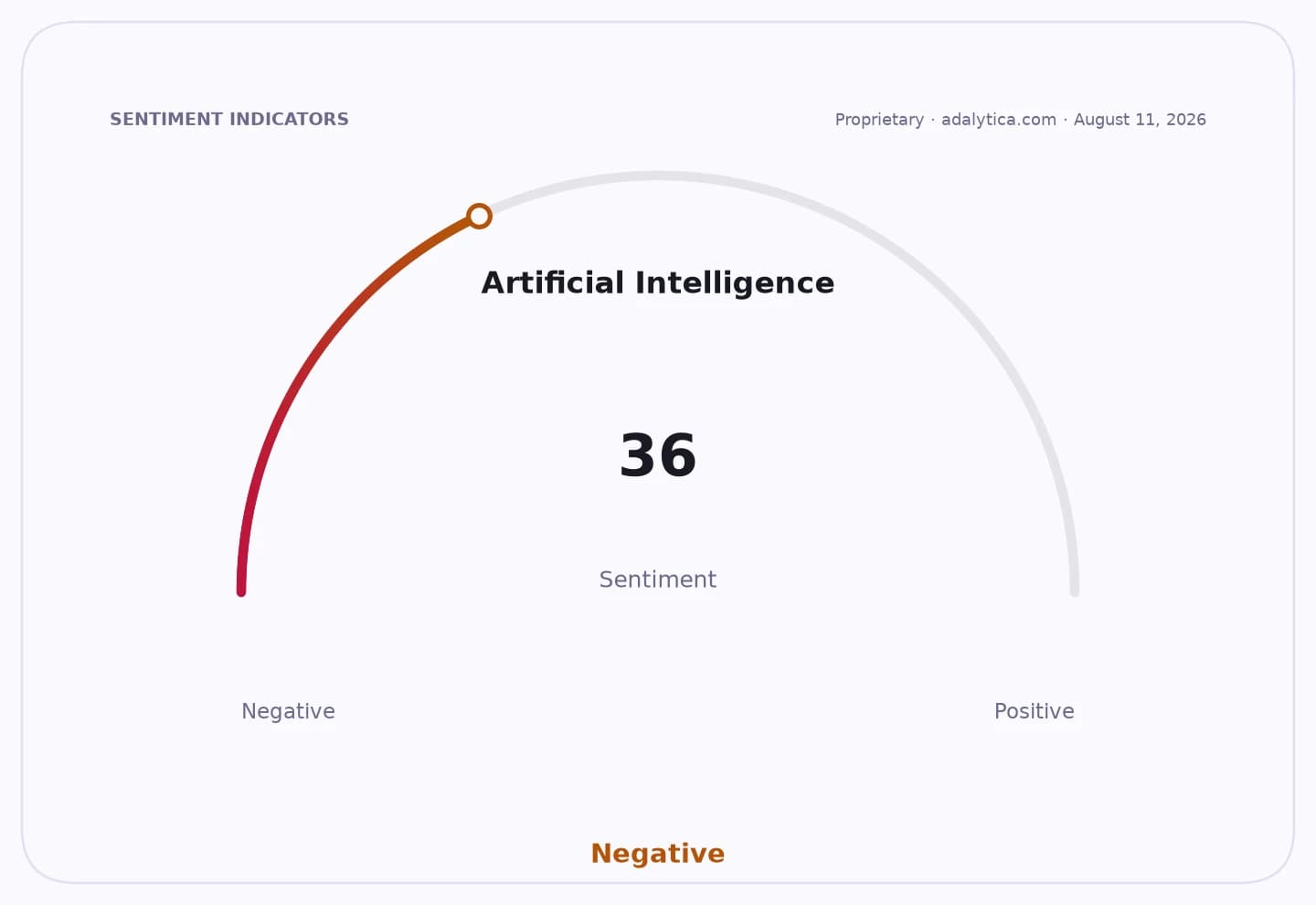
The Adalytica AI sentiment snapshot shows neutral sentiment at 36, but awareness is at 93, or “Extreme Greed,” with attention up 32% over the past week and 13% over the past month. That combination suggests the debate around AI search is becoming more visible even as investor sentiment stays cautious.
The next catalyst is likely to come from more product changes at Google, fresh regulatory action and whether publishers can prove that AI-driven search is eroding referral traffic enough to force a new bargain for online content.
| Entity | Gains | Losses |
|---|---|---|
| ▲More control of search UX | ▼More publisher backlash | |
| Publishers | ▲Potential leverage over licensing | ▼Referral traffic and ad revenue |
| Brands with first-party audiences | ▲Stronger direct reach | ▼Less dependence on search clicks |
| OpenAI and Meta | ▲More AI adoption | ▼Higher scrutiny and competition |