Grains Rise on Supply and Logistics Risks

Corn, wheat and soybean oil are all trading more expensively in international markets, a sign that geopolitical disruption and tightening logistics are still being priced into the global food trade.
The move matters because these crops sit at the center of the agricultural supply chain: corn feeds livestock and industrial demand, wheat is a staple food grain and soybean oil is a key edible oil and biofuel input. When prices rise together, the effects ripple through food manufacturers, feed users, exporters and importers, lifting input costs and complicating inflation outlooks in countries dependent on imports.
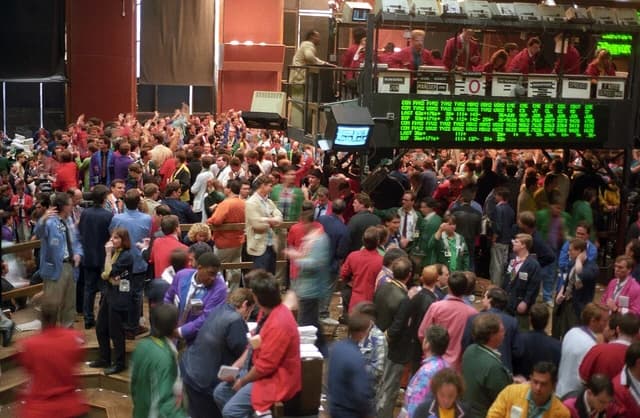
That tension is most visible in wheat. Ukrainian farmers have halted grain sales after a sharp collapse in local purchase prices, even as Russian strikes have cut about a third of Ukraine’s grain export capacity through Black Sea ports. Futures have climbed to a two-year high, but the advance has been capped by weak U.S. export data and higher transport friction, showing that the market is still balancing real supply risk against soft demand signals.
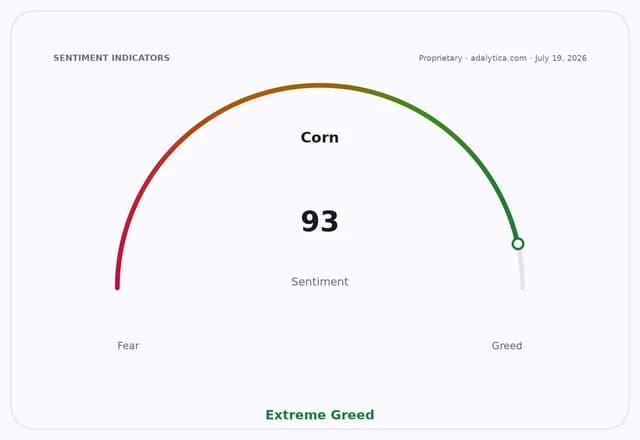
Corn has also recovered after a deep mid-June selloff. The July contract was recently at 17.78, up from 16.47 on June 29, while Adalytica’s Corn Fear & Greed Index has surged to 93, or “Extreme Greed,” from 64 a day earlier. That kind of move suggests traders are re-pricing weather, logistics and export-route risks rather than betting on a broad demand boom. The 50-day moving average is holding near 17.60, which has helped anchor the rebound technically.
Soybean oil is showing the strongest price momentum of the group. The SOYB ETF closed at 25.49 on July 17, up from 24.22 on June 29 and above both its 50-day and 200-day moving averages, with RSI readings above 68, typically a sign of an overbought market. The firm tone reflects tighter vegetable oil pricing and the spillover from strength in oilseeds and related crush markets, which matters for food processors and biodiesel economics.
The broader backdrop remains inflationary rather than orderly. The U.S. dollar is neutral in Adalytica’s signals, so the latest grain strength is being driven more by supply and trade flows than by currency weakness. That makes the move more important for importers, because higher dollar-denominated commodity prices feed directly into local food and feed costs without the cushioning effect of a sharply weaker greenback.
For investors, the winners are grain exporters, merchandisers and some agricultural trading houses with inventory and logistics exposure. The losers are livestock producers, food manufacturers and importing countries that are already exposed to elevated staples inflation. Companies such as ADM and Bunge have repeatedly flagged that mark-to-market effects and margin swings depend heavily on commodity price moves, underscoring how quickly a rally in grains can reshuffle earnings prospects across agribusiness.
The key question now is whether the current advance becomes a sustained supply-driven repricing or a short-lived squeeze. Any further disruption in Ukrainian export routes, a deterioration in Russian-Ukrainian shipping conditions or stronger-than-expected demand from importers could extend the rally. But if U.S. export data remain weak and harvest expectations improve, prices could stabilize quickly. For now, the market is telling consumers and investors that food inflation risks are not gone — they are simply moving from headline shock into trade and logistics.
| Entity | Gains | Losses |
|---|---|---|
| Grain exporters | ▲Higher realized prices | ▼Volume uncertainty |
| Food manufacturers | ▲None | ▼Higher input costs |
| Livestock producers | ▲None | ▼More expensive feed |
| Import-dependent countries | ▲None | ▼Food inflation pressure |