Greece Job Creation Hits 25-Year High
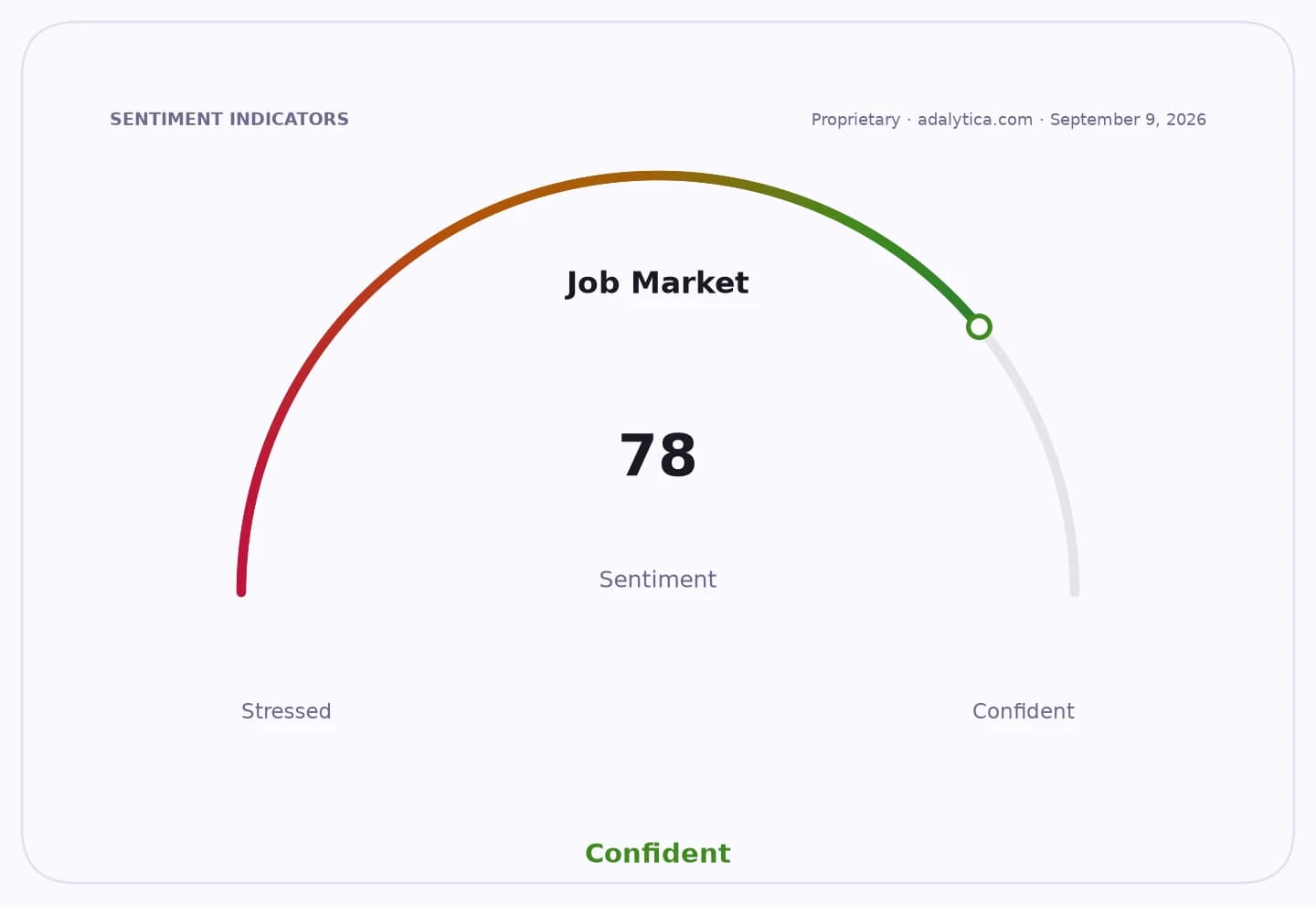
Greece posted its strongest start to a year in 25 years for net job creation, with 323,136 more hires than departures in the first seven months of 2026, underscoring a labor market that is still tightening and giving the government a key economic talking point ahead of the next policy push.
The improvement matters because jobs are the clearest sign that Greece’s recovery is broadening beyond headline growth and into household income, consumption and tax receipts. Labor Minister Niki Kerameos said the July data from the ERGANI system confirm a “steadily positive” labor market trend and point to a shift toward better-quality employment, not just more jobs.
Official statistics show unemployment fell to 7.9% in July from 17.9% in the same month of 2019, a drop of 10 percentage points and the sharpest decline in the European Union over that period, according to the ministry. That puts Greece below Finland, Spain, Sweden and France on the unemployment rate, while joblessness among men fell to 5.9%, among women to 10.4% and among young people to 16.8%.
The ministry said July 2026 was the best July in 18 years across total unemployment, as well as for women, men and youth. Kerameos also highlighted a bigger share of women and young people in the labor force and a marked rise in full-time work, signaling a labor market that is not only expanding but also becoming more formalized.
For investors, the data reinforce the case that Greece’s domestic-demand story remains intact, with stronger employment supporting retail spending, services activity and loan demand. It also helps the government’s fiscal narrative by pointing to a wider tax base and less pressure from welfare spending, even as policymakers still need to prove that wage gains, productivity and job quality keep pace with the drop in unemployment.
The next test is whether the labor market can keep generating jobs at this pace as tourism season fades and broader European growth remains uneven. Any slowdown would matter quickly for consumption and for the market’s view of how durable Greece’s post-crisis recovery really is.
| Entity | Gains | Losses |
|---|---|---|
| Greek workers | ▲More jobs, lower unemployment | ▼Less leverage if job quality lags |
| Greek government | ▲Stronger fiscal and recovery story | ▼Pressure to improve wages and productivity |
| Domestic consumers | ▲Higher income and spending support | ▼Risk if hiring slows after summer |
| Employers seeking labor | ▲Larger labor pool and full-time hiring | ▼Higher competition for workers |